The Hall Liang Sicheng Found: Visiting Foguang Temple's Tang East Hall
Foguang Temple's East Hall (857) is China's most celebrated surviving Tang timber building; tickets about 40 yuan, Tuesday–Sunday with Monday closure since 1 September 2026 — time your visit to a free guided talk and allow travel time from Wutai Shan or Taiyuan.
Published
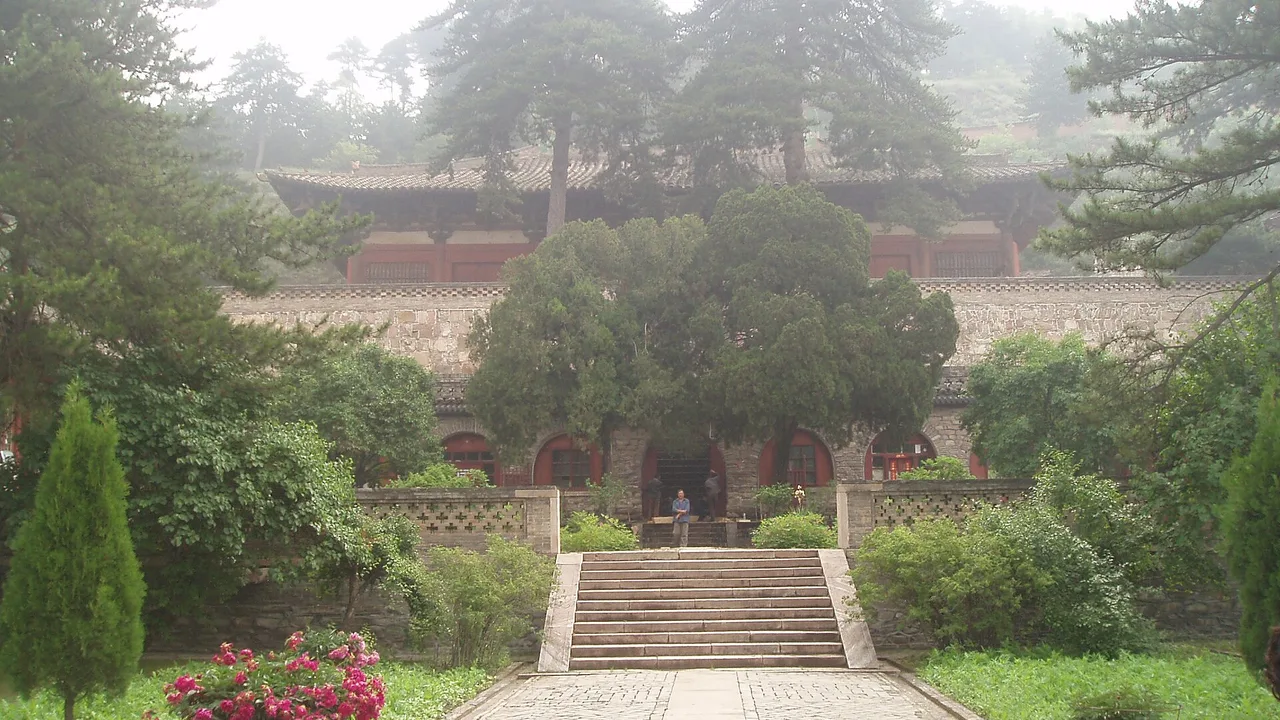
Foguang Temple (佛光寺) is worth a dedicated trip for anyone interested in Chinese architecture. Its East Hall, dated 857, is the most celebrated surviving Tang timber building in China. Tickets are listed at about 40 yuan. Since 1 September 2026 the temple has been closed on Mondays again, so plan a Tuesday-to-Sunday visit timed to a free guided talk.
Why is this hall so famous?
In 1937 the architects Liang Sicheng (梁思成) and Lin Huiyin (林徽因) came up this valley looking for a Tang building. At the time, Japanese scholars had said none survived in China. Following a clue from a Dunhuang mural, they found the East Hall (东大殿). Lin Huiyin spotted an ink inscription on a beam naming a woman donor, which helped date the building to 857. The discovery changed the history of Chinese architecture, and the hall is now part of the Wutai Shan World Heritage listing.
You do not need the story to feel the building, though. Its eaves reach far out on huge bracket sets, the roof pitch is gentle, and the hall sits high on a terrace above the courtyard. Nothing about it looks like a Ming or Qing temple.
What should you look at?
The brackets. Stand at the foot of the terrace and look up at the dougong (斗栱). They are enormous compared with later buildings, and they do real structural work rather than decorative work.
The sculpture inside. A platform of Tang painted clay figures fills the hall, with fragments of wall painting behind. The hall is dim and photography inside is not allowed, so let your eyes adjust.
The rest of the compound. There is a Jin-dynasty Manjushri Hall (文殊殿) in the lower courtyard, a small brick pagoda and old stone pillars. Together they make a quiet hour.
If you have seen Yingxian's Liao pagoda or Huayan Temple in Datong, this is the earlier link in the same chain. Seeing them in sequence makes each one easier to understand.
When should you go?
Time your arrival to a free public talk. The off-season schedule relayed from last year's official notice lists four a day: 9:30, 10:50, 14:00 and 15:30. A guide who points out the beam inscription and explains the brackets gives you much more than the signs do.
In 2026 the summer season ran every day until 17:30. From 1 September the temple returned to Tuesday–Sunday opening with Monday closed. When a national holiday falls on a Monday, the closure moves to the next working day. Off-season hours are listed as 8:30–17:00, with last entry at 16:30.
How do you get there?
The temple stands on a hillside above Doucun town (豆村镇) in Wutai county, south-west of the Wutai Shan valley. Reports put it at roughly one to two hours by car from Xinzhou or Taiyuan. No express bus serves it, so hire a car. Most people combine it with Nanchan Temple on a day from Taihuai to Taiyuan or the reverse. At holiday peaks the temple has used a temporary car park with a free shuttle.
Tickets, booking and phone
Checked October 2026 (Asia/Shanghai). The temple's official WeChat account and on-site notices win. The details here come from relays of official notices, not from a stable official web page.
Ticket. About 40 yuan, half price for students. Book in advance on the official WeChat account under your real name. Paper souvenir tickets were withdrawn in August 2026, and you now get a printed ticket.
Phone. 0350-8751066.
Who should skip it?
People with no interest in buildings, on a one-day Wutai trip. Everyone else should treat it as the main reason to come to Xinzhou. It is easily worth the drive. The three-day plan gives it a morning.
Cover photo: Angus Cepka / Wikimedia Commons (CC BY-SA 3.0)
More from Xinzhou
- culture / 4 min readWutai Shan's entry ticket (listed at 135 yuan full) now covers the day of use and the next day with unlimited re-entry; sleep in Taihuai, walk the core temples on day one and climb Dailuoding on day two, booking ahead on the official WeChat account.
- nature / 4 min readThe 'grand pilgrimage' to Wutai Shan's five terrace peaks — Beitai is about 3,061 m — takes a full day by official vehicle; do it in July to September, carry winter layers, and skip it from mid-October when snow and wind close the tops.
- history / 4 min readNanchan Temple's main hall (782) is the oldest dated timber building in China — small, plain and quiet; tickets about 20 yuan in season and 10 off-season, Monday closed since September 2026, best paired with Foguang on one drive.