Not Twin Temples: How to Choose and Read Huayan vs Shanhua
At Datong’s Huayan and Shanhua temples, choose by what you want to read — Liao sculpture and dual-axis halls, or a complete axial courtyard — not two generic old-temple twins.
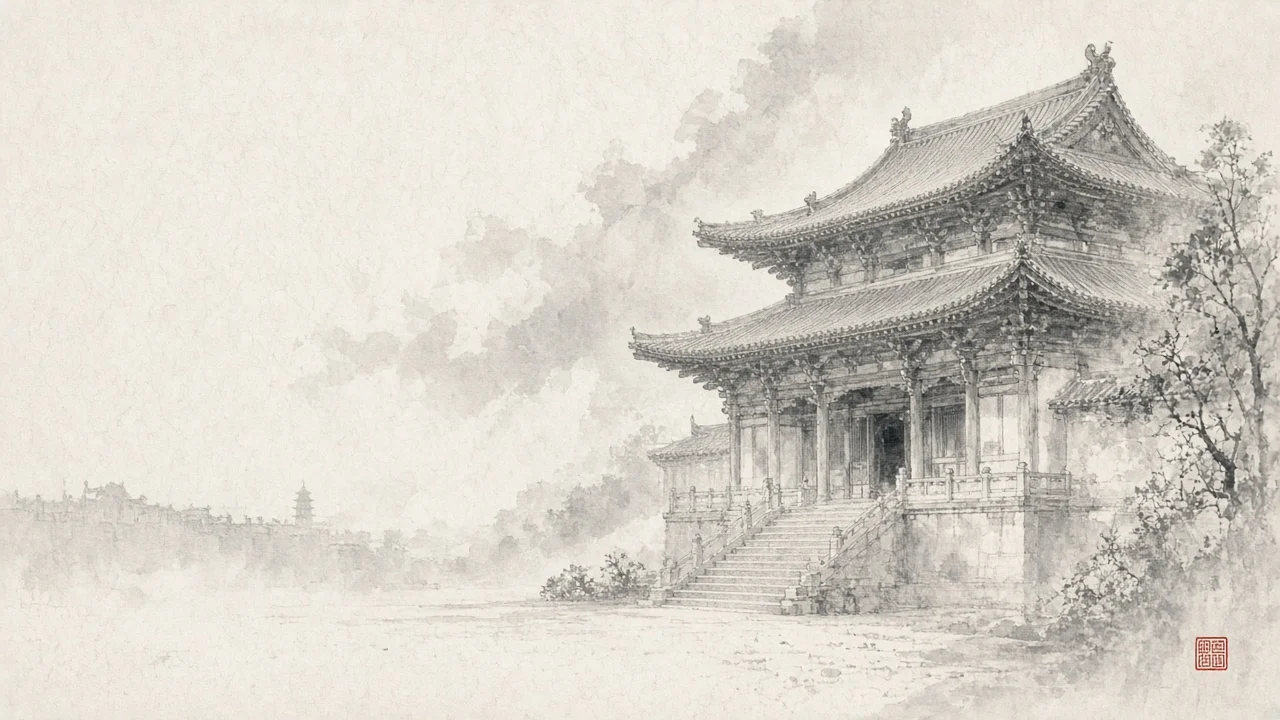
At Datong’s Huayan Temple (华严寺) and Shanhua Temple (善化寺), choose by what you want to read: Huayan for Liao sculpture depth and east-facing dual-axis halls; Shanhua for a complete south-facing axial courtyard from gate to Mahavira Hall. Both sit inside the old city within walking distance — one honest morning can hold both if you do not treat them as twin generic temples.
How do you choose — not two generic old temples?
Choose by the judgment you want, not by which name sounds older on a map. Huayan rewards slow looking at Liao timber, clay sculpture, and the odd east-facing dual-axis plan — Upper and Lower compounds that do not collapse into one south-facing parade. Shanhua rewards reading a complete axial courtyard: mountain gate, Hall of the Three Saints, Mahavira Hall in sequence, with one Liao and three Jin timber halls still carrying the plan.
Treating them as interchangeable “old temples” for a wall-top selfie wastes the city’s second depth after the caves. Soft city frame for how timber halls sit beside Yungang, wall, and Hanging Temple fringe: the Datong cultural landscape overview.
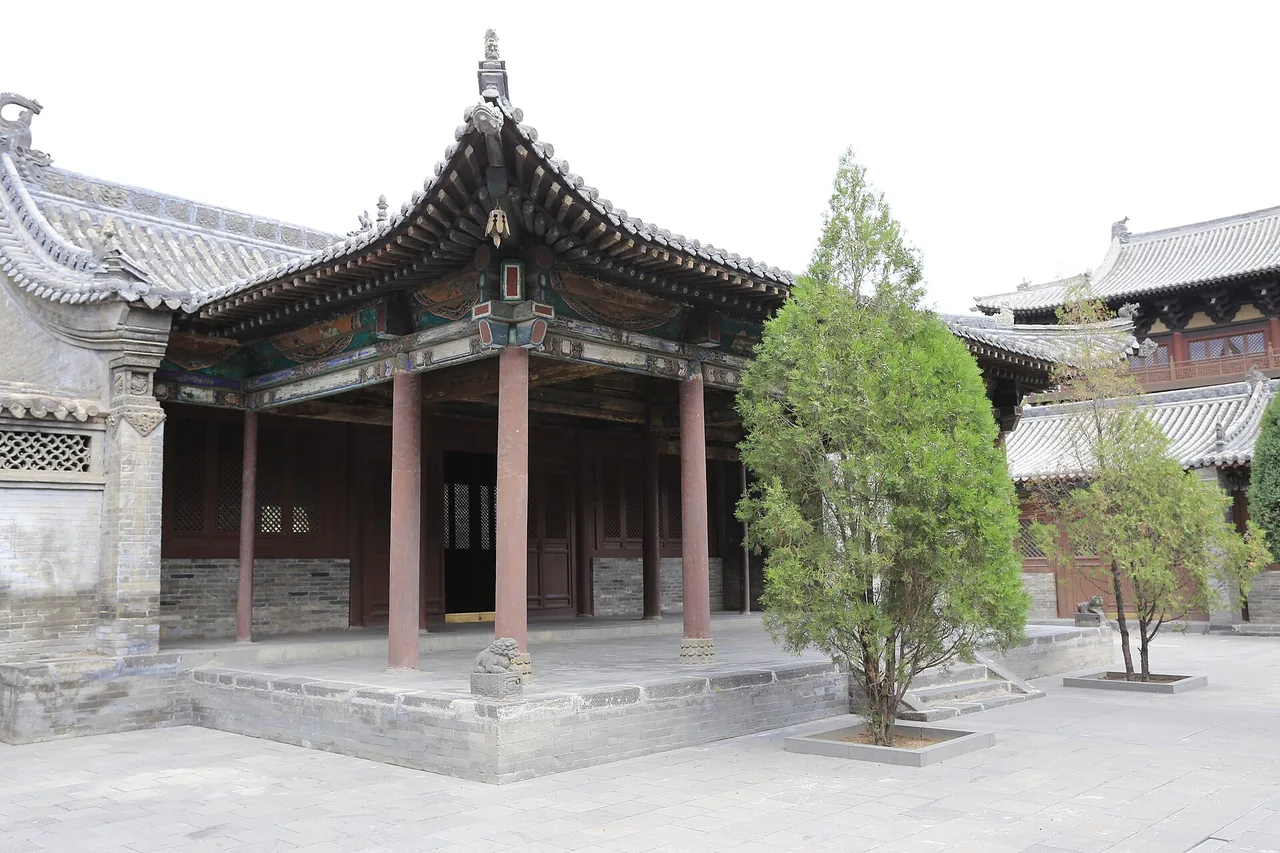
Photo: Zhangzhugang / Wikimedia Commons (CC BY-SA 3.0)
What does Huayan give you to read — and what does Shanhua?
Huayan is the sculpture-and-axis stop. The Bhagavata Sutra Hall (薄伽教藏殿) holds Liao-period sculpture and wall cabinets that repay standing still; the Mahavira Hall reads as imperial timber mass on a raised platform. Halls face east along parallel axes rather than the usual south-facing single spine — a layout quirk that changes how you enter and turn, not a trivia sticker.
Shanhua is the courtyard-plan stop. Walk the south–north spine and you get gate, Three Saints Hall (三圣殿), and Mahavira Hall as one readable sequence — often quieter than Huayan, with timber and dougong that teach Jin rebuilding after Liao war damage rather than a second sculpture encyclopedia. If you only have one temple hour, pick the reading you care about; if you have a morning, do both without racing plaques.
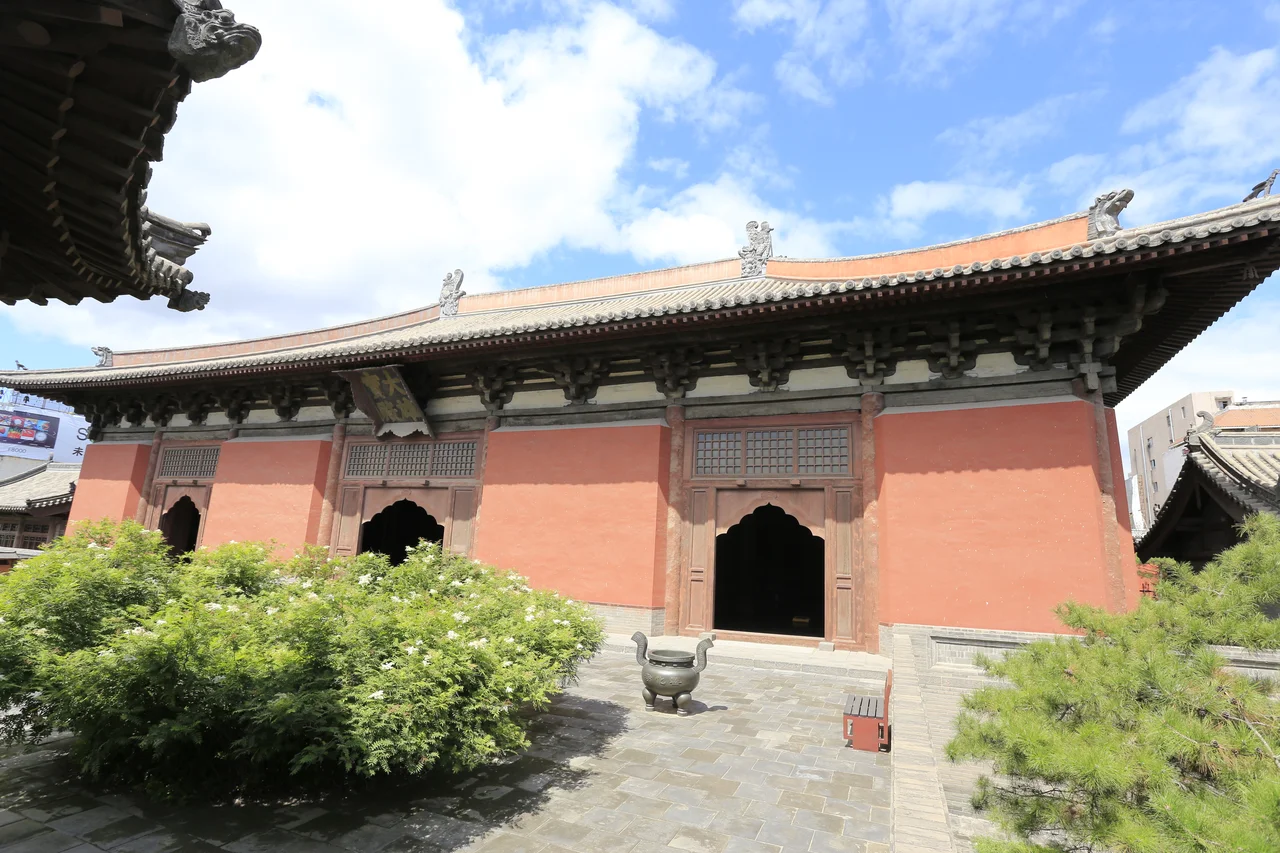
Photo: Zhangzhugang / Wikimedia Commons (CC BY-SA 3.0)
How should you pair them with the old city — walking distance, not a race?
Both temples sit inside the rebuilt old city, within walking distance of each other and of the wall circuit — not a day trip like the Hanging Temple, and not a western-edge corridor like Yungang. Pairing that works: one honest morning for Huayan then Shanhua (or the reverse), with wall or lanes as connective tissue rather than a separate exhausted afternoon.
Pairing that fails: treating the two as twin checkboxes before a taxi sprint to the caves, or stacking timber temples, full wall circuit, and a Hanging Temple gorge stop into one daylight race. Leave cave pacing and cliff ascent for other days; this page stays a choose/read frame for two old-city timber compounds.
When should you go, and how long?
Spring and autumn suit a first look: April–June and September–October for clearer air and kinder courtyard walking. Midsummer works if you enter near open; peak-season notices sometimes stretch Huayan into longer summer windows — trust the morning check. Winter days are short; off-peak ticket rules can differ from the preferential summer prices.
Plan most of a morning for both, or a focused ninety minutes for the one reading you chose. Do not bolt “two temples” into the gap between lunch and a Yungang half-circuit — that usually costs the linger time that makes either hall worth the ticket.
Hours, tickets, and how to get there?
Checked October 2026 (Asia/Shanghai). Named scenic WeChat / mini-programs and municipal notices win — re-confirm the morning you travel; prefer “大同华严寺景区” and Shanhua scenic WeChat over third-party clocks.
Huayan. Peak season (1 Apr–31 Oct) commonly about 08:30–17:30 (stop sale), ¥50 adult / ¥25 half; summer windows (e.g. mid-July–August) have run longer when announced. Prefer the scenic official channel for the day you go.
Shanhua. After restored charging, preferential peak notices commonly list about ¥40 / ¥20 (full / half), with peak open about 08:00–17:30 (stop sale) (Datong 12345 restore-charging notice; 2026 peak scenic announcements, checked October 2026). Concession and free-entry groups follow the municipal notice — confirm before you pay. Last checked: October 2026.
Transit. High-speed arrivals usually land at Datong South (大同南站); Datong Station (大同站) sits closer to the old city. From either overnight base, old-city temples are walk-and-taxi inside the wall fabric — no scenic through-bus required. Confirm gate positions on your map the morning you go; Huayan and Shanhua are roughly a short walk apart, not a cross-city hop.
Who is this for — and who should skip?
Come if you want a choose/read decision: Liao sculpture and dual-axis halls at Huayan, or a complete axial courtyard at Shanhua — with hours and tickets you can verify inside the old city. Skip if you only need a generic “ancient temple” backdrop for a wall selfie, or if you planned to race both temples, the caves, and the Hanging Temple into one short afternoon. Pick the reading you care about, walk the short link between them when you have the morning, and let timber and clay earn their place by how they change your pace — not by how many twin names you can tick.
More from Datong
- culture / 7 min readDatong reads clearest as Northern Wei caves, Liao-Jin timber temples, the old city wall, and the Hanging Temple fringe — a citywide frame before any day plan or single-site deep dive.
- history / 7 min readAt Datong’s Yungang Grottoes, a day is worth it when you pace one corridor — Tan Yao Five Caves for scale, later chambers for detail — not a cave-number race.
- history / 7 min readFrom a Datong base, Hanging Temple near Hunyuan is worth a day trip when you book capped climbing tickets and treat it as one gorge stop — not a walk from the old city.