Coal Layer, Not Brochure: Is Datong’s Contemporary City Worth Seeing?
Datong’s coal heritage and contemporary fabric repay a half-day via Jinhuagong Mine Park and the rebuilt old-city edge — honest modern / heritage, not a “new Datong” brochure checklist.
Yes — Datong’s coal heritage and contemporary fabric repay a half-day if you want the working-century layer beside caves and timber temples. Anchor at Jinhuagong National Mine Park (晋华宫国家矿山公园) across from Yungang for industrial reuse and the coal museum, then read rebuilt old-city edge against coal suburbs — honest modern / heritage, not a “new Datong” brochure.
Is Datong’s coal heritage and contemporary city worth seeing?
Worth it when you want the city’s working-century layer, not another temple twin. Datong was China’s coal capital for decades; that grit still sits beside the rebuilt Ming wall and Liao–Jin halls. An honest half-day holds industrial reuse at Jinhuagong — Datong Coal Museum (大同煤炭博物馆) plus the optional underground tour — then a short read of rebuilt old-city skyline against older mining-district fabric west and south of the wall.
Skip boosterism. “New Datong” checklists that only list plazas, night LEDs, and malls flatten the city into a brochure. Soft city frame: the Datong cultural landscape overview.
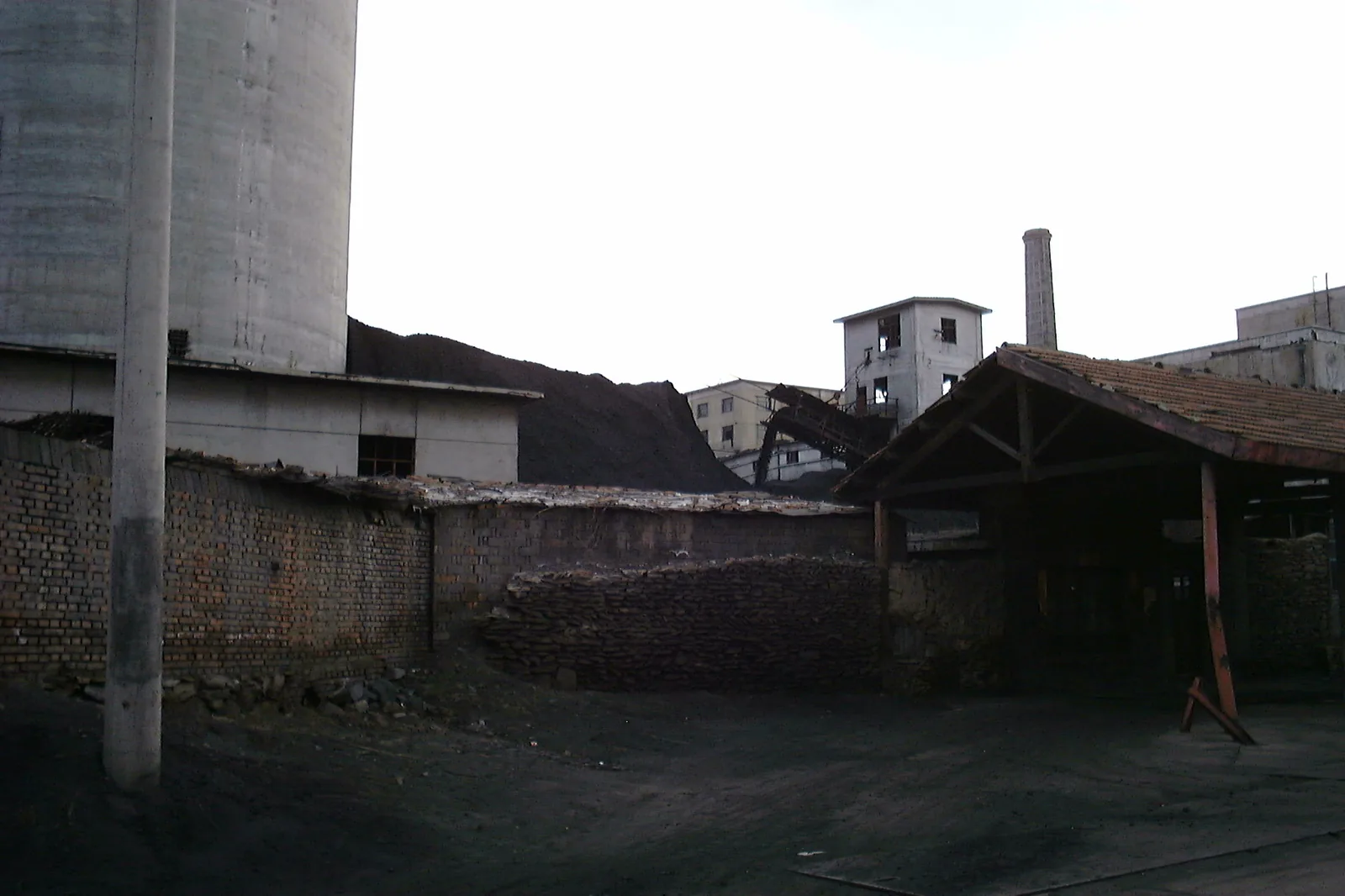
Photo: Peter Van den Bossche / Wikimedia Commons (CC BY-SA 2.0)
What do you actually see — mine park, museum, edge vs suburbs?
At Jinhuagong, about 13 km west of the old city and across a river from Yungang Grottoes (云冈石窟), you walk a former working mine turned national mine park: outdoor industrial relics, the coal museum’s formation-and-extraction story, and — when trains and groups allow — a guided drop into real workings. The point is coal as lived industry, not a polished “transformation” slogan.
Back toward the wall, the skyline reads as rebuilt gate towers and mid-rise fabric against ring-road towers. Coal suburbs still show worker housing, rail sidings, and unfinished edges the old-city rebuild does not erase. Hold both: staged heritage inside the circuit, and the industrial century that paid for much of modern Datong.
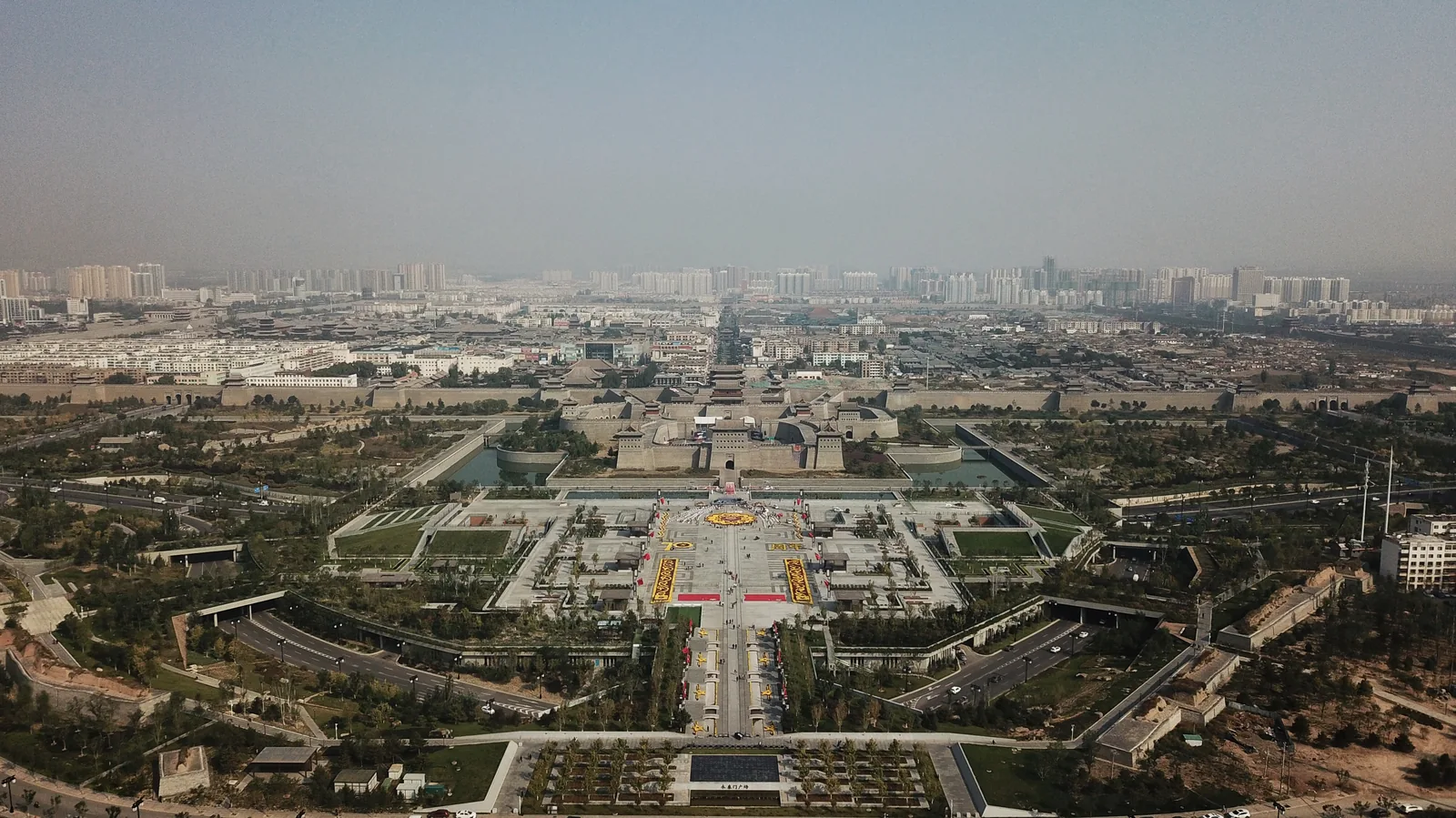
Photo: Charlie fong / Wikimedia Commons (CC BY-SA 4.0)
How is this different from the wall, temples, and caves day?
Different intent. The ancient city wall half-day is rampart height plus inner lanes. Huayan vs Shanhua is timber-hall choose/read. Yungang is Northern Wei cave pacing. This page is coal heritage and contemporary fabric — museums, industrial reuse, rebuilt edge versus mining suburbs.
Do not bolt mine park, full wall, both temples, and a cave half-circuit into one afternoon. Soft pairing: Yungang morning, then the hop to Jinhuagong; or wall / temples / knife-cut noodles as one urban block, with mine park on the Yungang day.
When should you go, and how long is honest?
Spring and autumn suit yards and skyline walks: April–June and September–October. Midsummer works if you hit halls and underground while heat peaks; winter days are short and the shaft run is cold — bring a layer under borrowed gear.
Plan two to four hours for mine park plus museum, longer with an underground slot. Soft add: an old-city edge walk or free municipal museum later. Do not invent a “whole new Datong” circuit that races every plaza.
Hours, tickets, and how to get there?
Checked October 2026 (Asia/Shanghai). No stable dedicated official scenic https with a live ticket clock was reachable for Jinhuagong — operator domain jhgjxtmy.cn returned no usable visitor page here. Degrade to ticket-desk phones (0352-7086666 / 0352-7086211), municipal / media reprints, and platform boards; re-confirm the morning you travel.
Jinhuagong / Datong Coal Museum. Park grounds commonly free; museum and underground are separate paid products. Late 2025–2026 desk and platform digests commonly list museum adults about ¥30, underground “井下探秘” adults about ¥85 — unverified on official https; confirm at the desk or by phone — with timed shaft runs often needing roughly 5–40 people per car — a working band, not an invented fixed fare; buy after you hear the day’s board. Peak windows commonly about 09:00–17:00 with mid-to-late afternoon last entry; off-peak last entry can sit earlier. Personal phones are typically banned underground; confirm on site.
Datong Museum (大同市博物馆) — free civic stop. Tue–Sun 09:00–17:00, last entry 16:30; closed Monday except statutory holidays (dt.gov.cn, August 2026 notice, checked October 2026). Main hall: real-name WeChat “大同市博物馆”; datongmuseum.com. Soft free branch halls near Heyang Gate share similar hours on the same municipal page.
Access. High-speed arrivals usually land at Datong South (大同南站); Datong Station (大同站) sits closer to the old city. Jinhuagong pairs with Yungang — taxi or grottoes through-bus, then a short hop; old-city museums and wall are walk-and-taxi. Last checked: October 2026.
Who is this for — and who should skip?
Come if you want an honest half-day: coal museum and industrial reuse for the working-century layer, rebuilt old-city edge against coal suburbs for the contemporary read — with hours and tickets you can re-check. Soft finish with noodles near the wall if the temples day already owns your legs.
Skip if you only want a propaganda “new Datong” checklist of plazas and night shows, or if you planned to race mine park, full wall, both temples, and Yungang into one afternoon. Hold the coal layer as one of Datong’s real frames — not a booster sticker — and let the city earn the modern pillar by what you can verify on the ground.
More from Datong
- culture / 7 min readDatong reads clearest as Northern Wei caves, Liao-Jin timber temples, the old city wall, and the Hanging Temple fringe — a citywide frame before any day plan or single-site deep dive.
- history / 7 min readAt Datong’s Yungang Grottoes, a day is worth it when you pace one corridor — Tan Yao Five Caves for scale, later chambers for detail — not a cave-number race.
- history / 7 min readFrom a Datong base, Hanging Temple near Hunyuan is worth a day trip when you book capped climbing tickets and treat it as one gorge stop — not a walk from the old city.