Gorge Stop, Not Old-City Walk: Is Hanging Temple Worth a Day Trip from Datong?
From a Datong base, Hanging Temple near Hunyuan is worth a day trip when you book capped climbing tickets and treat it as one gorge stop — not a walk from the old city.
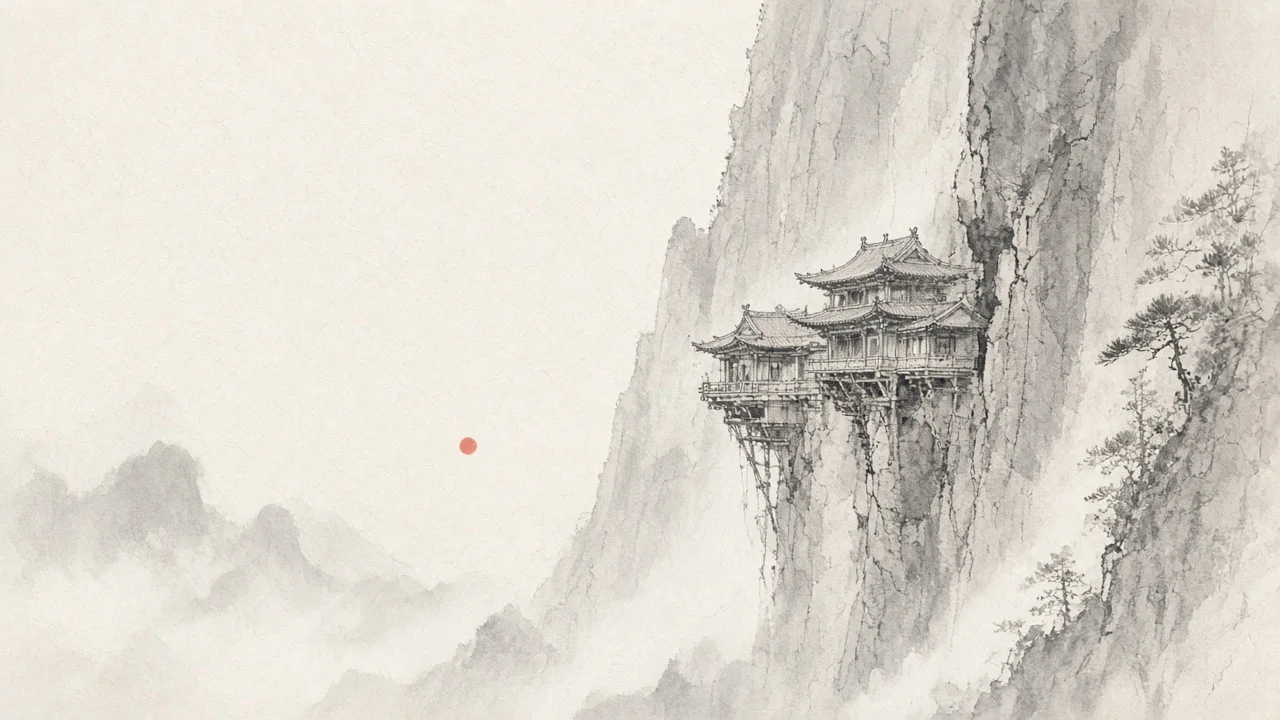
From a Datong base, Hanging Temple (悬空寺) on the Hengshan fringe near Hunyuan is worth a day trip when you book capped climbing tickets ahead and treat it as one gorge stop — not a walk from the old city. Pair it with Datong caves and temples on other days; leave Mount Heng itself for a separate add-or-skip.
Is the day trip worth it — and what judgment actually changes?
Worth it means one clear gorge stop with climbing tickets already in hand, not a photo from a tour-bus window on the way somewhere else. The temple is a timber-and-beam complex pinned into a sheer face on the Beiyue Hengshan (北岳恒山) scenic fringe — smaller in person than viral frames suggest, still the engineered precariousness that makes the day trip a decision rather than a checkbox.
What changes the day is planning: capped ascent tickets, shuttle from the scenic visitor center, and enough daylight to climb without stacking Yungang or the old-city wall into the same short afternoon. Soft city frame for how this fringe sits beside caves, timber temples, and wall: the Datong cultural landscape overview.
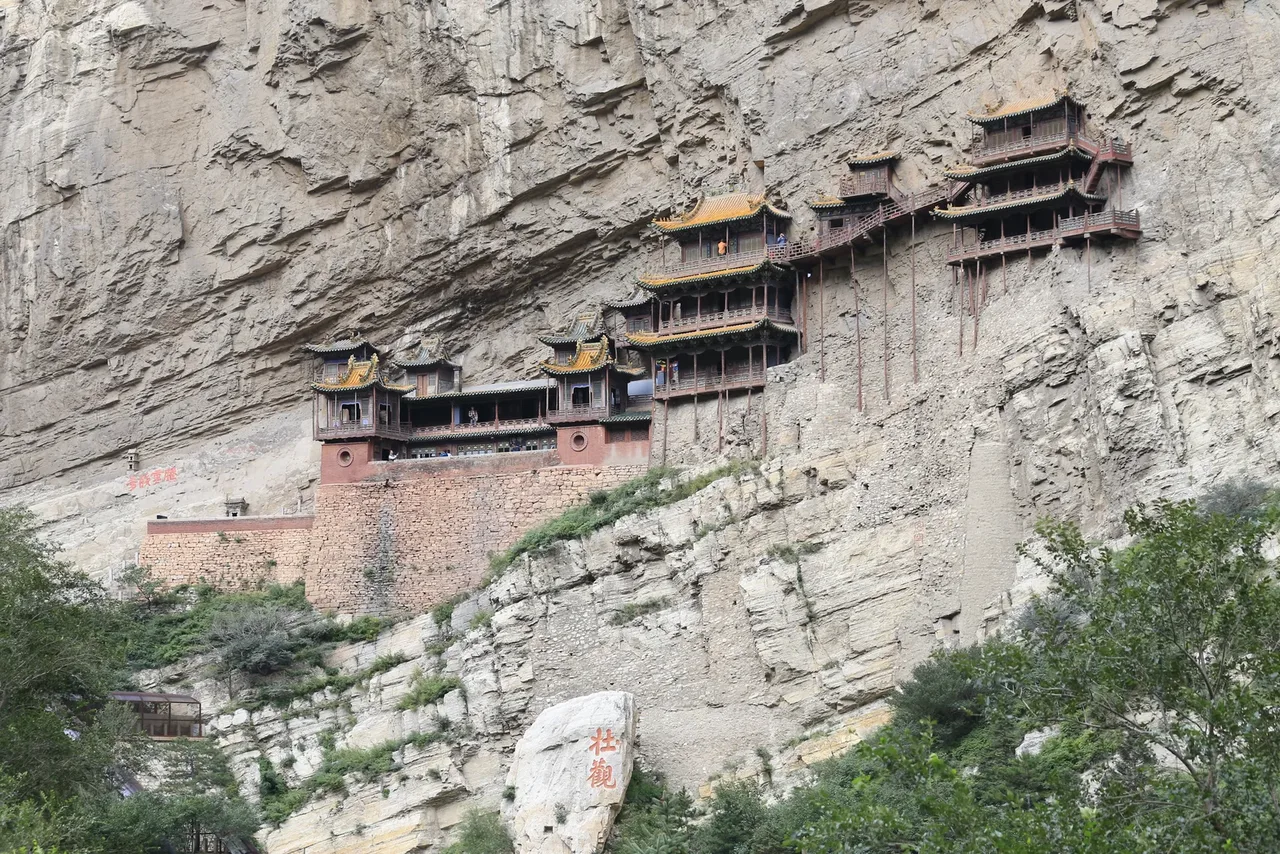
Photo: Zhangzhugang / Wikimedia Commons (CC BY-SA 3.0)
How should you pair it with a Datong base — not an old-city walk?
Base in Datong; day-trip south to Hunyuan (浑源). This is not a walk from the rebuilt old-city wall, and it is not a plug-in between lunch and a Yungang half-circuit. High-speed arrivals usually land at Datong South (大同南站); Datong Station (大同站) sits closer to the old city — either works as a overnight base, then a southbound morning toward the Hengshan visitor center for the scenic shuttle.
Pairing that works: one full Datong day for Yungang pacing or old-city temples and wall, a separate daylight window for Hanging Temple. Pairing that fails: bolting the cliff and the cave corridor into one exhausted daylight race. Mount Heng’s temple cluster and cableway are a different add-or-skip (series 7) — do not treat this page as a full Hengshan essay.
What do you get on the cliff — and what is checklist noise?
On the cliff you get narrow timber galleries, steep stairs, and the odd pleasure of standing inside a building that looks impossible from the gorge floor. The useful judgment is structural and spatial — how the halls cling, how the path threads, how crowded the ascent feels when tickets are scarce — not a hall-by-hall encyclopedia.
Checklist noise is racing every named plaque for identical cliff selfies, assuming the gate ticket includes ascent when you did not buy the climbing fee, or treating the site as a game map. If Black Myth: Wukong brought you here, keep it as recognition only — the Stories piece Black Myth to Shanxi’s ancient architecture maps verifiable sites; this page stays a day-trip worth-it judgment, not a walkthrough.
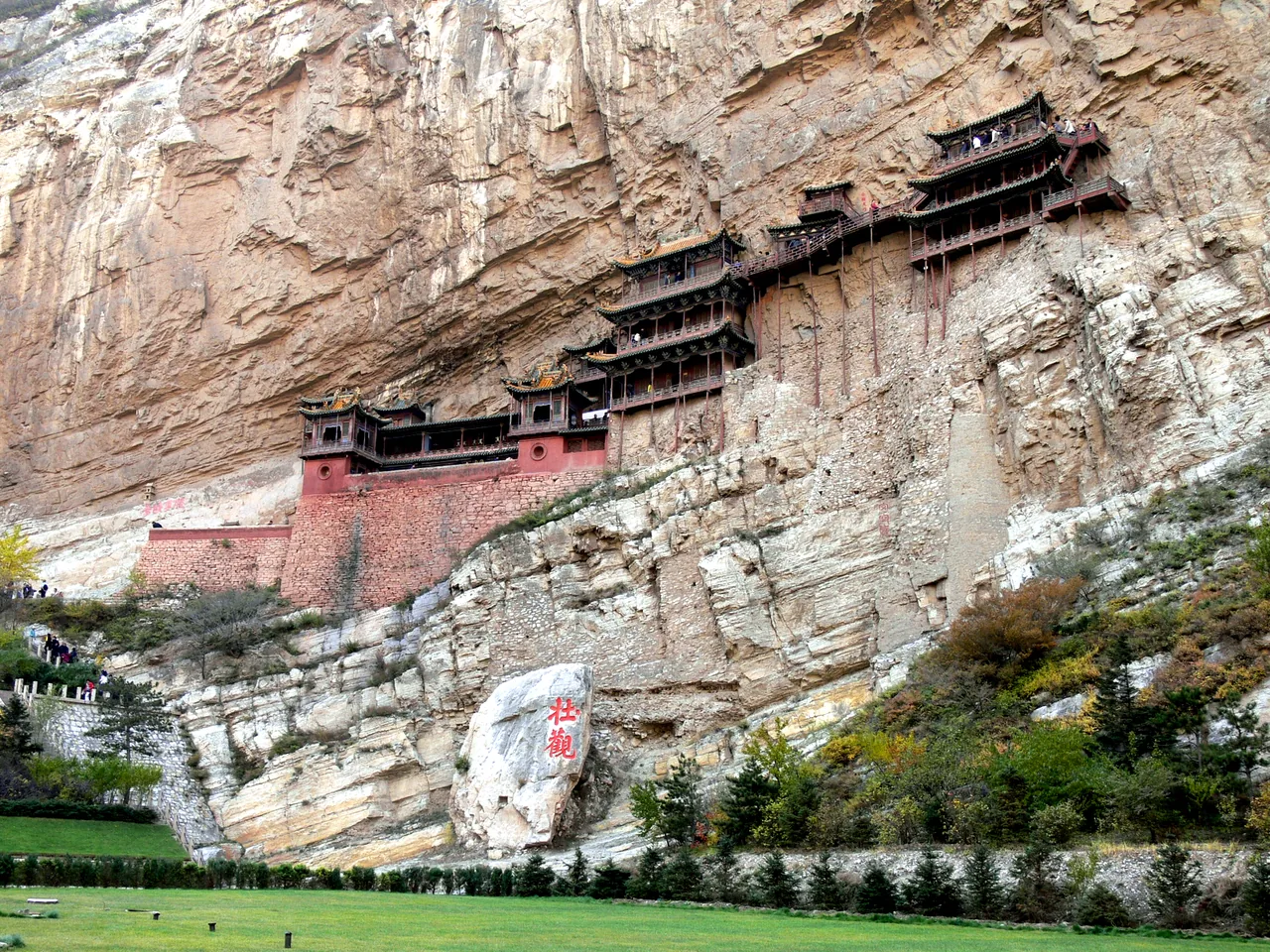
Photo: Gisling / Wikimedia Commons (CC BY 3.0)
When should you go, and how long?
Spring and autumn suit a first day trip: April–June and September–October for clearer air and kinder walking heat. Midsummer works if you enter near open and accept a hotter gorge; winter days are short and autumn windows already close earlier than summer. Plan most of a daylight window from Datong — travel south, visitor-center shuttle, climb, return — rather than a ninety-minute dash that only proves you found the cliff face.
Do not stack Hanging Temple and a full Yungang corridor into the same short afternoon. If you only have one spare day outside the city, spend it here as a single gorge stop; leave Mount Heng’s broader trails and temple group for a later add-or-skip.
Hours, tickets, and how to get there?
Checked October 2026 (Asia/Shanghai). Operator byhs.net.cn · English · ticket guide and scenic WeChat / “北岳云游” win — re-confirm the morning you travel; prefer those channels over third-party clocks.
Hours. Autumn from 2026-10-08: Hanging Temple about 08:00–17:00; ticket windows about 07:30–16:30; visitor-center shuttle toward the temple about 07:30–16:30 (山西发布 via 新黄河, checked October 2026). Earlier summer-style windows ran longer; holidays can shift again — trust the morning check.
Tickets. Full adult commonly ¥15 park admission + ¥100 climbing/ascent fee (about ¥115 combined); half-price ¥8 + ¥50 (byhs.net.cn ticket guide, checked October 2026). Climbing tickets are capped daily and often sell out — book via the authorized “北岳云游” mini-program; online climbing sales commonly open around 07:20. From 2025 onward, buy at the Hengshan visitor center (or authorized online), park there, and take the scenic shuttle — no on-site top-up booths inside the scenic area. Last checked: October 2026.
Transit. Day trip from a Datong overnight base to Hunyuan, not a walk from the old city. Taxi or ride-hail south is the simplest morning move when coaches are unclear; allow a generous half-day buffer for return. Confirm shuttle and last return at the visitor center the morning you go.
Who is this for — and who should skip?
Come if you want a day-trip decision: gorge stop from a Datong base, capped climbing tickets, and a clear split from Mount Heng and the cave corridor. Skip if you only need a cliff silhouette from a coach window, or if you planned to bolt Hanging Temple and Yungang into the same short afternoon. Book ascent ahead, start south early, and let the galleries earn their place by how they change your footing — not by how many viral angles you can recreate.
More from Datong
- culture / 7 min readDatong reads clearest as Northern Wei caves, Liao-Jin timber temples, the old city wall, and the Hanging Temple fringe — a citywide frame before any day plan or single-site deep dive.
- history / 7 min readAt Datong’s Yungang Grottoes, a day is worth it when you pace one corridor — Tan Yao Five Caves for scale, later chambers for detail — not a cave-number race.
- culture / 7 min readAt Datong’s Huayan and Shanhua temples, choose by what you want to read — Liao sculpture and dual-axis halls, or a complete axial courtyard — not two generic old-temple twins.