Four Frames, Not a Checklist: How to Read Datong's Cultural Landscape
Datong reads clearest as Northern Wei caves, Liao-Jin timber temples, the old city wall, and the Hanging Temple fringe — a citywide frame before any day plan or single-site deep dive.
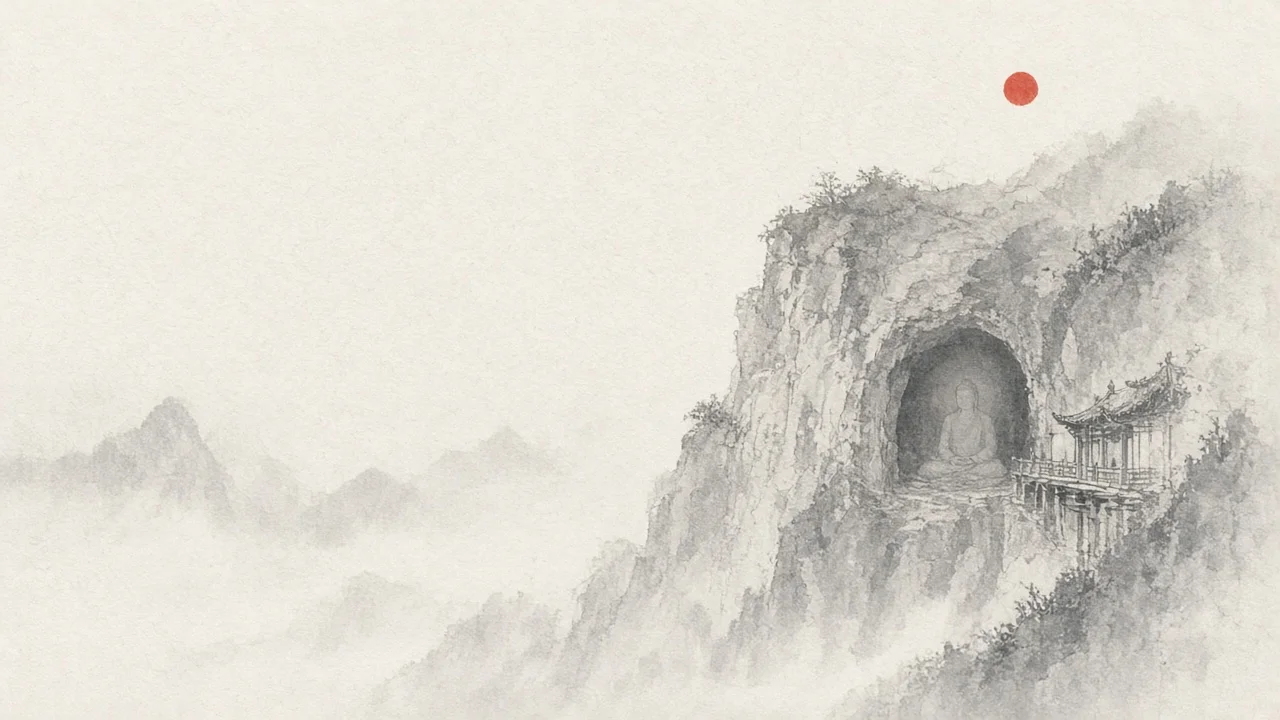
Datong’s cultural landscape reads as four frames: Northern Wei cave temples at Yungang Grottoes (云冈石窟), Liao–Jin timber halls at Huayan and Shanhua, the rebuilt old city wall with its inner walk, and the Hanging Temple (悬空寺) on the Hengshan fringe. Use this as a reading map — not a day plan or a single-site deep dive.
What are the four frames you should hold first?
Hold caves, timber temples, wall, and cliff temple as one map. Yungang is the Northern Wei imperial cave corridor on Datong’s western edge — rock-cut Buddhas and painted chambers UNESCO inscribed in 2001 (whc.unesco.org/en/list/1039, checked October 2026). Inside the old city, Huayan Temple (华严寺) and Shanhua Temple (善化寺) carry Liao–Jin timber halls and sculpture that repay slow looking. The rebuilt ancient city wall frames gates, lanes, and temple compounds. South of the city, the Hanging Temple clings to a gorge face on the Hengshan (恒山) scenic fringe — a day-trip stop, not a second city-center temple.
Miss one frame and Datong collapses into “one stone Buddha” or a game screenshot. Hold all four and later day choices have somewhere to land.
Why do the Northern Wei caves matter more than a photo checklist?
Yungang is not a cave-number scavenger hunt. The mid-5th to early-6th-century complex was cut under Northern Wei imperial patronage when Datong (then Pingcheng) was the capital; UNESCO’s brief stresses layout unity in the Tan Yao Five Caves and the fusion of Central Asian Buddhist cave art with Chinese form. What you walk is a linear corridor of monumental niches — scale and sequence matter more than collecting numbers.
Here the only judgment you need: the caves are the city’s oldest durable public claim, west of the wall — a half-day or full-day commitment, not a plug-in between lunch and shopping. Save cave pacing and ticket windows for the Yungang pacing piece.
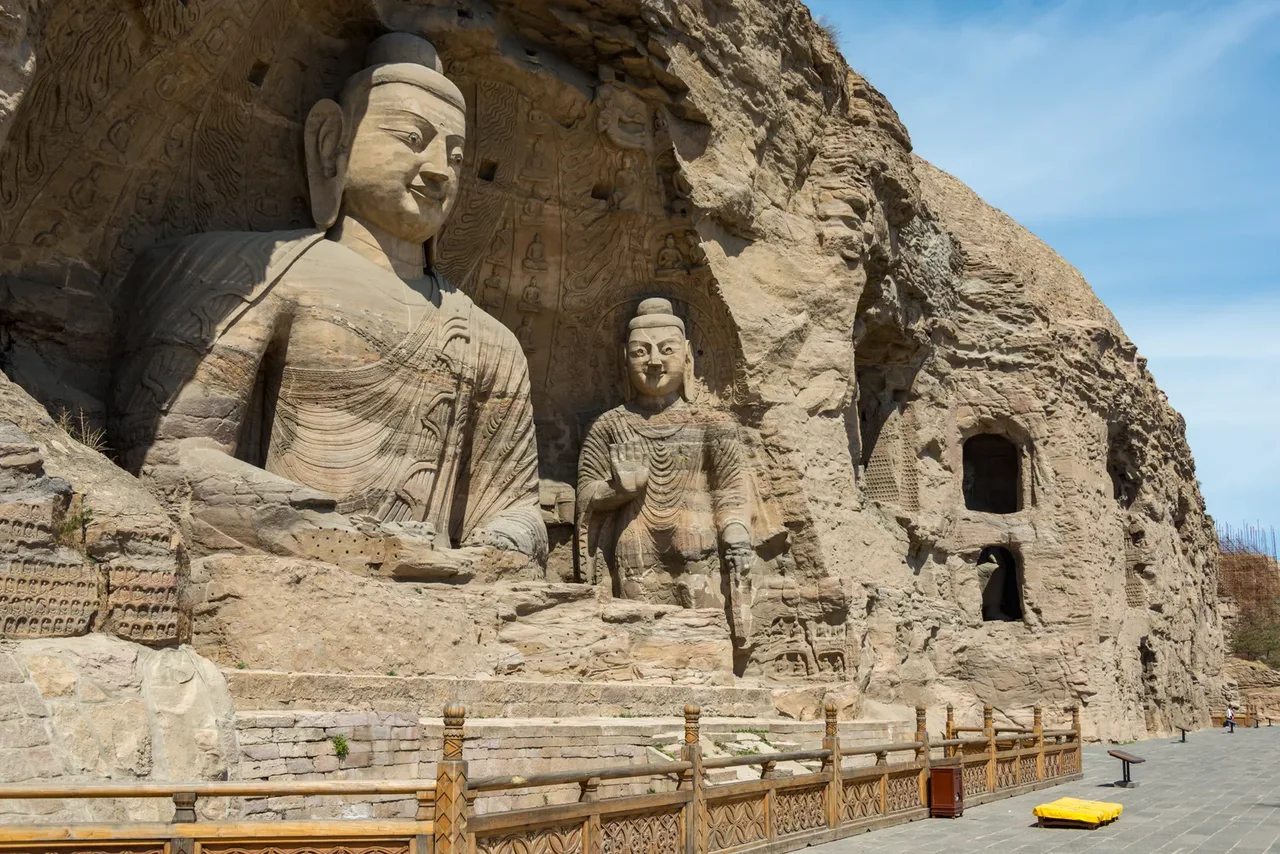
Photo: xiquinhosilva / Wikimedia Commons (CC BY 2.0)
How do Liao–Jin timber temples and the old wall fit — not just “more old buildings”?
Huayan and Shanhua are the old-city counterweight to the caves: wooden halls, sculpture, and courtyard rhythm from the Liao–Jin centuries, still inside walking distance of the wall. They are not twin generic temples. One honest morning can hold both; treating them as interchangeable background for a wall-top selfie wastes the city’s second depth.
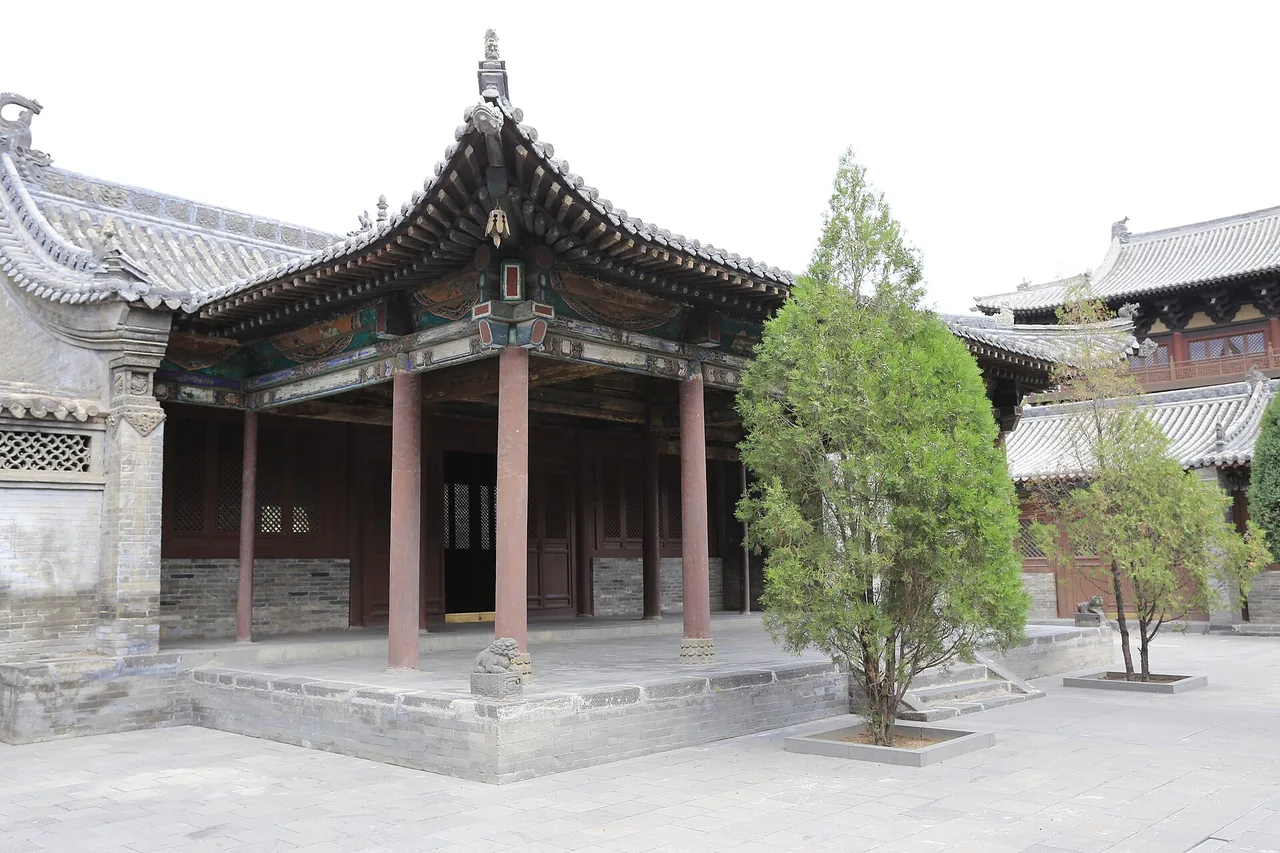
Photo: Zhangzhugang / Wikimedia Commons (CC BY-SA 3.0)
The wall itself is a rebuilt circuit with an inner fabric — half-day walking, not a souvenir script. Read wall + timber temples as one urban layer: how later dynasties re-staged Datong after the Northern Wei capital moved south. This overview only insists they share a frame with Yungang rather than competing as three disconnected “must-sees.”
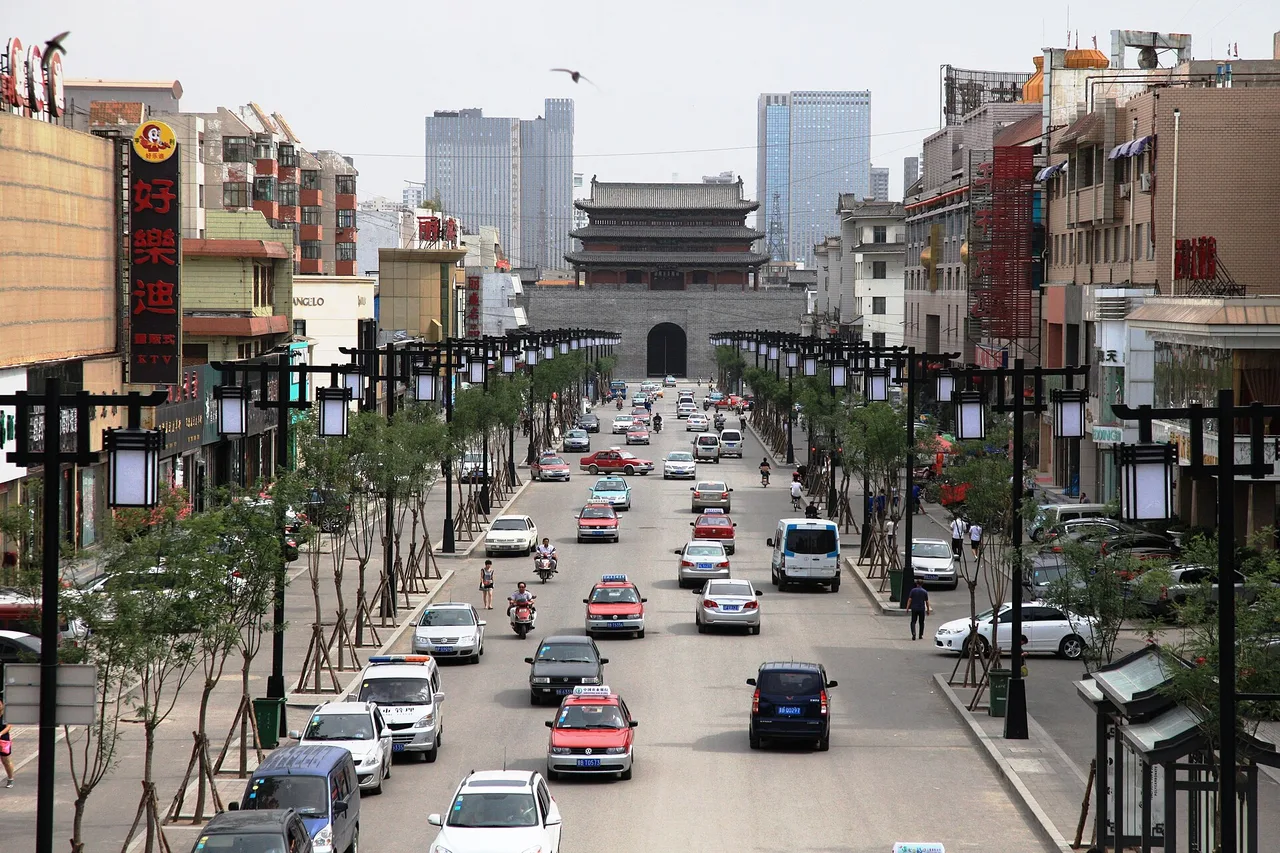
Photo: Chlukoe / Wikimedia Commons (CC0)
Where does the Hanging Temple sit — and why Black Myth is only a soft bridge?
The Hanging Temple (Xuankong Si) is in Hunyuan, south of Datong, on the Beiyue Hengshan scenic fringe. It is a day trip from a Datong base, not a walk from the old-city wall. The point is engineered precariousness on a cliff face — smaller in person than viral photos suggest, still worth the pairing judgment if your route already runs through northern Shanxi.
If you arrived because of Black Myth: Wukong, treat the game as a recognition bridge, not a walkthrough. The Stories piece Black Myth to Shanxi’s ancient architecture maps verifiable sites (including Yungang and the Hanging Temple) with official hours and tickets; this city overview stays city-first. Do not turn Datong into a boss checklist.
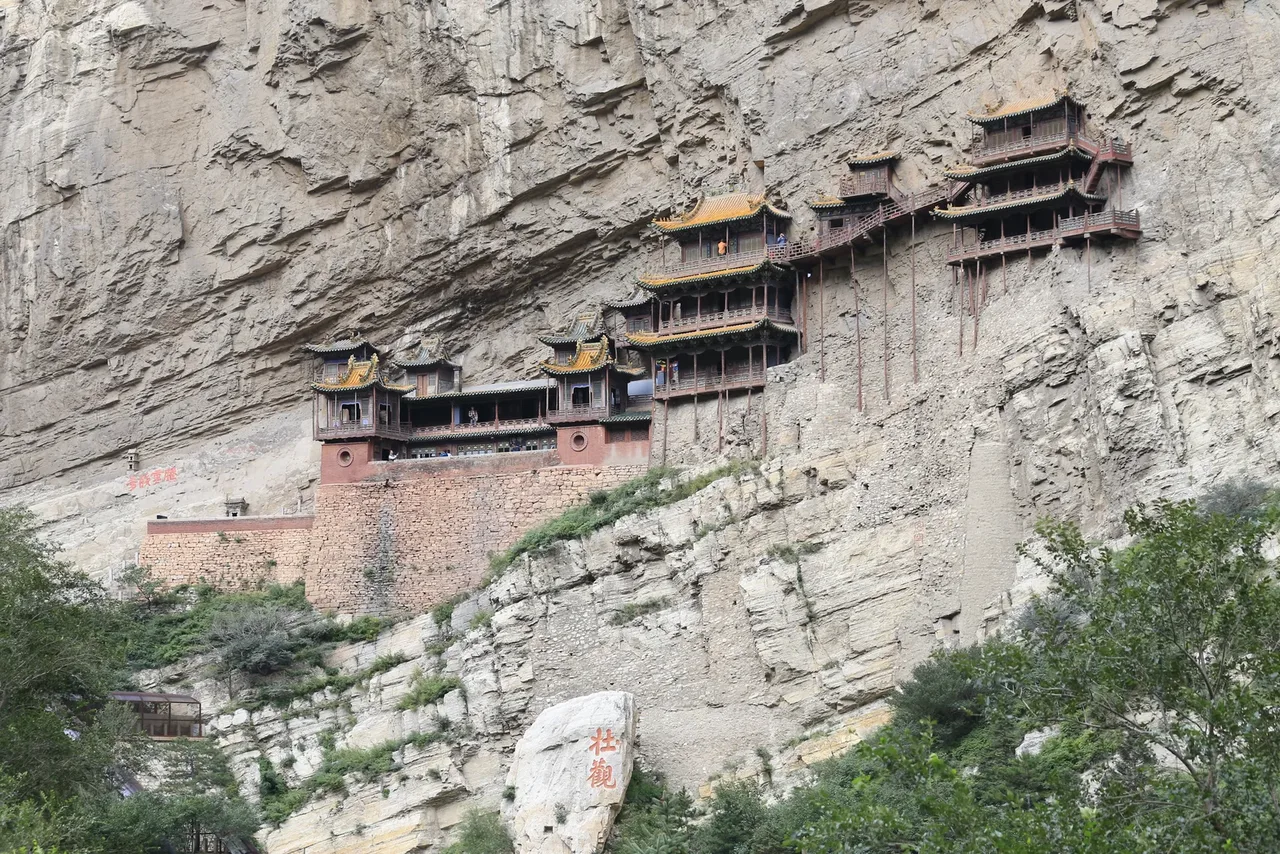
Photo: Zhangzhugang / Wikimedia Commons (CC BY-SA 3.0)
Hours, tickets, and how to move between the frames?
Checked October 2026 (Asia/Shanghai). Official scenic pages, Academy WeChat / mini-programs, and municipal notices win — re-confirm the morning you travel.
Yungang. About 08:30–16:30, stop entry after 16:30 after the 2026-10-08 autumn shift (山西发布 via 新黄河). Peak (1 Apr–31 Oct) about ¥120 adult / ¥60 child–student; book real-name 1–15 days ahead via “云冈石窟文旅” / “云冈研究院” mini-programs (dt.gov.cn reservation notice). Heritage: UNESCO. Last checked: October 2026.
Hanging Temple. Operator byhs.net.cn · English · ticket guide. Autumn check-in about 08:00–17:00; park + climbing commonly about ¥115 adult, climbing tickets capped — book via “北岳云游”. Last checked: October 2026.
Huayan / Shanhua. 2026 peak notices commonly list Huayan about 08:30–17:30, ¥50 / ¥25; Shanhua preferential about ¥40 / ¥20 after restored charging (Datong 12345). Prefer named scenic WeChat over third-party roundups. Last checked: October 2026.
Transit. High-speed arrivals usually land at Datong South (大同南站); Datong Station (大同站) sits closer to the old city. A municipal scenic through-bus has linked Datong South to Yungang in about 40 minutes at ¥10 when operating (dt.gov.cn). Old-city temples and wall are walk-and-taxi; Hanging Temple is a separate southbound day. Confirm through-bus and bus numbers the morning you go.
Who is this for — and who should skip?
Come if you want a judgment before the checklist: how caves, timber temples, wall, and cliff temple still explain each other. Skip if you only need a day-by-day schedule or a deep dive into one cave corridor — those are different articles. Start here so later stops do not float as disconnected attractions, then open sibling pieces when a frame needs a decision, not when a calendar slot needs filling.
More from Datong
- history / 7 min readAt Datong’s Yungang Grottoes, a day is worth it when you pace one corridor — Tan Yao Five Caves for scale, later chambers for detail — not a cave-number race.
- history / 7 min readFrom a Datong base, Hanging Temple near Hunyuan is worth a day trip when you book capped climbing tickets and treat it as one gorge stop — not a walk from the old city.
- culture / 7 min readAt Datong’s Huayan and Shanhua temples, choose by what you want to read — Liao sculpture and dual-axis halls, or a complete axial courtyard — not two generic old-temple twins.