Watch the Shave: Ordering Datong Knife-Cut Noodles Like a Local
Order Datong knife-cut noodles by watching the shave, naming broth and topping, then judging ribbon chew — old-city / wall–temple area anchors, soft meal windows, no invented shop closing minutes.
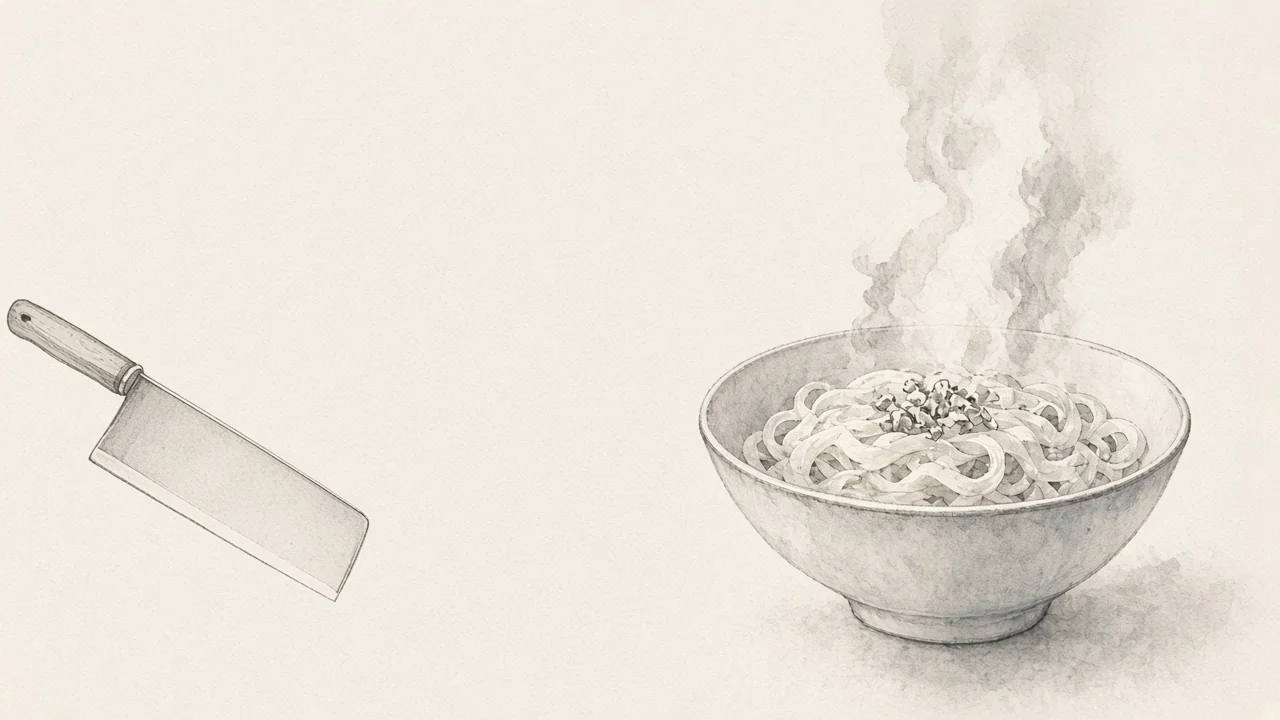
Order Datong knife-cut noodles (刀削面) by watching the shave, asking for firm ribbons in broth with a named topping, then judging chew at the table — thick middle, thin edge, spring not mush. Soft lunch-to-early-evening windows near the old city and wall–temple walk; confirm the board, never invent a single shop’s closing minute.
What should you order — broth, toppings, and ribbon cues?
Start with the noodle itself: dāoxiāo miàn means dough shaved from a block straight into boiling water, so each ribbon is irregular — thicker through the middle, thinner at the edge. That geometry is the point. Soft default: a bowl in clear or light meat broth with one named topping, not a stacked “all toppings” tourist plate.
Common toppings on Datong tables include minced pork sauce (ròu sàozi), tomato-egg, or simple greens — read the wall board and pick one. Ask for the firmness you want if the counter offers it (locals often prefer a springy bite, not limp strands). Soft spend: a filling bowl commonly lands in the low-to-mid tens of yuan; toppings and sides push the total up, not a fixed menu myth.
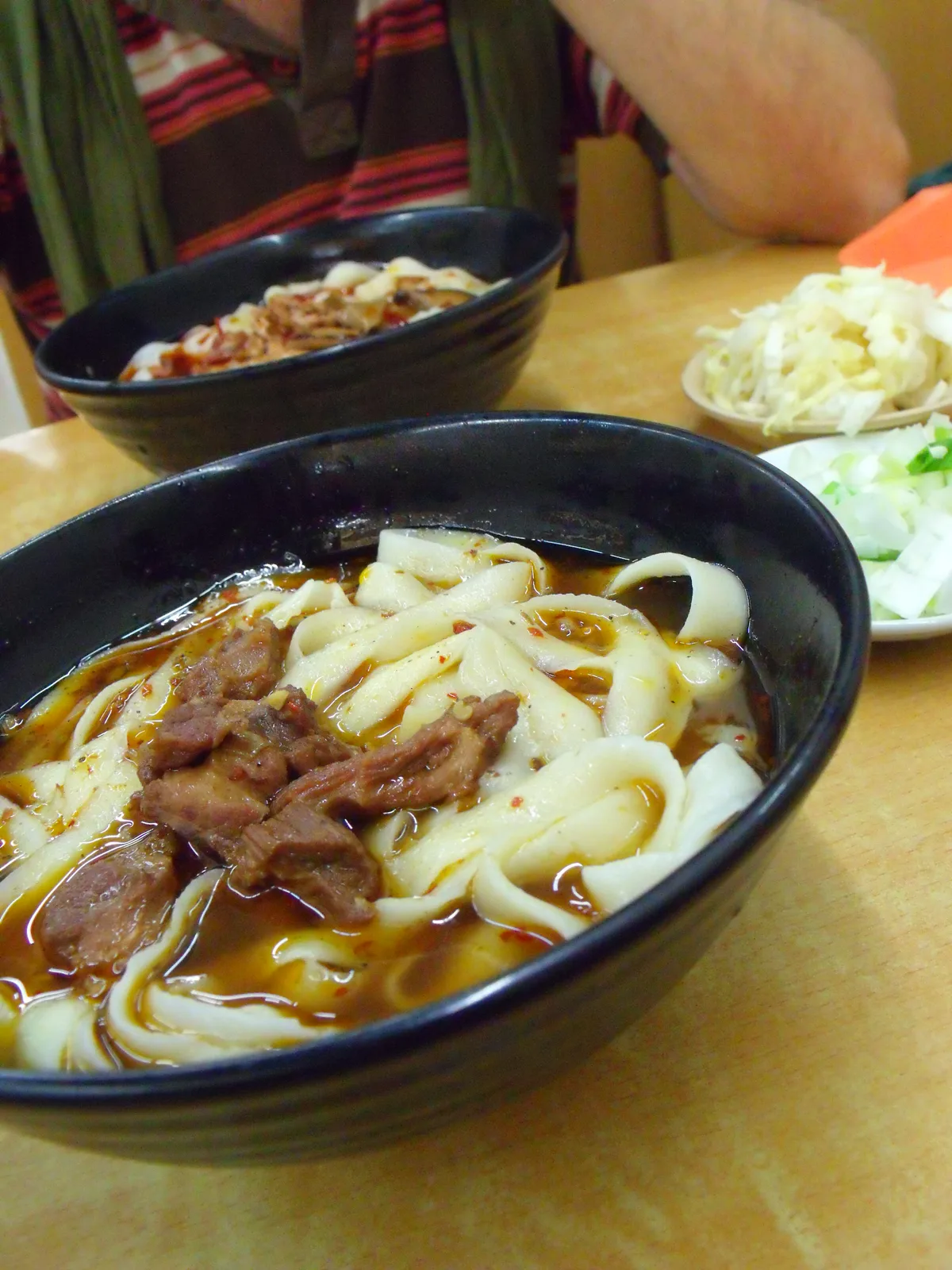
Photo: Seba Della y Sole Bossio / Wikimedia Commons (CC BY 2.0)
How do locals judge done-right vs soft mush?
Done-right ribbons keep a chew: the thick center resists the tooth, the thin edge softens first, and the whole strand still feels like wheat, not paste. Mush means the batch sat too long after the boil, or the dough was cut thick without enough cook — the bowl looks full but tastes flat.
Watch the shave when you can. Fresh strips flying into the pot matter more than décor. Soft judgment at the table: lift a few ribbons with chopsticks; if they break into soggy scraps with no spring, you ordered the wrong window or the wrong batch — not “all Shanxi noodles.”
How do you order at the counter like a local?
Order path, not a ranking list: point at the noodle type (刀削面), name broth or dry if offered, then one topping. Say the bowl size if the board lists small / large. Pay at the counter when that is the house rule; sit when the steam hits the table.
Do not invent English menu poetry. Soft phrases that work: yī wǎn dāoxiāo miàn (one bowl knife-cut), plus the topping name on the board. If you cannot read characters, point and confirm the price before they shave. This page is one city, one noodle — not a Shanxi noodle encyclopedia or a top-ten shop list.
When and where — old-city area anchors, not fake closing times?
Treat lunch through early evening as the usual soft window for a noodle table after a half-day walk. Many shops open for midday and stay useful into early evening; late-night clocks vary by door. No single official https hours page covers every Datong dāoxiāo shop (checked October 2026). Confirm the board or the steam line the day you go — never invent a single shop’s closing minute.
Neighborhood anchors, not GPS pins for every branch: lanes and casual tables inside and around the rebuilt old city, especially near the ancient city wall circuit and the short walks toward Huayan and Shanhua. Soft city frame for how food sits beside caves, timber halls, and wall: the Datong cultural landscape overview. High-speed arrivals usually land at Datong South (大同南站); Datong Station (大同站) sits closer to the old-city fabric — then walk or short taxi to a noodle door, not a scenic through-bus.
How should you pair noodles with a half-day wall or temple walk?
Pairing that works: morning rampart stretch or Huayan/Shanhua courtyard time, then a noodle bowl as the lunch reset — height and timber first, chew second. Soft thirty to forty-five minutes at the table is enough; you do not need a second noodle genre the same hour.
Pairing that fails: racing the full wall, both temples, and a “must-eat ranking” across the city before the ribbons even leave the pot. Leave Yungang and the Hanging Temple for other days; this page stays ordering path and texture at Datong tables.
Who is this for — and who should skip?
Come if you will watch the shave, name one topping, and judge ribbon chew at an old-city or wall–temple table. Skip if you want a full Shanxi noodle atlas, a restaurant top-ten, or invented shop clocks. Confirm the board, eat while the ribbons still spring, and let one honest bowl teach the city’s wheat — not a checklist of every northern strand.
More from Datong
- culture / 7 min readDatong reads clearest as Northern Wei caves, Liao-Jin timber temples, the old city wall, and the Hanging Temple fringe — a citywide frame before any day plan or single-site deep dive.
- history / 7 min readAt Datong’s Yungang Grottoes, a day is worth it when you pace one corridor — Tan Yao Five Caves for scale, later chambers for detail — not a cave-number race.
- history / 7 min readFrom a Datong base, Hanging Temple near Hunyuan is worth a day trip when you book capped climbing tickets and treat it as one gorge stop — not a walk from the old city.