Wall Height, Then Lanes: A Half-Day on Datong’s Ancient Circuit
Spend a half-day on Datong’s ancient city wall for rampart height and orientation, then walk the inner old-city fabric toward Huayan or Shanhua — not a generic old-street shopping guide.
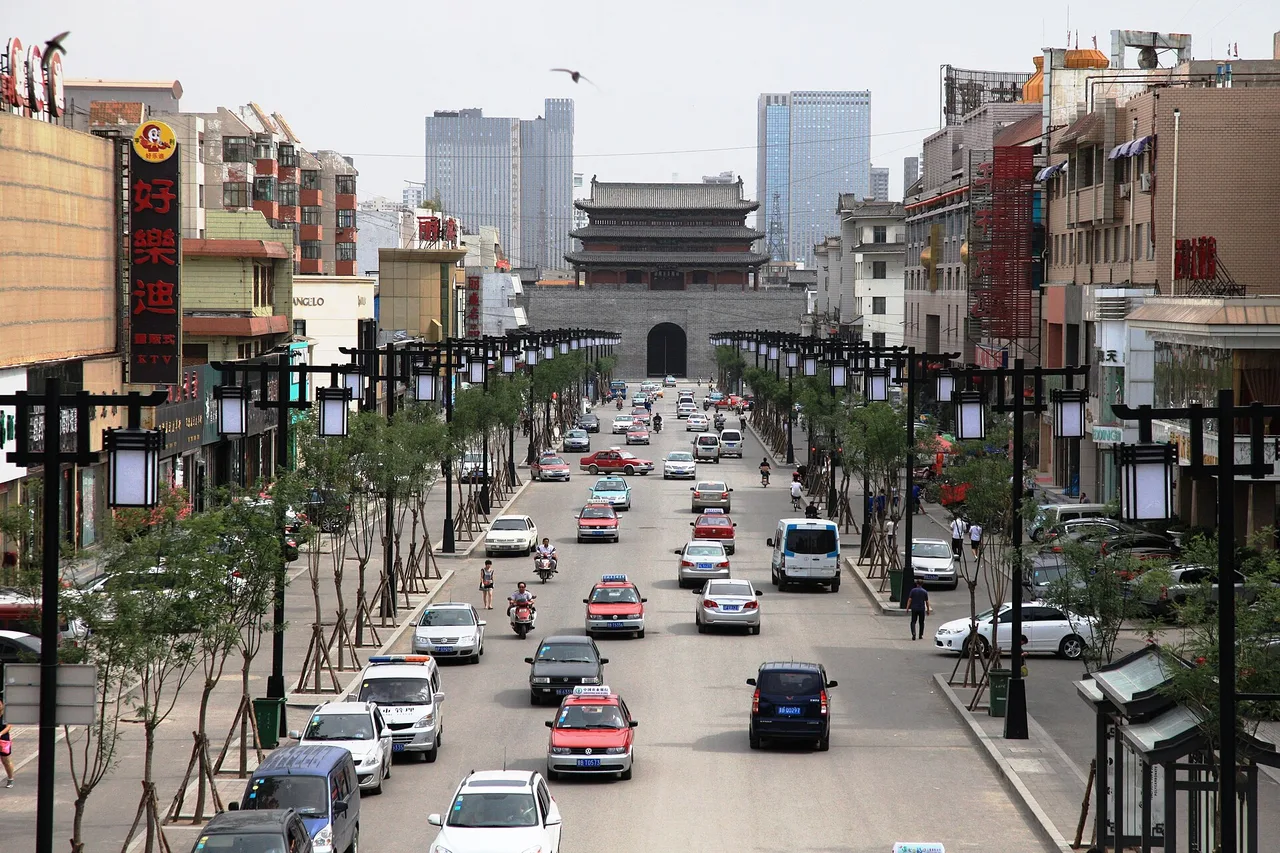
Spend a half-day on Datong’s ancient city wall (大同古城墙) by walking a gate-to-gate rampart stretch, then drop into the inner old-city fabric toward Huayan or Shanhua — not a souvenir street crawl. The rebuilt Ming circuit frames the old city; use the wall for height and orientation, then lanes and timber temples for the ground-level read.
How should you spend a half-day — wall first, then inner walk?
Start on the rampart while legs and light are fresh. Climb at a named gate, walk one honest stretch — corner tower to corner tower, or one gatehouse to the next — and use the height to place the old city: timber-roof clusters inside, newer towers outside. Then drop down and walk the inner fabric on foot toward Huayan Temple (华严寺) or Shanhua Temple (善化寺), letting lanes and courtyards finish the read the wall only opens.
Judgment: the wall is orientation and pace, not a shopping script. Racing the full ~7 km circuit in one go usually costs the linger that makes the half-day worth it. Soft city frame for how wall sits beside caves and cliff temple: the Datong cultural landscape overview.
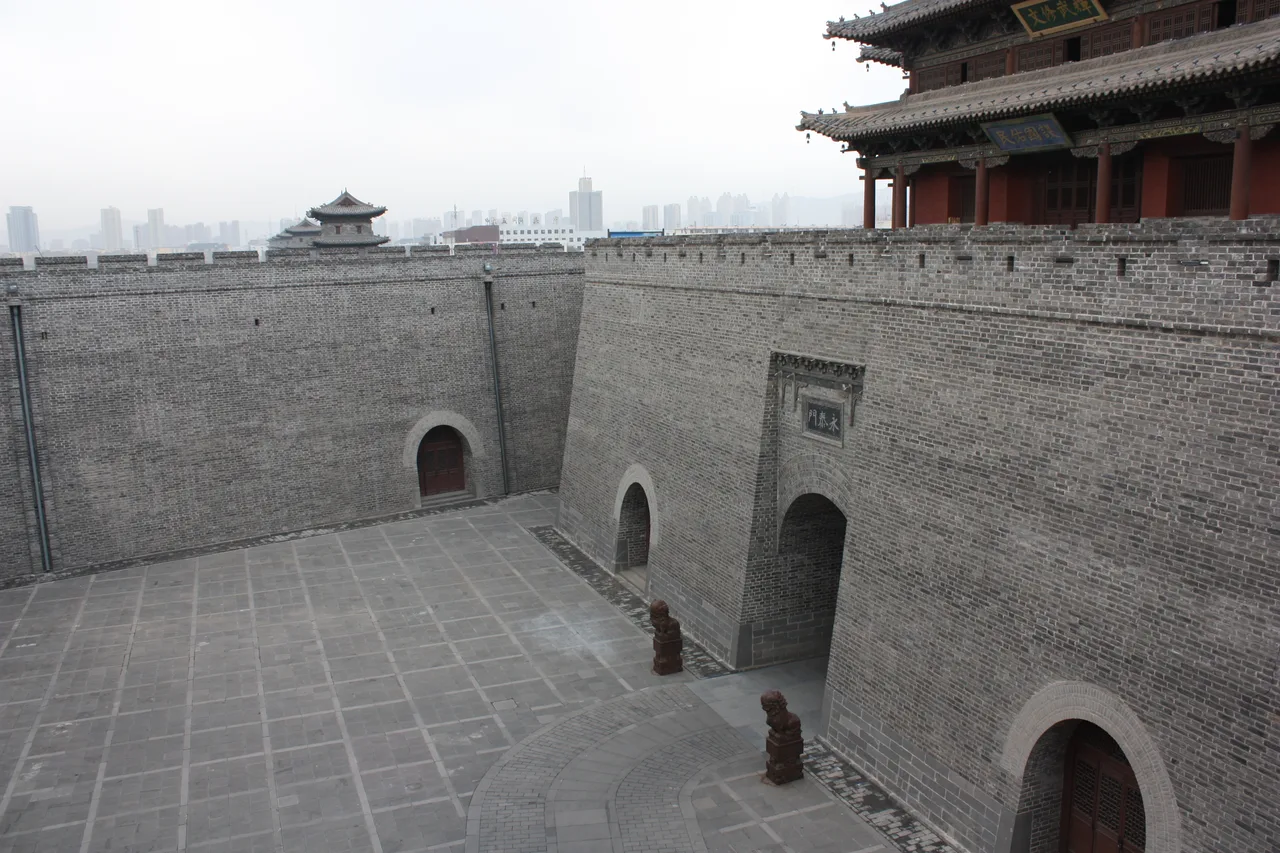
Photo: Kerryelaysahn / Wikimedia Commons (CC BY-SA 4.0)
What do you actually read on the rampart — not a shopping street?
You read a rebuilt Ming defensive circuit: wide brick walkway, crenellations, corner towers, and gatehouses that still teach how the city was staged after the Northern Wei capital moved south. Look inward for low grey roofs and temple compounds; look outward for ring roads and high-rises. The rebuild is honest brick — newer than the caves, clearer as urban frame than as “original Ming fabric.”
What you should not read here is a generic “old street” listicle. Souvenir lanes can sit under or beside the wall; they are connective tissue, not the half-day intent. If your camera only wants storefronts, you are already off this page’s question.
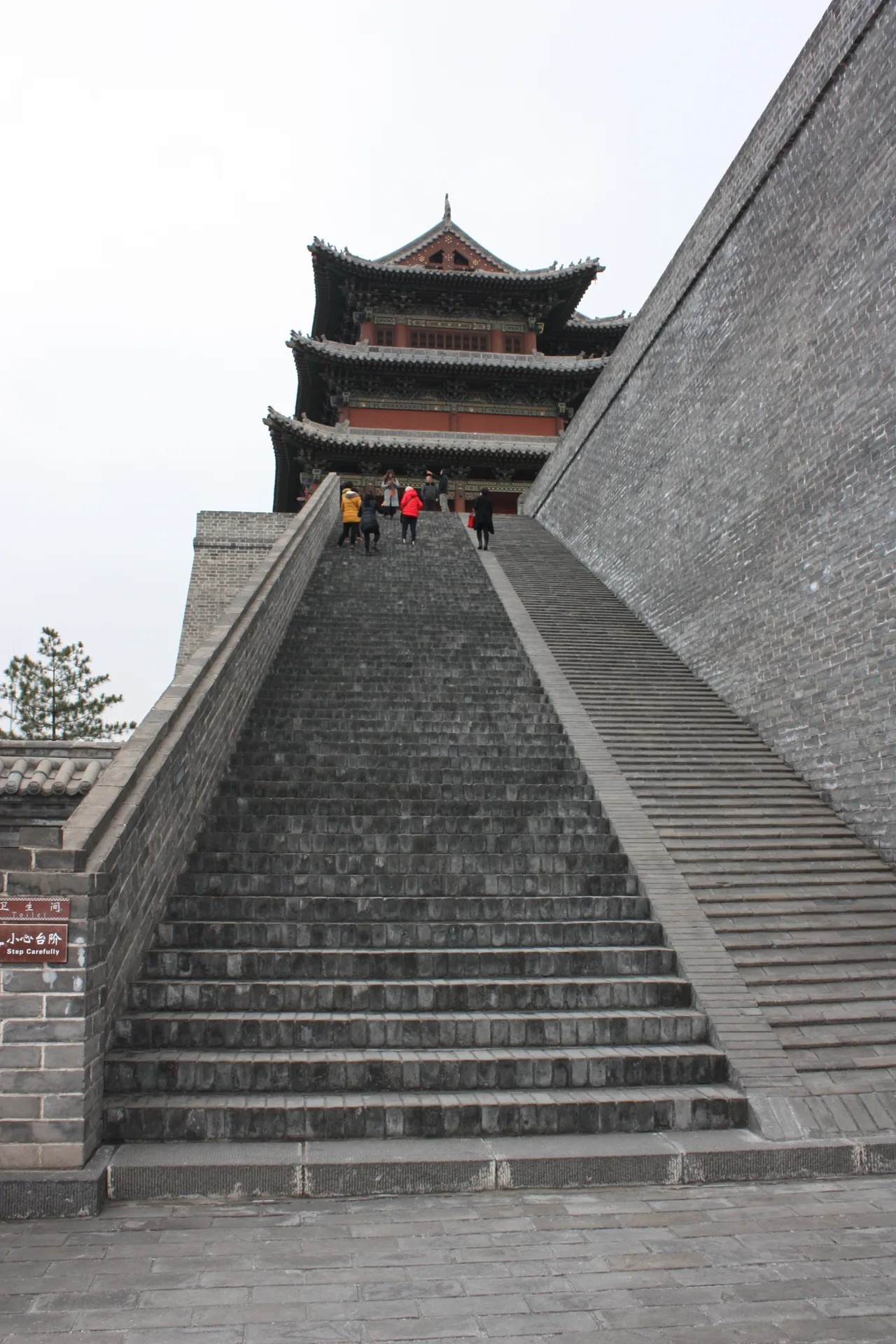
Photo: Kerryelaysahn / Wikimedia Commons (CC BY-SA 4.0)
How do you pair the wall with Huayan, Shanhua, and the lanes?
Pairing that works: morning rampart stretch, then a short walk into the old-city temples — choose/read Huayan vs Shanhua on the sibling page rather than treating both as twin checkboxes (Huayan vs Shanhua). Lanes between wall and halls are part of the half-day, not a shopping detour you must “complete.”
Pairing that fails: full wall loop plus both temples plus a taxi sprint to Yungang or a Hanging Temple gorge stop in the same daylight. Caves and cliff temple are other days — Yungang west of the wall, Hanging Temple on the Hengshan fringe south of the city. This page stays wall height plus inner fabric.
When should you go, and how long is honest?
Spring and autumn suit a first half-day: April–June and September–October for clearer air and kinder rampart walking. Midsummer works if you climb near open and leave the hottest noon for shaded lanes or a temple courtyard. Winter days are short; wind and ice on the walkway matter more than a calendar sticker.
Plan two to four hours: one rampart stretch, descent, and a temple-or-lanes finish. Do not bolt “whole wall” into the gap between lunch and a cave half-circuit — that usually costs the orientation the wall is for.
Hours, tickets, and how to get onto the wall?
Checked October 2026 (Asia/Shanghai). No stable dedicated official scenic website with a live ticket clock was found for this check — degrade to municipal / district reprints and named scenic-operator notices, then re-confirm on “大同古城墙景区” WeChat the morning you travel.
Tickets / free. From 11 May 2026, daytime (07:00–17:00) wall-wide free open was announced by the scenic operator and reprinted by Yungang District Government (checked October 2026). From 13 June 2026, the operator (大同古城文化旅游发展有限公司) announced full-circuit free open 07:00–22:00; that shift is reported via municipal media (e.g. 黄河新闻网大同 / Datong broadcast digests) rather than a stable official https page — treat it as current free baseline and confirm the morning you go. Earlier 2026 night flower-lantern paid zones are superseded when the full-free notice holds. High wind or rain can close sections.
Access. High-speed arrivals usually land at Datong South (大同南站); Datong Station (大同站) sits closer to the old city. From either overnight base, gates and temples are walk-and-taxi inside the wall fabric — no scenic through-bus required. Climb at a named gate (Yongtai / other posted entrances), walk one stretch, descend toward Huayan or Shanhua. Last checked: October 2026.
Who is this for — and who should skip?
Come if you want a half-day judgment: rampart height for orientation, then inner lanes and timber temples for the ground-level read — with free-open hours you can re-check. Skip if you only need a generic old-street shopping crawl, or if you planned to race the full wall, both temples, Yungang, and the Hanging Temple into one short afternoon. Climb for the frame, walk the short drop into the fabric, and let the rebuilt circuit earn its place by how it changes your pace — not by how many souvenir arches you can tick.
More from Datong
- culture / 7 min readDatong reads clearest as Northern Wei caves, Liao-Jin timber temples, the old city wall, and the Hanging Temple fringe — a citywide frame before any day plan or single-site deep dive.
- history / 7 min readAt Datong’s Yungang Grottoes, a day is worth it when you pace one corridor — Tan Yao Five Caves for scale, later chambers for detail — not a cave-number race.
- history / 7 min readFrom a Datong base, Hanging Temple near Hunyuan is worth a day trip when you book capped climbing tickets and treat it as one gorge stop — not a walk from the old city.