Donkey in a Pancake, Noodles on the Griddle: What to Eat in Changzhi
Changzhi's signature foods are Lucheng donkey-meat shuaibing, Zhangzi fried flatbread and Huguan mutton soup with a baked bun; order by name and point, and do not expect Western menus outside hotels.
Published
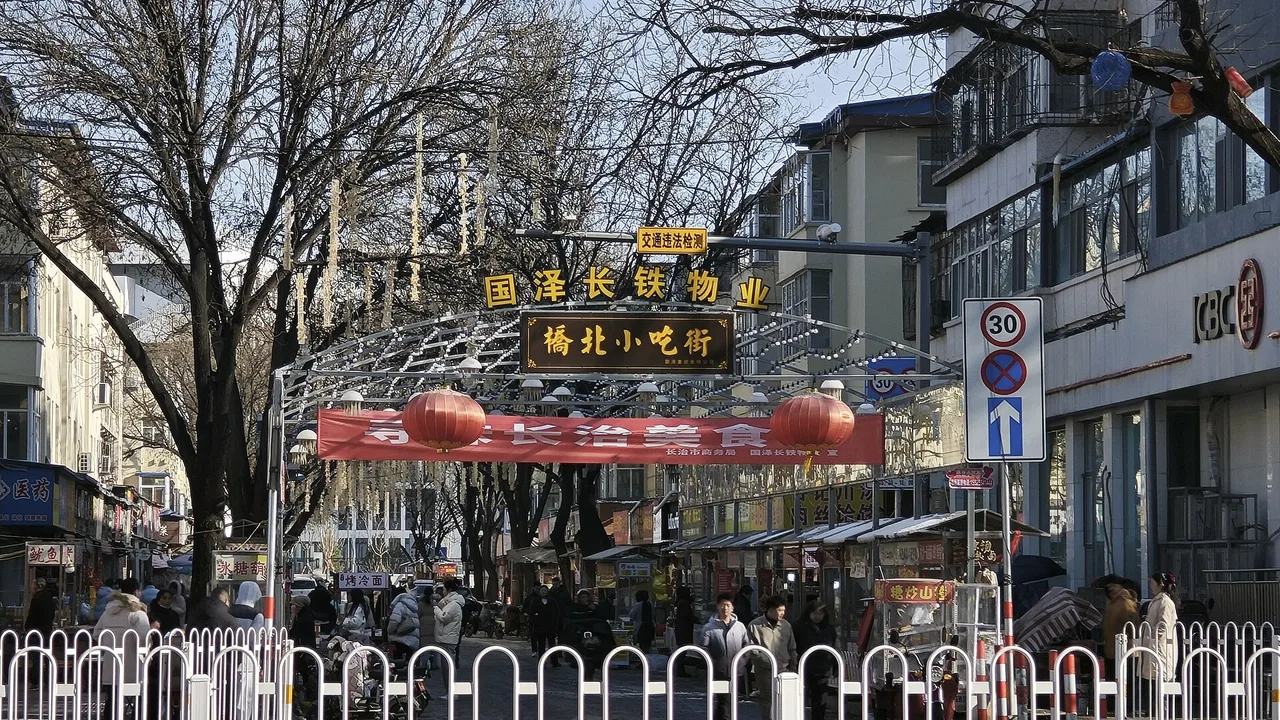
Changzhi's signature foods come from its counties. In Lucheng, cured donkey meat is rolled into a thin, stretched pancake called shuaibing (潞城驴肉甩饼). Zhangzi is known for chaobing (长子炒饼), shredded flatbread stir-fried with bean sprouts and meat. Huguan serves mutton soup (壶关羊汤) with a baked bun. Order by name, point at what others are eating, and do not expect English menus.
What is donkey shuaibing?
The old name for this region is Shangdang (上党), and Shangdang cured donkey meat (上党腊驴肉) is its best-known meat. It is cooked with spices, pressed and served cold in thin slices. In Lucheng it comes rolled in shuaibing (甩饼), a dough slapped and stretched until thin and layered, then crisped on a griddle. You get something like a flaky wrap, rich and slightly salty, eaten with your hands.
Order it as 驴肉甩饼 (lǘròu shuǎibǐng). Shops usually sell by the piece, and you can ask for more meat. If donkey is not for you, many places also sell plain shuaibing or other fillings. It is breakfast and lunch food. By evening many small shops are closed.
What is Zhangzi chaobing?
Zhangzi chaobing (长子炒饼, chǎobǐng) is a flatbread baked first, cut into strips and then stir-fried with bean sprouts, cabbage and usually pork, finished with vinegar and chilli if you want it. The texture sits between noodles and bread: chewy, soaked in sauce, very filling. It is the lunch you will most likely eat on a Zhangzi temple day. In Zhangzi itself, almost every small restaurant does it. In Changzhi city, look for shops with 长子炒饼 on the sign.
Ask for 加鸡蛋 (add egg) or 加肉 (add meat). For less heat, say 不要辣 (no chilli).
What is Huguan mutton soup?
Huguan yangtang (壶关羊汤) is mutton and bone broth with offal or meat, often eaten in the morning with a baked bun (火烧, huǒshāo) torn into the bowl. It is a cold-weather food, and it makes sense after a canyon day in Huguan. Chilli oil and coriander go in at the table. If you do not want offal, ask for 只要肉 (meat only).
What else is worth trying?
- Noodles. Changzhi is part of Shanxi's noodle country. Knife-cut and hand-pulled styles are everywhere. The Datong knife-cut noodle guide covers ordering, and it works here too.
- Mature vinegar (老陈醋) is on every table, as anywhere in Shanxi. Add a little to chaobing and noodles.
- Cold jelly (凉粉) and small buns from street stalls make easy snacks between temples.
How do you order with little Chinese?
Small Changzhi restaurants rarely have English menus, and many order at a counter or from a board on the wall. Three things help:
- Save the Chinese names above on your phone and show them.
- Point at another table's dish. People are used to it.
- Pay by WeChat Pay or Alipay. Foreign cards now link to both, but carry a little cash for village stalls.
Prices at these county snack shops are generally low. We are not listing restaurants or prices because shops change and we could not verify them. Choose places full of locals at mealtimes.
When should you eat what?
Shuaibing and mutton soup are best as breakfast or early lunch. Chaobing is lunch or dinner. If you are on the road in Pingshun, the village farmhouse meal (农家饭) is noodles or a simple set, fixed by the cook. For a day-by-day plan, see the three-day plan.
Cover photo: 1969社论 / Wikimedia Commons (CC BY-SA 4.0)
More from Changzhi
- history / 6 min readChangzhi Guanyin Hall is a Ming hall on the city's edge packed with about 500 painted clay figures hung on walls and beams; it closed for maintenance in June 2026, so confirm it is open before you go.
- history / 5 min readChongqing Temple and Faxing Temple in Zhangzi county are two small hillside temples south-west of Changzhi with outstanding Song painted sculpture, both linked to Black Myth: Wukong; see them together in half a day by car.
- history / 5 min readAlong the Zhuozhang River in Pingshun and Lucheng, a string of tiny Tang to Song timber temples sits 10 to 20 minutes apart; a seven-day joint pass started in October 2026, but go by car and expect some caretaker phone calls.