Eight National Sites, One River Road: Pingshun's Zhuozhang Valley Temples
Along the Zhuozhang River in Pingshun and Lucheng, a string of tiny Tang to Song timber temples sits 10 to 20 minutes apart; a seven-day joint pass started in October 2026, but go by car and expect some caretaker phone calls.
Published
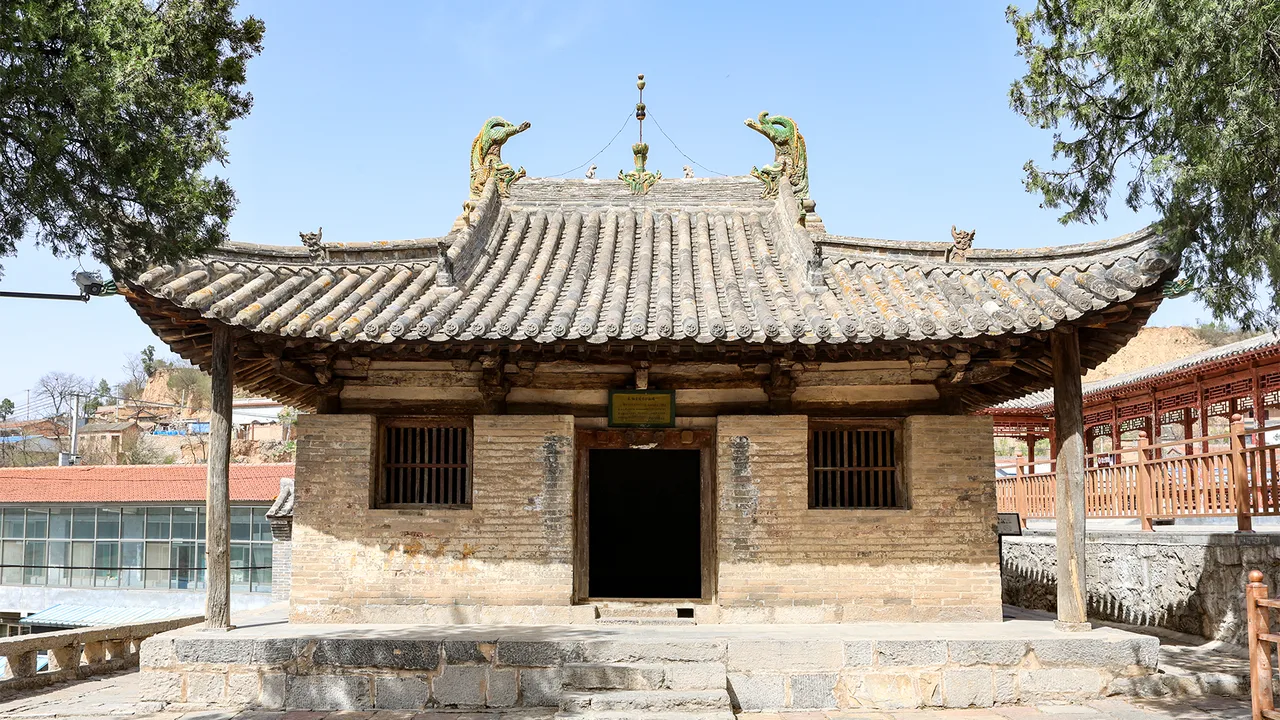
In Pingshun county, east of Changzhi, the Zhuozhang River (浊漳河) winds past a string of small timber temples from the Tang, Five Dynasties and Song. Most are 10–20 minutes apart by road. A seven-day joint pass for ten sites began in October 2026. Go by car, start early, and expect to phone a caretaker or two.
Why is this valley special?
China has only a handful of timber buildings older than about 960. Several of them are here, on the same river road, in farming villages, without a ticket hall or a souvenir row. That is the appeal and the challenge. If old bracket sets and roof lines excite you, this is one of the great days in Shanxi. If they do not, one hall will look much like the next, and the Taihang canyon is a better use of the day.
Which halls should you prioritise?
If time is short, these four are enough:
- Tiantai An (天台庵) — a tiny, nearly square hall on a terrace above the village, usually counted among China's few surviving Tang timber buildings. It takes ten minutes to see and you will remember it for a long time.
- Yuanqi Temple (原起寺) — a small hilltop compound with a Song brick pagoda. Lucheng and Pingshun share the valley here.
- Dayun Yuan (大云院) — the Five Dynasties Amitabha Hall still holds Five Dynasties murals. Visitors who have done the full loop often call it the best value of the day.
- Longmen Temple (龙门寺) — up a side valley. One courtyard holds buildings from six dynasties, Five Dynasties to Qing. Give it an hour and a half.
With more time, add Jiutian Shengmu Temple (九天圣母庙), Fotou Temple (佛头寺), Chunhua Temple (淳化寺), Huilong Temple (回龙寺) and the Xia Yu shrine (夏禹神祠). Most are smaller and less staffed.
How does the joint pass work?
Pingshun and Lucheng launched a Pingshun–Lucheng national heritage pass for the October 2026 holiday. It covers ten national key sites: Yuanqi Temple (with Xin'an Yuhuang Temple), the Lizhuang Confucian and Martial temples in Lucheng, plus Tiantai An, Dayun Yuan, Fotou, Chunhua, Huilong, the Xia Yu shrine and Longmen Temple in Pingshun. It is valid for seven days. The launch report did not give a price and we could not find one, so ask at the first ticketed site. Before the pass, travellers reported individual tickets of about 10–20 yuan at the bigger sites, with the rest free.
Checked October 2026 (Asia/Shanghai). This is a new scheme, so details may shift. Official notices and what the site staff tell you win.
What is it like on the ground?
Several halls are locked when no visitors are around. A phone number for the caretaker (文保员) is usually posted on the gate. Call, wait a few minutes, and someone comes with a key. A translation app or a short message in Chinese helps. Some sites close for a long lunch, so travellers recommend leaving Changzhi before 9:00 and doing Tiantai An and Yuanqi in the morning. Toilets are basic or absent at several sites. Carry water and snacks; a farmhouse lunch near Dayun Yuan is the usual stop.
How do you get there?
Drive or hire a car and driver from Changzhi. The common route heads east along provincial road S324 to Lucheng and into Pingshun, then visits the halls in a line: Tiantai An, Yuanqi, Dayun Yuan, Fotou, Chunhua, Longmen. The full set takes seven to eight hours with lunch. There is no practical public bus loop for this.
How does it fit with the rest of Changzhi?
Pingshun is on the way to nothing else and the day is long, so give it a full day. Some people sleep in a Pingshun guesthouse and continue to the Taihang canyon. If you have already seen the Liao halls of Huayan and Shanhua in Datong or the Yingxian pagoda, this valley shows you what came before them. Sequencing is in the three-day plan.
Cover photo: Windmemories / Wikimedia Commons (CC BY-SA 4.0)
More from Changzhi
- history / 6 min readChangzhi Guanyin Hall is a Ming hall on the city's edge packed with about 500 painted clay figures hung on walls and beams; it closed for maintenance in June 2026, so confirm it is open before you go.
- history / 5 min readChongqing Temple and Faxing Temple in Zhangzi county are two small hillside temples south-west of Changzhi with outstanding Song painted sculpture, both linked to Black Myth: Wukong; see them together in half a day by car.
- nature / 5 min readThe Taihang Grand Canyon in Huguan county bundles Baquanxia, Hongdouxia and Qinglongxia on one 100-yuan, two-day ticket; first-gate entry is free from 15 October to 30 November 2026, but buses, boats and cableways still cost extra.