Three Frames, Not a Checklist: How to Read Yangzhou's Cultural Landscape
Yangzhou reads clearest as lake-gardens, Huaiyang table, and Grand Canal salt-merchant fabric — a citywide frame before any day plan or single-garden deep dive.
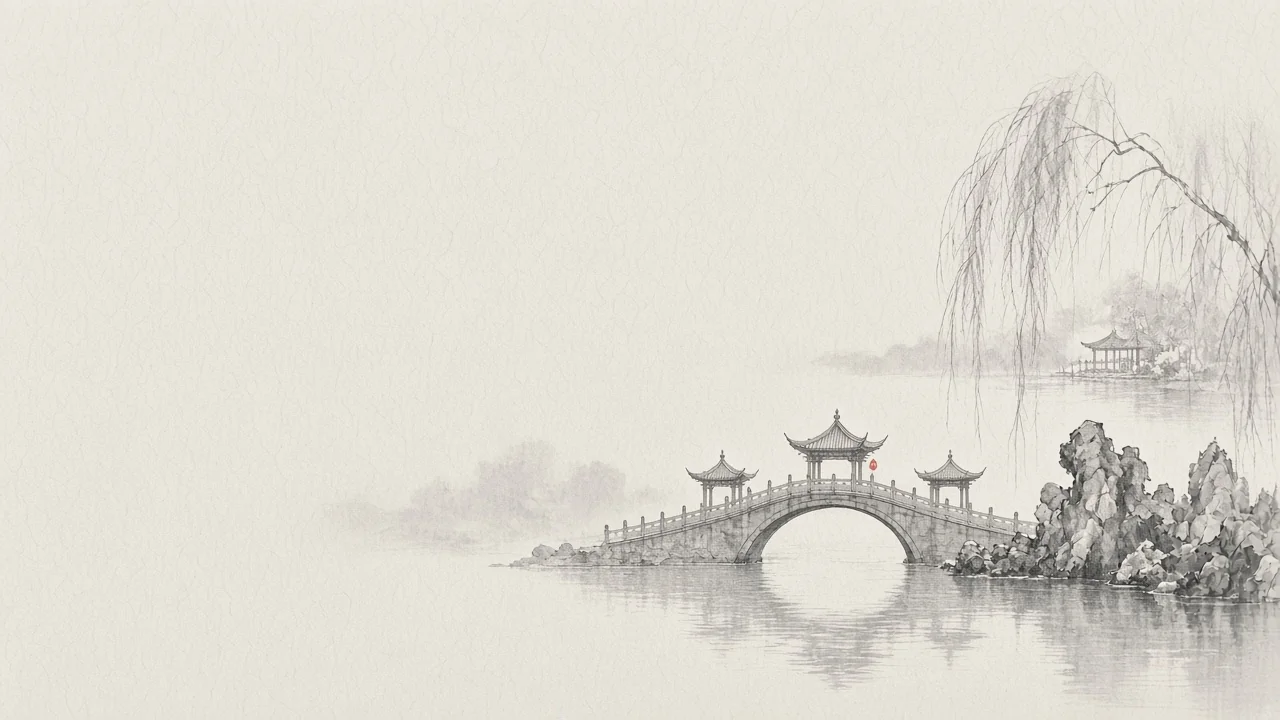
Yangzhou’s cultural landscape reads as three frames: Slender West Lake with its merchant gardens (Ge and He), a Huaiyang table recognized when UNESCO named the city a Creative City of Gastronomy in 2019, and the Grand Canal fabric inscribed as World Heritage in 2014. Use this as a reading map — not a day plan or a single-garden deep dive.
What are the three frames you should hold first?
Hold lake-gardens, table, and canal as one map. Slender West Lake (瘦西湖, Shòuxī Hú) is the public lake ribbon — willows, bridges, pavilions strung along a narrow watercourse that Qing salt wealth helped dress for imperial visits. Beside it sit the private merchant gardens: Ge Garden (个园) for four-season rockeries, He Garden (何园) for late-Qing covered corridors. The Huaiyang (淮扬) table is not a side dish; knife work, clear broths, and morning-tea discipline are how the city still argues for refinement. The third frame is the canal and salt-merchant fabric — Dongguan Street (东关街) and the ancient Grand Canal corridor — where warehouses, gates, and shopfronts still show how grain and salt money moved.
Miss one frame and the city collapses into a single postcard or a fried-rice myth. Hold all three and the later pieces in this series have somewhere to land.
Why do lake-gardens matter more than a photo checklist?
Yangzhou’s gardens are not Suzhou twins with different names. The lake is a linear stage built for pleasure boats and shoreline procession; the private gardens are merchant houses arguing for taste after the salt monopoly paid the bills. Per the scenic-area management at shouxihu.com (checked October 2026), Slender West Lake is a national 5A scenic area whose Qing Kangxi–Qianlong lakeside ensemble still frames Xu Garden, Five-Pavilion Bridge, and Twenty-Four Bridges as named anchors — not a random bridge scavenger hunt.
Ge and He repay slow walking, not stamp collecting. Save the boat-versus-walk decision for the Slender West Lake piece, and the rockery-versus-corridor choice for the garden essays. Here the only judgment you need is this: lake and gardens are one cultural economy, funded by the same canal wealth that built the dining rooms.
How does Huaiyang fit the landscape — not just the menu?
Huaiyang is one of China’s four classical cuisines, and Yangzhou is its hometown claim. UNESCO lists Yangzhou in the Creative Cities Network for gastronomy (designation 2019; still listed on unesco.org/en/creative-cities/yangzhou, checked October 2026). That designation does not tell you what to order at lunch. It does tell you the city’s self-image: craft at the table is civic culture, not tourist garnish.
Read the landscape through texture — scalded dry tofu at morning tea, clear soups, precise knife work — rather than through “Yangzhou fried rice” as a city brand. Morning tea and one serious dinner are separate intents; this overview only insists that the table belongs beside the lake, not after it as a reward sticker. Soft follow-ons: morning tea ordering and what one Huaiyang dinner should deliver.
What does the canal / salt-merchant fabric still show?
UNESCO inscribed the Grand Canal as World Heritage in 2014 (whc.unesco.org/en/list/1443, checked October 2026); the serial property includes canal sections through this region. Yangzhou sat at the junction of the Yangtze and the inland canal system; Ming–Qing salt merchants turned that geography into gardens, halls, and a dense urban fabric.
What you still see at street scale is not a museum diorama. Dongguan and the ancient canal corridor keep shop-house rhythm, temple compounds, and water edges that reward a half-day walk more than a souvenir crawl. Treat that walk as the third frame — how money and taste moved — and leave the route detail to the Dongguan / Grand Canal piece.
When should you go, and how long to give each frame?
Spring and autumn are the kinder windows for a first reading: March–May for willows and blossom pressure along the lake, September–November for clearer air and fewer sticky days. Tourism and scenic materials commonly treat those spans as peak lake season (ticket calendars often price March–May and September–October higher); verify current hours and tickets on named official pages before you go — for the lake, start at shouxihu.com (checked October 2026). This citywide piece does not invent venue opening times.
Give each frame real time rather than one exhausted day: a lake half-day (boat or walk), a separate garden morning, a morning-tea or dinner slot that is not squeezed between buses, and a canal half-day. The three-day sequence comes last in the series for a reason; do not rush it into this overview.
Who is this for — and who should skip?
Come if you want a judgment before the checklist: how lake, table, and canal still explain each other. Skip if you only need a day-by-day schedule or a deep dive into one garden’s stones — those are different articles. Start here so later stops do not float as disconnected attractions, then open the sibling pieces when a frame needs a decision, not when a calendar slot needs filling.
More from Yangzhou
- nature / 7 min readAt Yangzhou’s Slender West Lake, boat for the water stage and walk for Five-Pavilion Bridge and Twenty-Four Bridges underfoot — admission is not a boat ticket.
- history / 7 min readAt Yangzhou’s Ge Garden, walk the four-season rockeries as one sequence and stop when a season earns a judgment — not every pavilion as a stamp.
- history / 7 min readAt Yangzhou’s He Garden, walk the covered corridors for late-Qing residential drama — and choose Ge only when four-season rockeries are the question.