Corridors First: When He Garden Beats Ge — and When It Doesn’t
At Yangzhou’s He Garden, walk the covered corridors for late-Qing residential drama — and choose Ge only when four-season rockeries are the question.
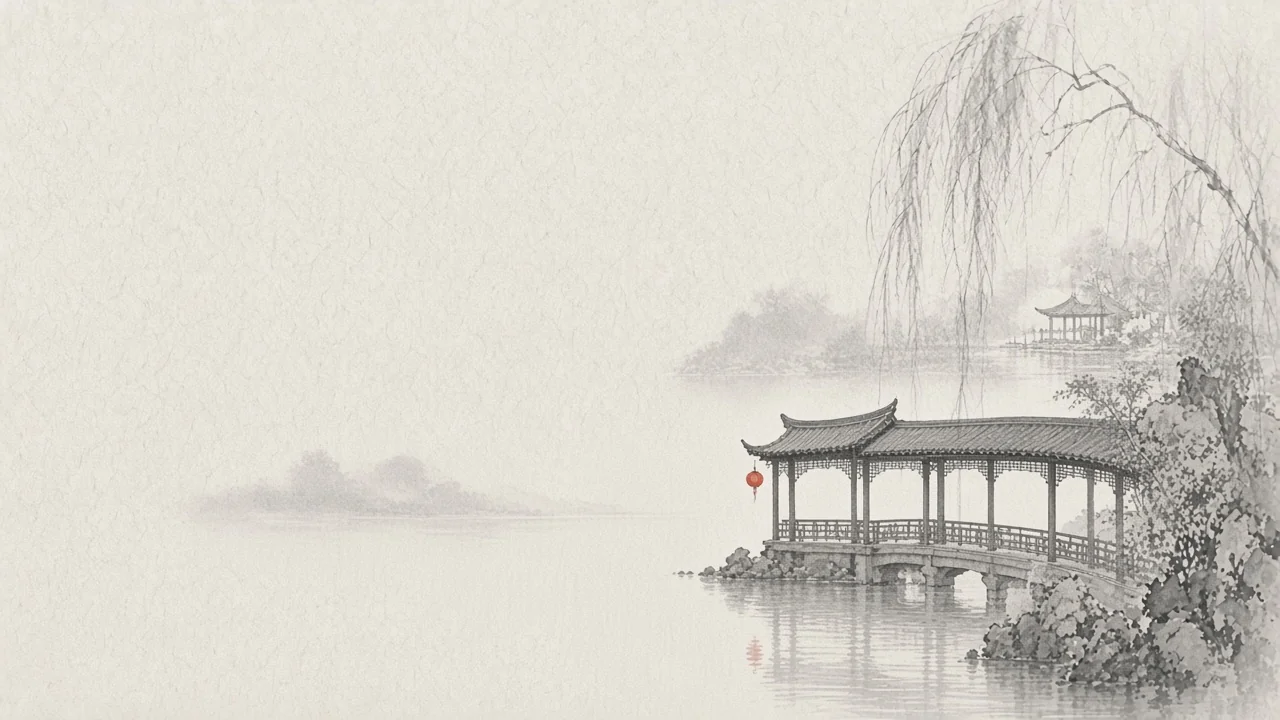
At Yangzhou’s He Garden (何园), the roughly 1,500-meter covered corridors are worth it when you want rain-proof, two-level walks through a late-Qing residence — not another rockery tour. Choose He for corridors and residential drama; choose Ge Garden for four-season stone. Leave both gardens for separate mornings.
What do the covered corridors actually give you?
The hard claim is the double-deck 复道回廊 — a continuous covered walk that links halls, courtyards, and garden courts so you can move upstairs or downstairs without wet shoes. Scenic and Bendibao materials commonly cite about 1,500 meters of that network; garden historian Luo Zhewen (罗哲文) called the place “晚清第一园” (first garden of the late Qing) for that late residential density, not for a trophy rockery. On a rainy morning the corridor is the visit: you stay under roof, change height, and watch courtyards shift through openings rather than racing named pavilions in the open.
Secondary anchors repay a slower second loop, not a first sprint: Pianshi Mountain Lodge (片石山房) for the Shitao-attributed rockery often billed as a rare surviving stack; Water Heart Pavilion (水心亭) as a stage set in the pool; and the patterned flower windows (什锦花窗) that frame borrowed views. Treat those as punctuation after the corridor has earned its judgment.
Why did a resigned official build this residence-garden?
He Zhidao (何芷舠, also He Weijian 何维键) built the estate after resigning as a daotai in the Guangxu years — commonly dated around 1883 — and named it Jixiao Mountain Villa (寄啸山庄). Official site copy at he-garden.net (checked October 2026) still presents it as a late private residence-garden and national key cultural relic, later opened as a scenic area. Salt-and-official wealth paid for domestic theater: linked floors, a water stage, family halls — taste after office, not a Ming rockery revival.
That late-Qing residential logic sits beside the lake ribbon and canal fabric in the citywide reading frame. He is the corridor deep dive; it is not a second Slender West Lake, and it is not a twin of Ge’s stone seasons.
When should you choose He — and when Ge?
Choose He when your question is covered walks, rain-day comfort, and late residential drama — two levels, continuous roof, courtyards read through openings. Choose Ge when your question is the four-season rockery sequence underfoot; that walk lives in the Ge Garden piece. Same city, same merchant-garden economy, different judgments.
Do not force both into one sweaty afternoon. If you only have one garden morning, pick the question you actually care about; if you have two, give each its own half-day and keep the lake boat-versus-walk decision for the Slender West Lake piece. Stacking Ge and He as “two gardens done” is checklist tourism with better branding.
When should you go, and how long?
Spring and autumn are kinder for first walks: March–May and September–November. Midsummer works early; the upper corridor in midday heat is the usual regret. Plan about one and a half to three hours — enough to walk the main corridor loop twice (ground then upper if open), stop at the water pavilion once, and leave without racing every hall label.
Night programs (often billed as 何堂月色) are a separate product from daytime admission. If you only have one daylight window, spend it on the corridors, not on stacking day and night into one exhausted visit.
Hours, tickets, and how to get there?
Address: No. 66 Xuningmen Street (徐凝门大街66号), Guangling District — near Pishi Street and the ancient canal edge. Phone commonly listed: 0514-87239626. Official site: he-garden.net (checked October 2026).
Daytime tickets for 2026 follow Yangzhou’s municipal peak / off-season schedule for state-run sites: He Garden peak ¥48, off-season ¥30, as reported in Yangzhou Bendibao’s 2026 ticket guide (yz.bendibao.com, updated 9 October 2026). Peak months are commonly listed as February–October; off-season January, November, and December — confirm the month you travel on the WeChat account “何园” or at the gate before you pay. Concession and free-entry rules (students, ages 60–64 half, 65+ and other listed groups free) appear on the same Bendibao guide; recheck WeChat the morning you go.
Day hours commonly listed for 2026 by season: 07:30–17:15 (January–February and December), 07:30–17:30 (March–May and September–November), 07:30–18:00 (June–August), with ticket sales and entry stopping 30 minutes before close (yz.bendibao.com and the companion hours guide yz.bendibao.com/tour/2026813/30967.shtm, checked October 2026). Real-name booking via the scenic WeChat account or mini-program; bring ID. Bus 19 stops at 七二三所; walk a few minutes to the gate.
Who is this for — and who should skip?
Come if you want one corridor judgment — rain-proof height change, late residential fabric, an explicit Ge-versus-He choice. Skip if you only need a rockery photo from a tour sprint, or if you came for four-season stone first — that is Ge’s question, not this one. Start under the covered walk, finish when the upper loop has earned its contrast, and leave the checklist of halls uncollected.
More from Yangzhou
- culture / 7 min readYangzhou reads clearest as lake-gardens, Huaiyang table, and Grand Canal salt-merchant fabric — a citywide frame before any day plan or single-garden deep dive.
- nature / 7 min readAt Yangzhou’s Slender West Lake, boat for the water stage and walk for Five-Pavilion Bridge and Twenty-Four Bridges underfoot — admission is not a boat ticket.
- history / 7 min readAt Yangzhou’s Ge Garden, walk the four-season rockeries as one sequence and stop when a season earns a judgment — not every pavilion as a stamp.