Canal Fabric, Not Souvenirs: A Half-Day on Dongguan Street and the Ancient Canal
Spend a half-day on Yangzhou’s Dongguan Street and ancient Grand Canal as a salt-merchant fabric walk — fish-bone lanes to the ferry edge — not a shopping-street checklist.
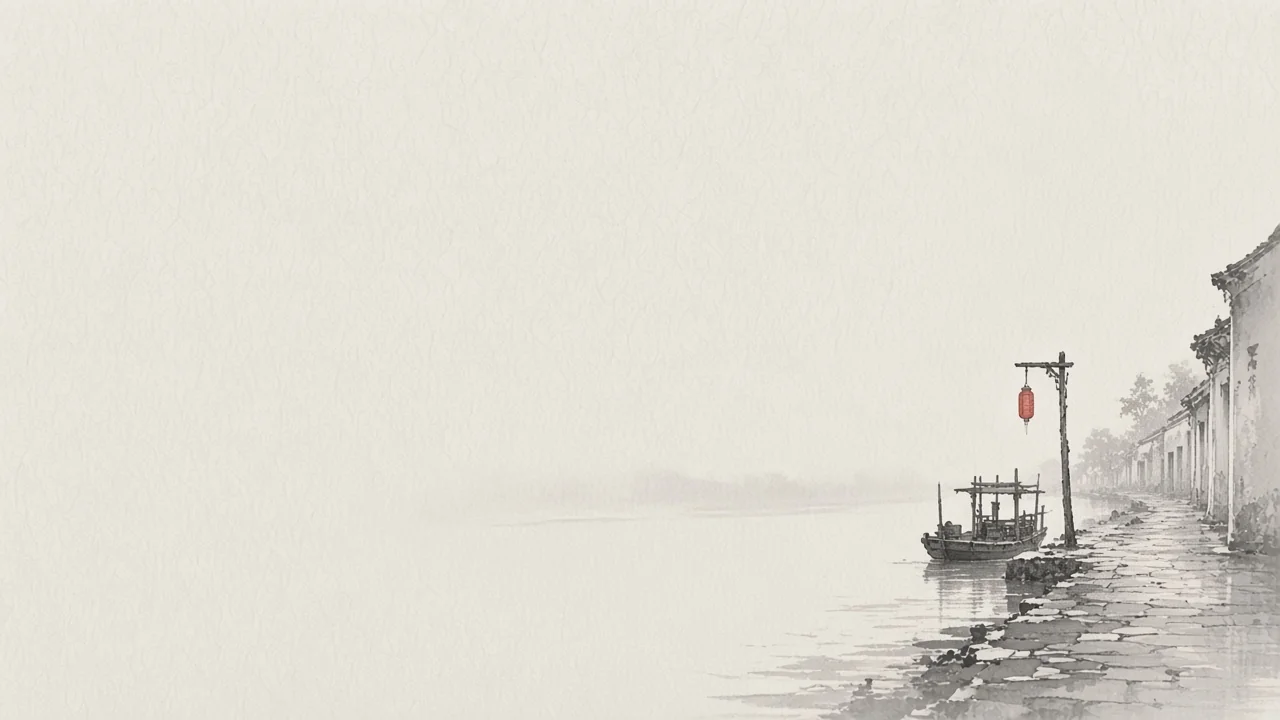
Spend a half-day on Yangzhou’s Dongguan Street (东关街) and the ancient Grand Canal corridor as a canal / salt-merchant fabric walk: fish-bone lanes, merchant houses, and the water edge toward Dongguan Ancient Ferry — not a souvenir crawl. Soft-read the citywide frame first; leave lacquerware workshops for a separate visit.
What is the half-day judgment — fabric walk or shopping street?
Hold one intent: how money and taste moved through Yangzhou’s canal city, not how many snack bags you can fill. Dongguan Street is the living spine of that story — slate paving, side lanes, merchant houses, and an eastern water edge that still meets the ancient canal. Treat the half-day as a linear reading of that fabric. Soft context for why canal wealth sits beside lake and table: the citywide reading frame.
Shopping-street tourism collapses the same blocks into a souvenir crawl. You can buy something without making purchase the plan. Lacquerware craft deserves its own looking criteria later; do not turn this walk into a workshop hunt.
What does Dongguan Street actually give you?
Dongguan Street runs about 1,122 meters from Guoqing Road (国庆路) toward the canal — civic and tourism coverage still treat that length as the street’s published span (govt.chinadaily.com.cn, June 2023, checked October 2026). The layout is fish-bone: a main commercial axis with side alleys that once tied shops, temples, and residences into one Ming–Qing urban grain. China Daily’s canal-city feature still calls the street a window on canal and salt-merchant culture — gateway of water transport, business, religion, and craft — not a theme-park strip (same page, checked October 2026).
What you get on foot is rhythm more than checklist: shop-house fronts, courtyard gates, and named compounds that repay one or two slow entries rather than a stamp of every plaque. Ge Garden (个园) sits on the street’s western gravity; soft-link the four-season rockery walk if you already planned a garden morning, but do not force Ge’s full rockery sequence into the same exhausted canal half-day unless time is truly open.
How does the Grand Canal edge finish the story?
UNESCO inscribed the Grand Canal as World Heritage in 2014 (whc.unesco.org/en/list/1443, checked October 2026). Yangzhou sat where the Yangtze meets the inland canal system; China Daily’s canal reporting notes that six channels and ten heritage sites from the Yangzhou section entered that serial listing (June 2023 feature, checked October 2026). Street-scale walking does not replace a museum encyclopedia — it shows why warehouses, gates, and ferry edges mattered when grain and salt moved.
Finish east toward Dongguan Ancient Ferry (东关古渡) and the canal waterline. The judgment is simple: you want the water edge after the fish-bone lanes so the street still reads as a corridor to the canal, not as an indoor mall with slate floors. Skip racing every side alley for identical lantern photos; one steady west-to-east (or reverse) pass with a pause at the ferry is enough for a first reading.
What is checklist noise — and what nearby craft to leave aside?
Checklist noise is treating Dongguan as “old street shopping” plus a forced snack marathon, or stacking a full Ge Garden tour, a museum deep dive, and night-market browsing into one sticky afternoon. Renovation awards are context, not a scavenger list: UNESCO’s 2023 Asia-Pacific Awards for Cultural Heritage Conservation gave an Award of Distinction to the Dongguan Garden Residences project — restorations of historic gardens along the street (unesco.org, December 2023, checked October 2026). Use that as proof the fabric is still being cared for; do not turn the citation into a garden-stamp route.
Lacquerware is Yangzhou’s craft default for a separate visit — look for process and finish on a workshop or museum stop, not as impulse buys on this half-day. Soft-link the lacquerware looking criteria; keep that intent off this canal walk.
When should you go, and how long?
Spring and autumn are kinder for first walking: March–May and September–November for milder air along the canal edge. Midsummer works early or late; midday heat turns the slate into a slog. Plan two to four hours for the street plus ferry pause — enough for one or two house or small-garden entries without racing.
The historic street itself is commonly treated as open and free to walk; individual gardens, residences, and ticketed rooms charge separately — confirm hours and fees on the site boards or WeChat the morning you go rather than trusting a third-party clock. This piece does not invent per-shop prices or a ranked snack list.
Who is this for — and who should skip?
Come if you want a half-day that answers how Dongguan and the ancient canal still show salt-merchant urban fabric — fish-bone lanes to the ferry edge — with the overview as the soft frame. Skip if you only need a shopping map, a restaurant ranking, or a lacquerware buying guide. Walk for corridor and water; leave lake boats, dinner texture, and workshop finish to their own intents.
More from Yangzhou
- culture / 7 min readYangzhou reads clearest as lake-gardens, Huaiyang table, and Grand Canal salt-merchant fabric — a citywide frame before any day plan or single-garden deep dive.
- nature / 7 min readAt Yangzhou’s Slender West Lake, boat for the water stage and walk for Five-Pavilion Bridge and Twenty-Four Bridges underfoot — admission is not a boat ticket.
- history / 7 min readAt Yangzhou’s Ge Garden, walk the four-season rockeries as one sequence and stop when a season earns a judgment — not every pavilion as a stamp.