Four Seasons, One Judgment: How to Walk Ge Garden Without Checklist Tourism
At Yangzhou’s Ge Garden, walk the four-season rockeries as one sequence and stop when a season earns a judgment — not every pavilion as a stamp.
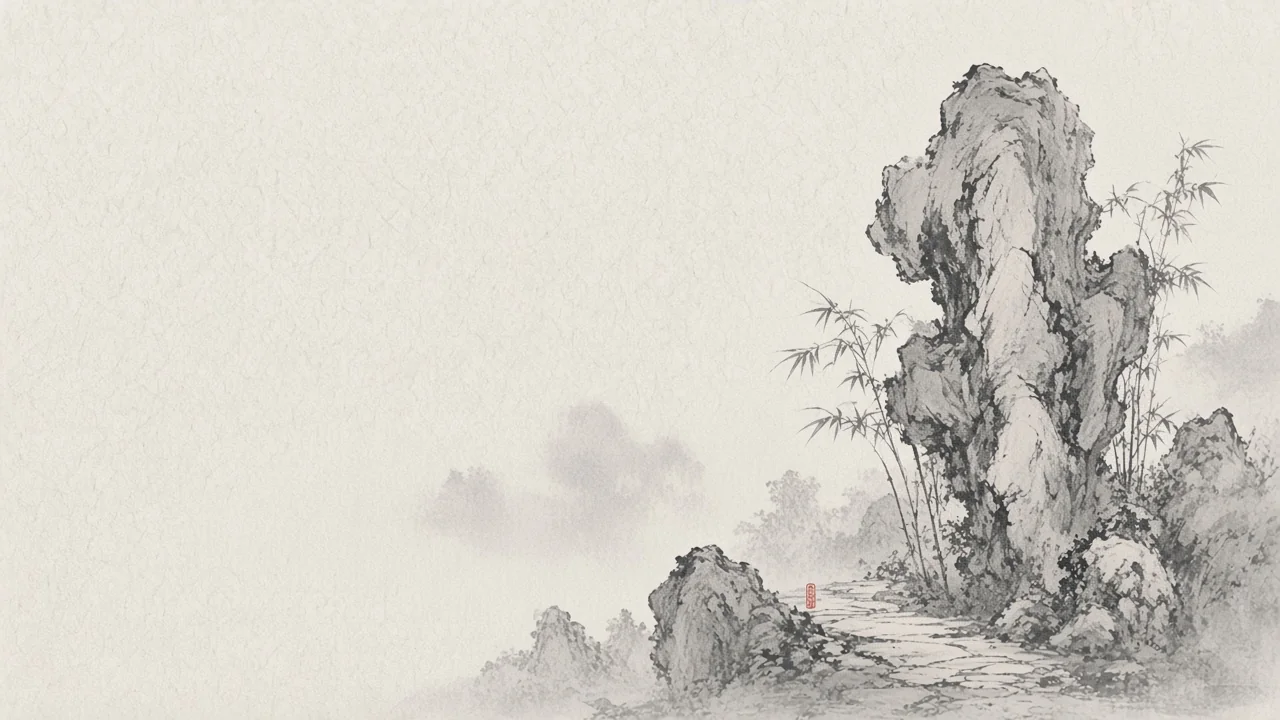
At Yangzhou’s Ge Garden (个园), walk the four-season rockeries as one sequence — spring bamboo and stone shoots, summer Taihu stone by water, autumn yellow stone, winter Xuan stone — and stop when a season earns a judgment. Do not stamp-collect every pavilion. Leave He Garden’s corridors for a separate choice.
What do the four-season rockeries actually give you?
The garden’s hard claim is one circuit of stone seasons, not a pavilion checklist. Spring is bamboo with stone bamboo shoots (笋石) — vertical, green, and quick to read. Summer is Taihu lake stone (湖石) piled beside water so cavities and shade do the work. Autumn is yellow stone (黄石) rising steep; Fuyunting (拂云亭) on the autumn peak is the highest lookout and the one place worth climbing for a full-garden read. Winter is Xuan stone (宣石) used for a snow-like white — best when you already know what the other three did, not as a selfie corner first.
Walk them in that order if the path allows. The point is contrast under your feet: bamboo verticals, water-shadow cavities, hard yellow climb, pale winter close. Stamp-collecting every named hall between seasons is checklist noise.
Why did a salt merchant build a garden you walk by season?
Huang Zhiyun (黄至筠), a Lianghuai salt-merchant chief in the Jiaqing years, expanded an older Ming site (寿芝园) into this private residence-garden around 1818 and named it for bamboo — the character 个 echoes a bamboo leaf. Salt money paid for taste after the monopoly paid the bills. The rockeries are the argument: one domestic circuit that stages time, not a trophy wall of imported rarities.
That merchant-garden logic sits beside the lake ribbon and canal fabric in the citywide reading frame. Ge is the rockery deep dive; it is not a second Slender West Lake.
How is this different from Suzhou gardens — or from He Garden?
Suzhou’s famous cluster is denser UNESCO pilgrimage; Ge is a Yangzhou salt-merchant house arguing with stone seasons. You come for sequence and judgment, not for collecting another Humble Administrator twin.
He Garden (何园) is the later corridor choice — covered walks and late-Qing residential drama — and belongs in its own morning. Do not force Ge and He into one sweaty afternoon; pick rockeries first if that is your question, and save corridors for when you want the other judgment. Soft context for the lake half-day that often sits beside garden mornings: boat versus walk at Slender West Lake.
When should you go, and how long?
Spring and autumn are kinder for first walks: March–May for bamboo and blossom pressure, September–November for clearer air. Midsummer works early; the autumn yellow-stone climb in midday heat is the usual regret. Plan about one and a half to three hours for the rockery sequence at an honest pace — enough to stop at each season, climb Fuyunting once, and leave without racing halls.
Night programs are a separate product from daytime admission. If you only have one daylight window, spend it on the four seasons, not on stacking day and night into one exhausted visit.
Hours, tickets, and how to get there?
Address: No. 10 Yanfu East Road (盐阜东路10号), Guangling District — the south gate opens toward Dongguan Street (东关街). Phone commonly listed for the scenic area: 0514-87361638. Official site: ge-garden.net (checked October 2026).
Daytime tickets for 2026 follow Yangzhou’s municipal peak / off-season schedule for state-run sites: Ge Garden peak ¥48, off-season ¥30, as reported in Yangzhou Bendibao’s 2026 ticket guide (yz.bendibao.com, updated 9 October 2026) under the city’s annual notice framed by 扬发改价格发〔2023〕346号. Peak months are commonly listed as February–October; off-season January, November, and December — confirm the month you travel on the WeChat account “扬州个园” or at the gate before you pay. The English ticket notice on the official site still shows an older peak figure in places; treat the 2026 municipal / Bendibao listing as the working baseline and recheck WeChat the morning you go.
Day hours commonly listed for 2026: 07:15–17:45, last entry 17:30, latest exit often 18:30 (yz.bendibao.com, checked October 2026). Night tours are sold separately (often quoted around ¥55 adult) with evening windows around 19:00–21:30 — not included in the day ticket. Real-name booking via the scenic WeChat account; bring ID. Buses 61, 游1, 游2, 8, and 27 stop at 个园.
Who is this for — and who should skip?
Come if you want one rockery sequence with judgment — four seasons underfoot, not a garden encyclopedia. Skip if you only need a pavilion photo from a tour sprint, or if you came for covered corridors first — that is He Garden’s question, not this one. Start with spring bamboo, finish when winter stone has earned its contrast, and leave the checklist of halls uncollected.
More from Yangzhou
- culture / 7 min readYangzhou reads clearest as lake-gardens, Huaiyang table, and Grand Canal salt-merchant fabric — a citywide frame before any day plan or single-garden deep dive.
- nature / 7 min readAt Yangzhou’s Slender West Lake, boat for the water stage and walk for Five-Pavilion Bridge and Twenty-Four Bridges underfoot — admission is not a boat ticket.
- history / 7 min readAt Yangzhou’s He Garden, walk the covered corridors for late-Qing residential drama — and choose Ge only when four-season rockeries are the question.