Three Plates First: How to Order Yangzhou Morning Tea
Order Yangzhou morning tea as scalded dry tofu, san ding bao, then jade shaomai — an early tea-house path, not a restaurant ranking or fried-rice myth.
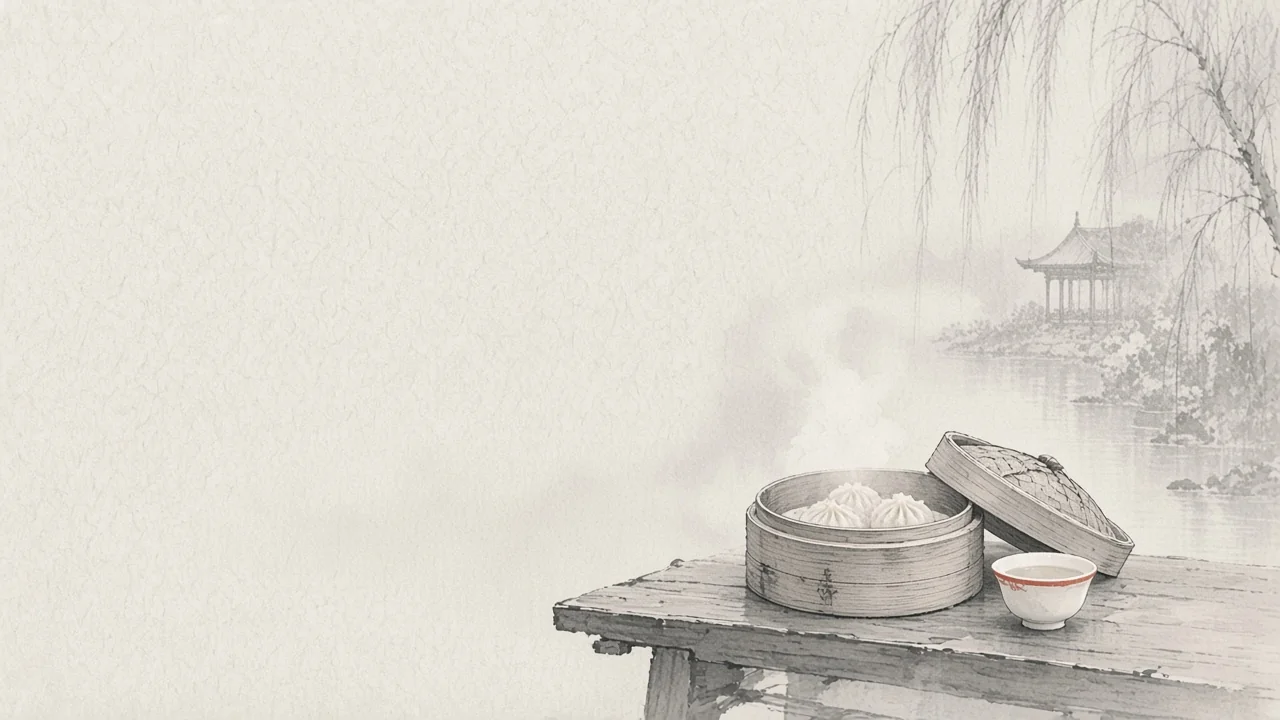
Order Yangzhou morning tea as a three-plate path: scalded dry tofu (烫干丝) first for knife-cut silk and light soy-sesame, then san ding bao (三丁包) for chicken-pork-bamboo dice, then jade shaomai (翡翠烧卖) for green vegetable steam. Arrive early at a classic tea house; leave fried-rice myths and restaurant rankings aside.
What should you order first — and in what order?
Start with the cold knife plate, then the savory bun, then the green steamer. Scalded dry tofu wakes the palate; san ding bao is the protein center; jade shaomai is the bright vegetable close. One of each for two people teaches the grammar; add thousand-layer oil cake (千层油糕) or a clear noodle bowl only after those three have earned their seats.
This is an ordering path, not a shop scorecard. Named tea houses such as Fuchun (富春), Yechun (冶春), and Quyuan (趣园) matter as cultural anchors where the same three plates still appear — not as a ranked list. Soft context for why the table belongs beside lake and canal: the citywide reading frame.
What is scalded dry tofu actually doing on the table?
烫干丝 is dried tofu cut into hair-fine strands, briefly scalded, then dressed with light soy, sesame oil, and often ginger shreds. The judgment is knife work and restraint: silk that stays springy, sauce that does not bury the bean. Zhu Ziqing’s old praise — that it clears the mouth without blocking what comes next — still explains why locals put it early. Thick, greasy, or drowned strands are filler, not morning tea. Skip it and you jump to steamed dough without the texture contrast Yangzhou claims as craft.
How do san ding bao and jade shaomai earn their places?
San ding bao seals three dice — chicken, pork, and bamboo shoot — in a soft steamed bun. CGTN’s kitchen walk-through at Fuchun (2019) still shows the craft claim: those three dice sealed in dough, traditionally pleated into a palm-sized bao. You want distinct dice and juice held by the skin — savory center, not a side bun.
Jade shaomai (翡翠烧卖) is the green counterweight: thin wrapper around finely chopped greens (often with a touch of fat or ham flecks), steamed until translucent and jade-bright. Order both so the table has a savory axis and a green one — that pair is the argument, not every steamer on the wall.
Fuchun’s tea-pastry technique entered China’s national intangible cultural heritage list in 2008 (still cited in municipal food guides, checked October 2026). Use that as craft context, not a branch ranking.
How is this different from Guangzhou yum cha — or from a Huaiyang dinner?
Guangzhou yam cha is tea-first etiquette with many small steamers. Yangzhou morning tea is fewer, larger pieces plus a knife-work cold plate: one dry-tofu dish, a bun, and a green shaomai can finish a modest table.
A serious Huaiyang dinner is a different intent — texture and clear broths at night scale. Soft-link the sibling Huaiyang dinner piece; do not merge dinner into this morning path. And do not let fried rice become the city’s main food claim: UNESCO named Yangzhou a Creative City of Gastronomy in 2019 (unesco.org/en/creative-cities/yangzhou, checked October 2026) for broader Huaiyang heritage, not a fried-rice myth.
When should you go, and how long?
Year-round. Morning-tea culture treats the early window as the real meal: traveler and city food writing commonly put the rush around 06:30–08:30, with classic houses opening near 06:30 and morning service running into early afternoon (often about 13:30) before a separate afternoon slot at some brands. Treat morning 06:30–13:30 and a mid-afternoon reopen as a common Fuchun-pattern band — confirm the board or WeChat the morning you go rather than a dated city digest. Ctrip travelogues and Trip.com house pages for flagship tea houses repeat the same early-open pattern (checked October 2026).
Arrive at open on weekends if you want a seat without a long queue. Allow 60–90 minutes for the three-plate path plus tea. Soft spend varies by house; this piece does not invent per-shop prices.
Who is this for — and who should skip?
Come if you want one ordering grammar — cold silk, savory dice bun, green steamer — and an early tea-house morning that explains Huaiyang craft before lake and gardens. Skip if you need a ranked restaurant list, a private booth with an English tasting menu, or a fried-rice checklist as the city’s food story. Sit early, order the three plates first, and leave dinner’s deliverables for their own article.
More from Yangzhou
- culture / 7 min readYangzhou reads clearest as lake-gardens, Huaiyang table, and Grand Canal salt-merchant fabric — a citywide frame before any day plan or single-garden deep dive.
- nature / 7 min readAt Yangzhou’s Slender West Lake, boat for the water stage and walk for Five-Pavilion Bridge and Twenty-Four Bridges underfoot — admission is not a boat ticket.
- history / 7 min readAt Yangzhou’s Ge Garden, walk the four-season rockeries as one sequence and stop when a season earns a judgment — not every pavilion as a stamp.