Knife-Cut, Pinched and Poured On: Eating Noodles and Vinegar in Taiyuan
In Taiyuan, eat knife-cut noodles, tijian and cat's-ear noodles with a splash of mature vinegar, try guoyourou, and, in cold months, the early-morning soup called tounao; Qingxu county to the south is the heart of Shanxi vinegar.
Published
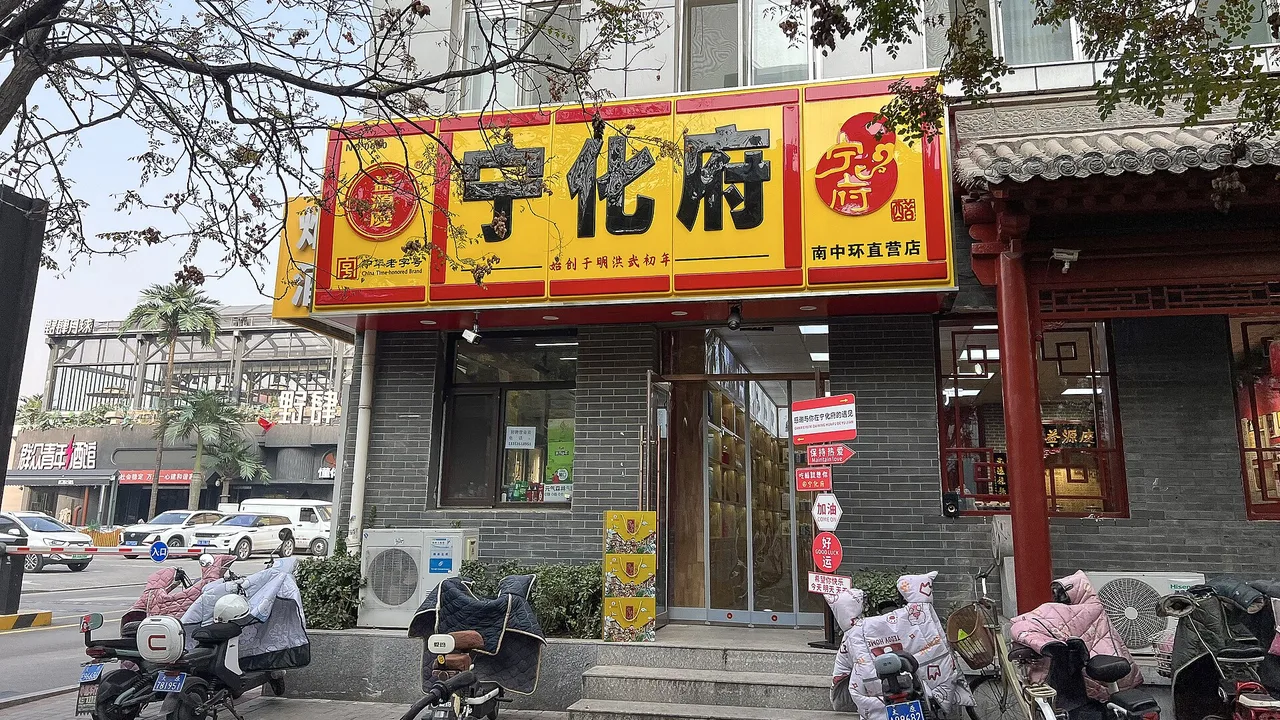
In Taiyuan, eat noodles: knife-cut (刀削面), tijian (剔尖), pinched "cat's ears" (猫耳朵), and add a splash of mature vinegar (老陈醋) at the table. Order guoyourou (过油肉), the city's classic stir-fried pork. In cold months, try tounao (头脑), an early-morning mutton and herb soup. Qingxu county, just south of the city, is the heart of Shanxi vinegar.
Why is Shanxi noodle country?
Shanxi grows wheat, sorghum, oats and buckwheat rather than rice, and over centuries its cooks developed more noodle shapes than anywhere else in China. In Taiyuan you can eat a different one every meal for days. The shape matters as much as the sauce, because each takes the topping differently.
Which noodles should you try?
- Knife-cut noodles (刀削面, dāoxiāomiàn). Shaved from a block of dough into boiling water, thick in the middle and thin at the edges. The Datong knife-cut guide covers them in detail. Taiyuan's are just as good.
- Tijian (剔尖, tījiān). Soft dough flicked off a plate into the pot with a metal pick, giving short noodles pointed at both ends. Light and slippery.
- Cat's ears (猫耳朵, māo'ěrduo). Small pinched shells, often stir-fried or in soup. They hold sauce well.
- Youmian kaolaolao (莜面栲栳栳). Oat-flour tubes steamed in a basket and dipped in a sauce. They are more northern, but you will see them.
Toppings are mostly tomato and egg (西红柿鸡蛋), minced pork sauce (肉臊) or braised meat (卤). Ask for 一碗刀削面, 西红柿鸡蛋的 (a bowl of knife-cut with tomato and egg) and you will get a classic.
What about vinegar?
Shanxi mature vinegar (山西老陈醋) is dark, thick and aged, more mellow than sharp. Every table has a bottle, and locals add it to noodles, dumplings and soups as a matter of course. Start with a little and work up.
The traditional centre of production is Qingxu county (清徐), south of Taiyuan, where several large vinegar makers operate. Some workshops in and around Taiyuan run visits or vinegar museums. We could not confirm current hours, so check before you go. A bottle is the easiest souvenir in the province, but pack it carefully.
What else is a Taiyuan dish?
- Guoyourou (过油肉). Thin slices of pork, fried, then stir-fried with wood-ear fungus, garlic shoots and a vinegar-tinged sauce. It is on nearly every Shanxi menu, and Taiyuan claims it.
- Tounao (头脑, tóunǎo). Taiyuan's most unusual breakfast: a thick soup of mutton, lotus root and Chinese yam with yellow wine and herbs, eaten very early, traditionally in the colder months, with a baked bun. Local legend credits the Ming–Qing scholar-doctor Fu Shan with the recipe. Shops that make it often open before dawn and close by mid-morning.
- Shaomai and steamed dumplings at breakfast stalls.
How do you order with little Chinese?
Many noodle shops order at a counter, with a board on the wall. Save the Chinese names above on your phone, point at what others are eating, and pay by WeChat Pay or Alipay. Bowls are large. If you want less, ask for 小碗 (small bowl). To avoid heat, say 不要辣.
We are not naming restaurants or listing prices, because they change and we could not verify them. Look for busy places full of local diners at noon.
Where does food fit in your days?
Noodles are lunch and dinner. Tounao is a dawn outing on a cold-month morning. Plan your two days in Taiyuan with one early start for it. If you go on to Changzhi, the noodle culture continues with a different set of county dishes.
Cover photo: N509FZ / Wikimedia Commons (CC BY-SA 4.0)
More from Taiyuan
- history / 5 min readJinci, south-west of Taiyuan, is a garden of temples around the Jin River springs, with a Song-dynasty Hall of the Holy Mother and its painted maid figures; the ticket is 80 yuan, booking runs on WeChat, and holiday slots sell out.
- history / 5 min readThe Shanxi Museum in Taiyuan is free but needs real-name WeChat booking; slots open three days ahead and on the morning itself, it closes on Mondays except holidays, and foreigners book and enter with a passport.
- history / 4 min readShuanta (Twin Pagodas) Temple, or Yongzuo Temple, has a pair of Ming brick pagodas that are Taiyuan's skyline symbol, plus old peonies in spring; the ticket is 30 yuan and April to October hours run 08:30 to 17:30.