Free Lanes, a Temple on the Hill: How to Spend Half a Day in Qikou on the Yellow River
Qikou's old trading street and river landing are free and open all day; give it three to five hours, climb to Heilong Temple for the bend in the Yellow River, and sleep over if you want Lijiashan at dawn.
Published
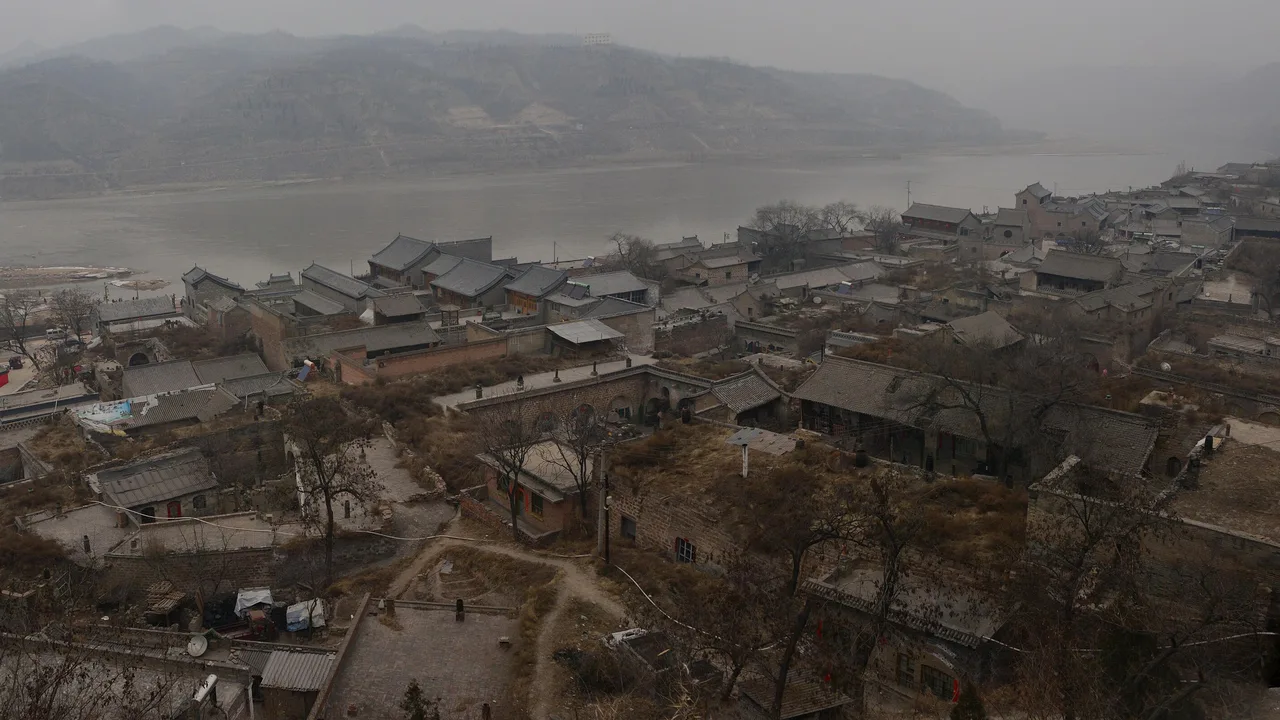
Qikou Ancient Town (碛口古镇) in Lin County, Lüliang, is free to walk and open around the clock. Give the old trading street, the river landing and the climb to Heilong Temple (黑龙庙) three to five hours. Stay the night if you also want Lijiashan village in the morning light.
Why does a small river town matter?
Qikou sits where the Qiushui River (湫水河) runs into the Yellow River. Just downstream, a rocky stretch of rapids — the qi in the name — stopped big boats going any further. So goods coming down from Inner Mongolia and Ningxia were unloaded here and sent on overland by camel and mule toward Taiyuan and the North China Plain. For the Ming and Qing centuries that made Qikou one of the busiest transfer points on the middle Yellow River. Chinese guidebooks still call it the "first town of the Nine Bends".
What survives is a working town, not a rebuilt film set. Warehouses, inns and shopfronts climb the slope in stone and brick, many with cave-style arched rooms (窑洞) behind the façades. People still live here. That is the main reason to come, and it also explains the rough edges: some of the riverfront looks tired, and the town is plainer than the canal towns of the south.
What should you actually see?
The old street. Walk the main commercial lane end to end. Look at the old shop names over the doors and at the courtyards behind them, where goods were weighed and stored. An hour does it at a slow pace.
Heilong Temple. This is the one climb worth doing. The temple sits on the hill above town, and from its terrace you see the Qiushui meet the Yellow River with the hills of Shaanxi on the far bank. Go in the late afternoon if you can, when the river turns copper.
The landing. Walk down to the waterline afterwards. The stone steps and the width of the river make clear why a town grew here.
Xiwan village (西湾村). A walled family compound village about a kilometre or two up the Qiushui valley, linked lanes and all. It charges a separate small fee. Fit it in if you have an extra hour and like courtyard architecture. If you are short of time, skip it before you skip Lijiashan.
Day trip or overnight?
You can do Qikou as a long day from Taiyuan on the direct coach (see getting to Qikou), but you only get the middle of the day, which is the flattest light. An overnight lets you see Heilong Temple at dusk and reach Lijiashan early, before day-trippers arrive. Inns in the old town and across the bridge are mostly family-run, often in converted cave rooms. Book ahead for national holidays.
Tickets, hours and phone — what should you check?
Checked October 2026 (Asia/Shanghai). Notices from the scenic area and Lin County authorities win over this page and over any booking listing.
- Entry. The main street and the old landing are free and open all day. A Taiyuan Daily report on the new coach line (August 2026) and recent visitor guides agree on this.
- Paid extras. Some sites, Xiwan among them, charge separately. Guides from August 2026 report half price for students and visitors aged 60–64, and free entry for those 65 and over and for children under 1.2 m. Treat these figures as a guide; prices are posted at each gate.
- Heilong Temple. Recent guides say it is free. Others have listed a fee in the past, so carry a little cash.
- Phone. The scenic area is commonly listed as 0358-4467001.
- Payment. Smaller shops and inns may want cash or WeChat Pay. Carry some cash.
Who should skip it?
If what you want from old towns is polish, carved archways and good cafés, Qikou will feel thin, and Pingyao is the better use of a day. Come for the river, the loess hills and a trading town that never got a makeover. For the full route with Fenyang, see the three-day Lüliang plan.
Cover photo: Fanghong / Wikimedia Commons (CC BY-SA 4.0)
More from Lüliang
- culture / 5 min readLijiashan is a free, still-lived-in cave-dwelling village a few kilometres from Qikou; go early or late for the light, allow two to three hours, and expect steep stone lanes rather than a staged attraction.
- food / 5 min readThe Fenjiu Culture Scenic Area at Xinghuacun, about 15 km from Fenyang, is a working distillery tour — museum, fermentation halls, old cellars and a tasting — for a 42-yuan ticket; budget two to three hours and do not drive afterwards.
- history / 6 min readFenyang's three painted-temple stops are Taifu Temple for Ming hanging sculpture, Tiancun Houtu Temple for gilded Ming murals and Beiyuyuan Wuyue Temple for faded Yuan murals; go to Taifu first, check its midday closure, and treat the other two as caretaker-dependent.