Mutton Soup and Torn Flatbread: What to Eat in Yuncheng
Yuncheng's signature is Xiezhou-style mutton paomo — a milky broth with mutton, glass noodles and chilli oil, eaten with flatbread; add Wenxi zhubing to take away, plus pulled noodles and Wanrong steamed dishes.
Published
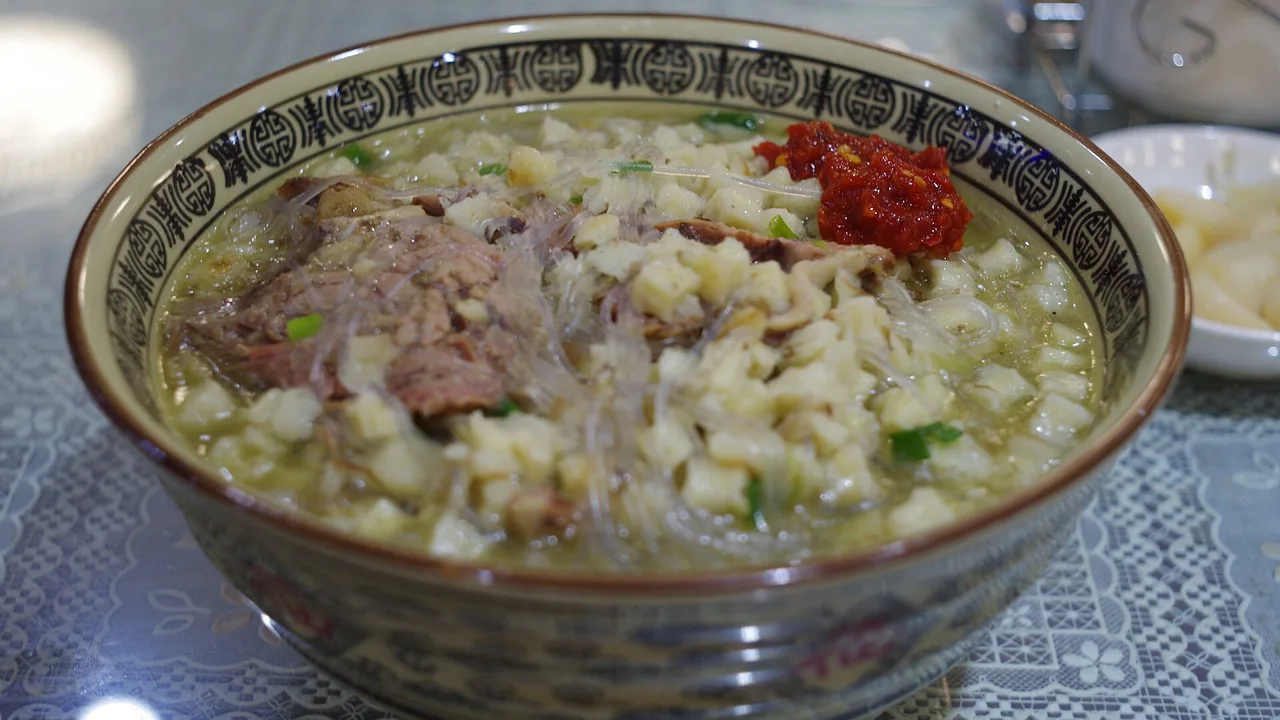
Eat mutton paomo (羊肉泡) in Yuncheng. It is a milky mutton broth with sliced meat, glass noodles, tofu and chilli oil, eaten with a round flatbread that you tear into the bowl. Order it for breakfast or lunch near Xiezhou. Take Wenxi zhubing (闻喜煮饼), sesame-coated honey cakes, home in a box.
How is Yuncheng mutton soup different from Xi'an's?
In Xi'an, yangrou paomo is famous for the diner tearing bread into tiny pieces before the kitchen cooks it in the broth. Yuncheng's version is quicker and looser. The soup arrives already finished: a creamy white broth with mutton, fentiao (粉条, sweet-potato starch noodles) and often cubes of tofu, under a slick of red chilli oil. Flatbread (饼子) comes on the side. You tear it yourself and dunk it, or add it in pieces as you go. Locals eat it early, and plenty of shops are busiest before 9 a.m.
How to order. Most shops have one main item, so say 羊肉泡 (yángròu pào) and how many. You may be asked how much meat. Some shops sell portions by price, with more meat for more money. Ask for less chilli with 少辣 (shǎo là) if you are unsure. Chopped coriander and green onion are on the table. Garlic cloves or pickled garlic are common on the side.
Xiezhou, the town of the Guandi Temple, is known for its version. A bowl near the temple before or after your visit is the classic pairing.
What else is worth trying?
Wenxi zhubing (闻喜煮饼). A Wenxi county speciality: a round cake fried, then coated in honey or syrup and rolled in sesame. The outside crackles and the inside is soft and slightly chewy. It travels well, so buy a box at the station or a specialty shop rather than hunting for a fresh one.
Pulled and splashed noodles. Like the rest of the wheat belt, Yuncheng eats noodles every day. Chemian (扯面), wide hand-pulled noodles, often come youpo style (油泼), with hot oil poured over chilli and garlic. If you liked Datong's knife-cut noodles, order this for the contrast.
Wanrong steamed dishes (万荣蒸菜). Vegetables tossed in flour and steamed, then dressed with garlic and vinegar. They are a light lunch on a Wanrong day, and the county town has small shops serving them along with mutton hele (饸饹) noodles.
Jishan mahua (稷山麻花). Twisted fried dough from Jishan county. It is crisp, sweet and another good gift to carry home.
Where do you find it?
Look for small shops with a soup pot at the door and a list of one or two items on the wall. That is a better sign than a menu with photographs. Night markets in central Yuncheng have food stalls in the evening. Opening hours change, so look for shops that are busy rather than relying on a list. This page names no restaurants because small shops move, close and change hands faster than any guide can track.
Any practical cautions?
Mutton soup is rich. If you are visiting several temples, have it as a late breakfast rather than a heavy lunch before an afternoon of standing. Cash is rarely needed now, since mobile payment works almost everywhere, but carry some small notes in the villages around Wanrong. Vegetarians should be aware that most of the broth bases are meat. Steamed dishes and noodles with oil and chilli are the easy fallback.
Fit meals around the three-day plan: soup at Xiezhou on day one, steamed dishes at Wanrong on day two, and noodles in Ruicheng or Yongji on day three.
Cover photo: Danielinblue / Wikimedia Commons (CC BY-SA 3.0)
More from Yuncheng
- history / 4 min readXiezhou Guandi Temple, 20 km south-west of central Yuncheng, is the largest and oldest-rooted temple to Guan Yu; give it two to three hours, enter by the Jieyi Garden, and check whether the Chunqiu Tower statue area has reopened.
- history / 4 min readYongle Palace in Ruicheng holds China's grandest surviving Daoist mural cycle, sawn off the walls and moved in the 1950s–60s ahead of the Sanmenxia reservoir; allow two hours, bring patience for dim halls, and check Monday opening before going.
- history / 4 min readFeiyun Pavilion, a timber tower inside Wanrong's Dongyue Temple and a Black Myth: Wukong location, costs about 10 yuan and takes an hour; you can usually climb its steep stairs, and it pairs with Houtu Temple by the Yellow River.