Emperor Yao's Temple and a Village of Ming Courtyards: Linfen's Close-to-Town Half Day
If you base in Linfen, Yao Temple in the city and the Ding Village Folk Museum in Xiangfen make a near-town half day; the temple is a much-rebuilt shrine to a legendary sage king, Ding Village a real cluster of Ming–Qing houses closed on Mondays.
Published
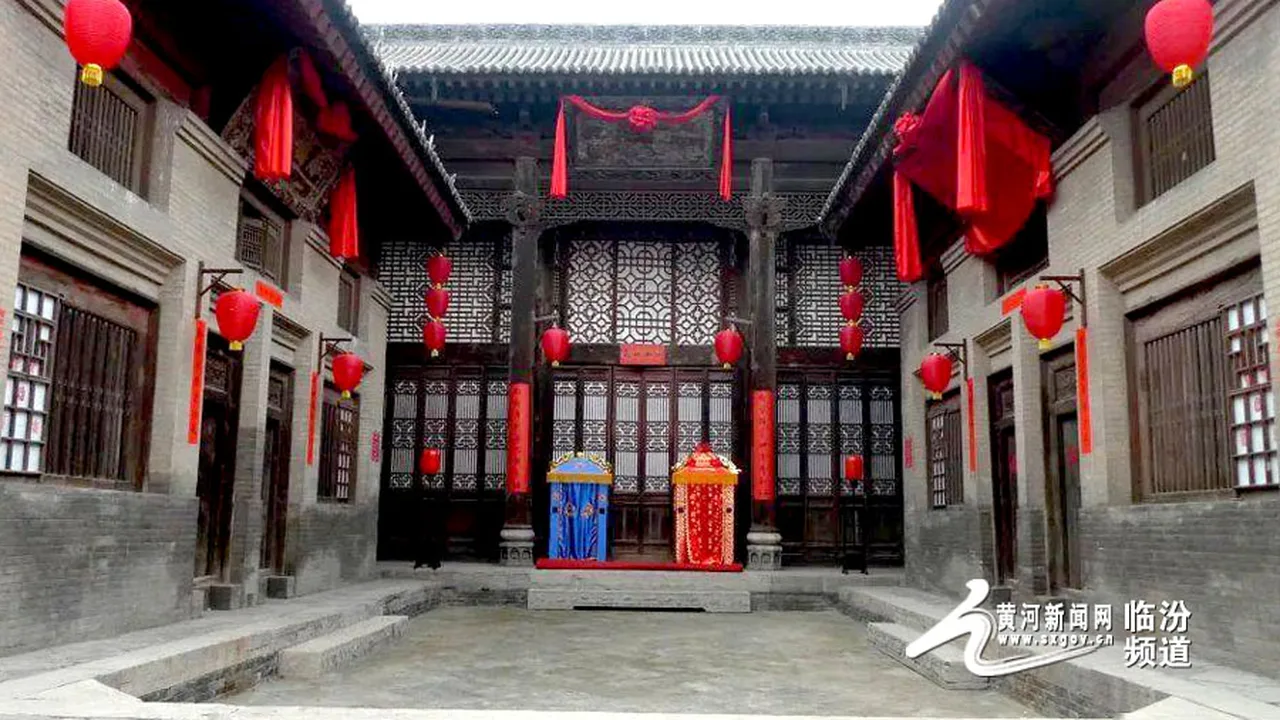
If you sleep in Linfen and have half a day left, pair Yao Temple (尧庙) on the city's south side with the Ding Village Folk Museum (丁村民俗博物馆) in Xiangfen. Yao Temple is a large, much-rebuilt shrine to the legendary sage king; Ding Village is a real cluster of Ming and Qing courtyard houses. The village museum is normally closed on Mondays.
Why is there a temple to Emperor Yao in Linfen?
Chinese tradition places the capital of Yao, one of the sage kings of the legendary age, in the Linfen area, and the city leans hard on that identity. Archaeology gives it some weight: the Taosi site in Xiangfen is a large late-Neolithic town that Chinese scholars often discuss in connection with that early period, though linking it to a named ruler is a matter of debate.
The temple itself has been rebuilt many times. Most of what stands is Qing or modern, including a tall gate tower and a huge main hall, set in big formal grounds along with some ancient cypress trees. It is a place to understand how Linfen sees itself more than a place for original architecture. An hour is plenty. The large Huamen monument nearby is newer still.
What is Ding Village?
Ding Village (丁村) in Xiangfen, south of Linfen, is known for two things. The area gave its name to the Palaeolithic Dingcun finds, and the village keeps a group of Ming and Qing courtyard houses, which since 1985 have formed a folk museum. You walk through lived-in-looking compounds with carved wood and brick, and displays of farm tools, weddings and household life. The lanes are uneven, so watch your footing. Allow one to two hours.
If you are also going to Pingyao's courtyards or the merchant mansions further north, Ding Village is the humbler, rural version, and a useful contrast.
How do you do both?
Yao Temple is reachable by city bus or taxi from central Linfen and Linfen station. Ding Village is about 35 km south and best done by taxi or ride-hailing car; agree the waiting time. A natural order is Ding Village in the morning, back to town for lunch, then Yao Temple in the afternoon.
Tickets and hours — what should you check?
Checked October 2026 (Asia/Shanghai). Posted notices at each site and the Linfen Museum's announcements win; several details here come from listings, not official pages.
Yao Temple. Ticket listings vary, most often showing 50 yuan. Ctrip lists hours of 8:00–18:00 with last entry at 17:30, and free entry for visitors 60 and over and children 1.2 m and under.
Ding Village Folk Museum. Run as a branch of the Linfen Museum. Its notices show the normal pattern: closed Mondays, open Tuesday to Sunday, with holiday hours given as 9:00–17:00 and ticket sales ending at 16:00. Ordinary daily hours are not on a stable official page, so assume a similar day and arrive by mid-afternoon. A ticket of around 30 yuan appears in travel listings; we could not confirm a current official price. Phone 0357-3868090.
Is it worth it?
As a must-see, no. As a gentle half day on arrival, or a buffer after a long Xiaoxitian or Hukou day, it fits well. The three-day plan uses it exactly that way.
Cover photo: Li Xianjun / Yellow River News Network, sxgov.cn
More from Linfen
- history / 4 min readLittle Western Heaven (Xiaoxitian) is a small Ming hillside temple whose main hall is crammed with gilded hanging sculpture; book a real-name ticket, give the hall most of your time, and allow a long day from Linfen.
- nature / 4 min readHukou Waterfall's Shanxi bank, in Ji county, now shares one 80-yuan ticket with the Shaanxi bank for two days; go in summer or autumn flow, arrive early, and expect a long road from Linfen.
- history / 4 min readGuangsheng Temple near Hongdong is two sites on one 70-yuan ticket: the Upper Temple's glazed Flying Rainbow Pagoda and the Lower Temple's Water God Temple with Yuan murals, including a famous theatre scene.