A Lone Song Pagoda in the Fields: Visiting Balong Temple Pagoda, Black Myth: Zhong Kui's Wanrong Tower
Balong Temple Pagoda near Zhonglizhuang, Wanrong, is a 1012 Song brick pagoda standing alone with no ticket and no temple; it is 30+ km from the county seat, under renovation, and climbing is forbidden — go by car as an add-on to Houtu Temple.
Published
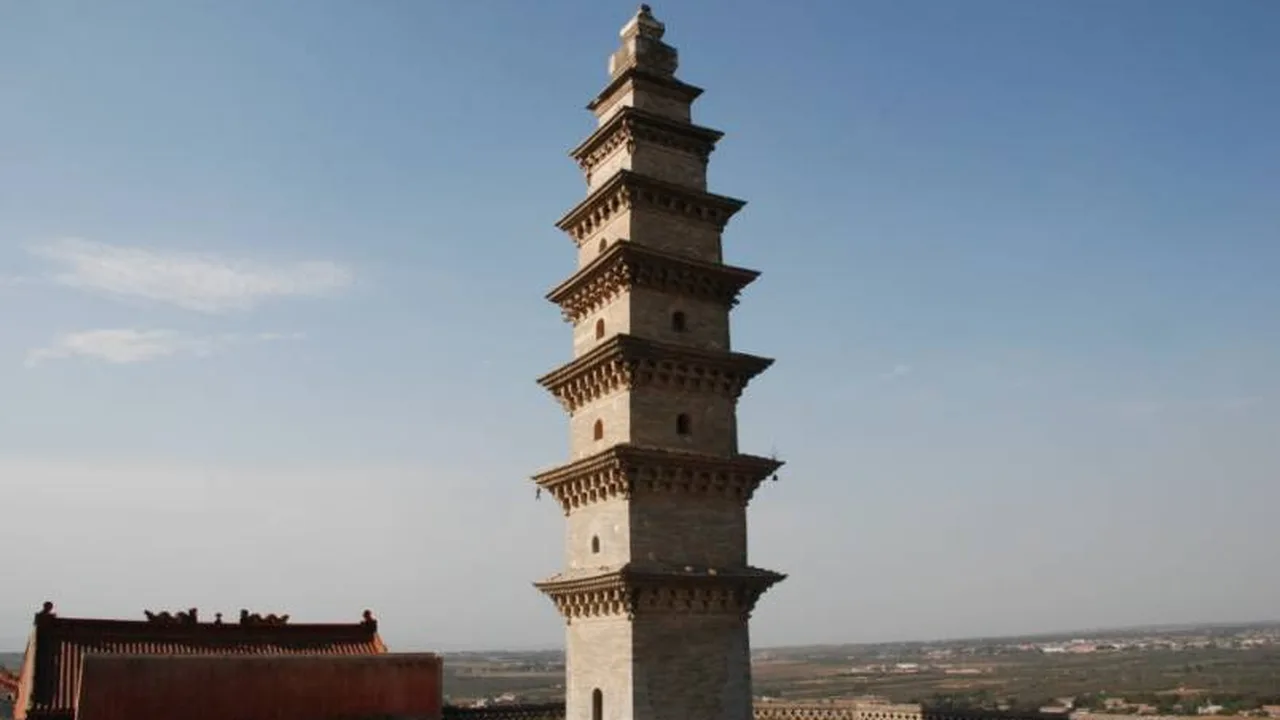
Balong Temple Pagoda (八龙寺塔) is a square, seven-storey solid brick pagoda built in 1012 under the Northern Song. It stands alone on a terrace east of Zhonglizhuang village in Wanrong. Its temple is long gone. There is no ticket, but it is more than 30 km from the county seat, under renovation, and you may not climb it. Go by car as an add-on to Houtu Temple.
Why is everyone suddenly asking about it?
In August 2026 Game Science released a long gameplay demo of Black Myth: Zhong Kui. Viewers matched a square brick tower in the footage to this pagoda. Shanxi media treated it as one of the first confirmed real-world locations, alongside the Houtu Temple in Lingshi, Jinzhong. Wanrong's culture and tourism bureau confirmed that the pagoda is in the county, but said it did not know whether the studio had worked with them.
Unlike Feiyun or Qiufeng from the Wukong trail, this is not a scenic area. It is a protected monument in farmland. Keep your expectations to that.
What will you actually see?
You will see one tower and the space around it. The pagoda rises in seven stepped storeys, each with corbelled brick eaves. Under the eaves, brick is carved to imitate timber bracket sets. Specialists value it because the date is known and the brickwork shows Song bracket forms changing from storey to storey. Reports say the top two storeys and the gourd-shaped finial were rebuilt in the Ming and Qing. Arched openings face south on the lower storeys.
Local records tie the name to Song Zhenzong's journey to sacrifice at the Houtu Temple on the Yellow River. The story goes that the emperor saw clouds coiling like eight dragons (八龙) and ordered a temple built. That is why the two sites go together naturally.
What are the rules on site?
According to the Wanrong county officials quoted by Shanxi media in late August 2026:
- No ticket. It is a cultural-relic site, not a formal scenic area.
- Under renovation. Repair work began in 2025 and was still under way. Expect scaffolding or fencing, which can change the view.
- No climbing. You may approach and photograph it, but not climb the structure.
- Basic courtesy. Do not scratch or carve, do not smoke, and take your rubbish away.
There are no facilities. Bring water and do not count on shade.
How do you get there?
Search for 中里庄八龙寺塔 in a Chinese map app. The pagoda is about 2 km east of Zhonglizhuang village in Ronghe town. Officials put it at more than 30 km and at least half an hour's drive from the Wanrong county seat. No public bus serves it in any way a visitor could rely on, so use a hired car or ride-hail and ask the driver to wait. Getting a car back out of the countryside is the real risk. Combine it with Houtu Temple, also in Ronghe town, and Feiyun Pavilion for a full Wanrong day.
Practical check
Checked October 2026 (Asia/Shanghai). Facts here come from Wanrong county officials as quoted by Shanxi Daily and Shanxi Evening News (26 August 2026). No official visitor page exists. Local notices and fencing on site win. Renovation may close the immediate surroundings without warning. No opening hours have been published. Treat it as a daylight-only visit.
Is it worth the detour?
For game fans and anyone who likes Song brickwork or empty landscapes, yes. Give it about 30 minutes on site plus the drive. If you are short on time or have no driver, skip it. Feiyun and Houtu give you more for the same effort.
Cover photo: Yuncheng Fabu (运城发布) via Tencent News
More from Yuncheng
- history / 4 min readXiezhou Guandi Temple, 20 km south-west of central Yuncheng, is the largest and oldest-rooted temple to Guan Yu; give it two to three hours, enter by the Jieyi Garden, and check whether the Chunqiu Tower statue area has reopened.
- history / 4 min readYongle Palace in Ruicheng holds China's grandest surviving Daoist mural cycle, sawn off the walls and moved in the 1950s–60s ahead of the Sanmenxia reservoir; allow two hours, bring patience for dim halls, and check Monday opening before going.
- history / 4 min readFeiyun Pavilion, a timber tower inside Wanrong's Dongyue Temple and a Black Myth: Wukong location, costs about 10 yuan and takes an hour; you can usually climb its steep stairs, and it pairs with Houtu Temple by the Yellow River.