Walk the Loop, Boat Optional: How to Explore Nantong's Haohe Moat
Nantong's Haohe is a free daytime riverside loop around the old city — walk the banks first, and treat a lit night boat as optional, not the default.
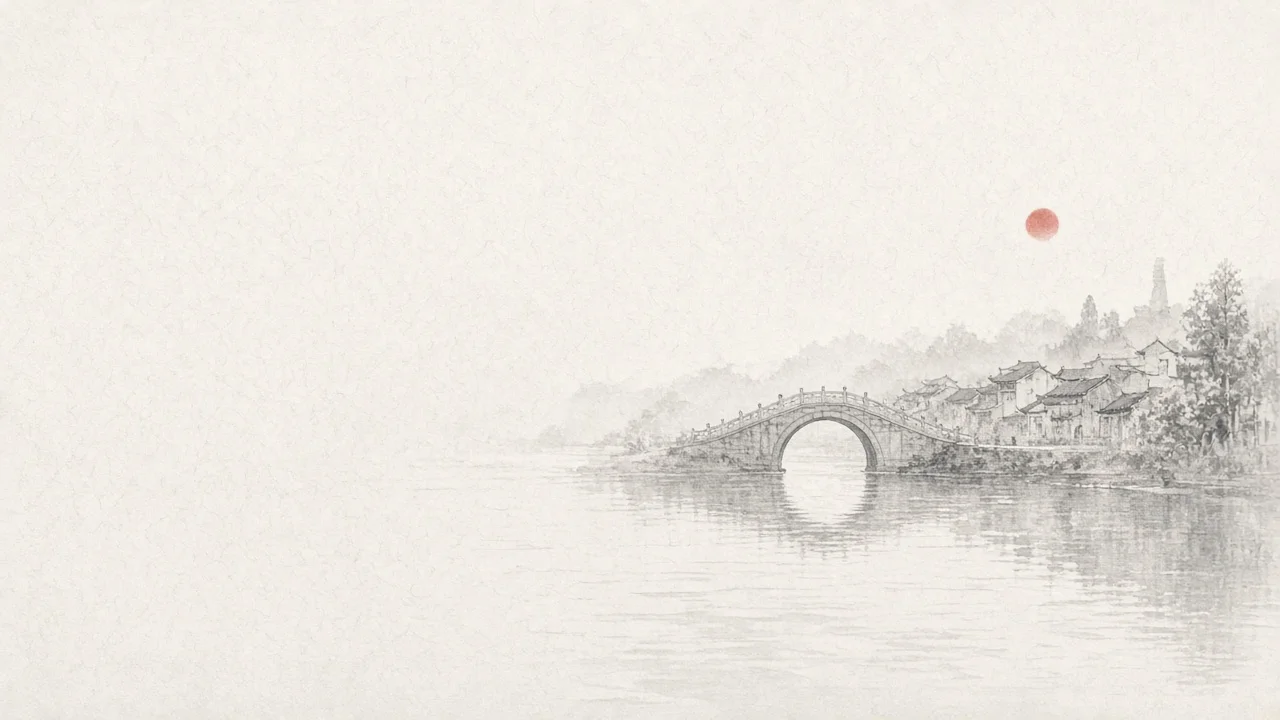
Nantong's Haohe (濠河, Háohé) is a roughly 10 km ancient moat — a national 5A "jade necklace" looping the old city — best as a free riverside walk by day and an optional lit boat after dark. Start near the visitor hub; shore museums are neighbors, not the visit. Walk first; book a night boat only if lights are the point.
What do you actually see on the banks?
Willow shade, bicycle bells, and a stretch of open water wider than many expect for a city moat. The Haohe River Scenic Area (濠河风景名胜区, Háohé Fēngjǐng Míngshèngqū) in Chongchuan (崇川, Chóngchuān) is an open loop: you can enter the bank walks without treating the river as a ticketed show. Shore landmarks — including Nantong Museum on the Haohe edge — sit beside the water as neighbors. They enrich a stop; they are not substitutes for the circuit.
Why walk first instead of boarding a boat?
If you want to understand how the old city sits inside water, walk. A boat is a different question — useful when darkness and illuminated façades are what you came for, not when you still need to learn the shape of the moat under your feet. The waterway runs roughly ten kilometers around the old city. In 2012 the scenic area was rated a national 5A site. The banks are free to walk as an open scenic area. At its widest the water reaches about 215 meters — enough to feel like a small lake in places, not a ditch. Local records place the moat with the Later Zhou (后周, Hòu Zhōu) city works of 958, when wall and river were cut together; treat that as the civic origin story, not a claim that every meter of today's path is unchanged stone from that year.
Is the night cruise the same visit as the daytime banks?
The controversy is not whether the Haohe is beautiful at night — it often is — but whether the marketed night experience is the same visit as the daytime banks. "Haohe Night Painting" (濠河夜画, Háohé Yèhuà) packages light, sound, and staged scenes along the cruise route. That product answers travelers who want immersion and illumination. It does not answer travelers who want an unhurried circuit, bird calls at dusk, or the simple geometry of an old-city moat without a seat assignment. Both readings are incomplete — and different intents.
When should you go, and how long?
Spring and autumn suit the banks best: March to May and September to November keep the air kinder than midsummer. Evenings matter only if lights are the point. Plan one to three hours depending on how much of the loop you want; you need not finish all ten kilometers in one go. Start near the visitor hub so you can orient to the water before you pick a direction.
Where do night boats board, and what stays free?
The visitor-center pier for night boats is commonly listed at No. 508 Haobei Road (濠北路508号), Chongchuan District — the boarding point for Haohe Night Painting departures. Scheduled evening sailings are often listed around 18:45, 19:15, 19:45, and 20:15; treat those as a pattern to confirm, not a permanent timetable. Check the Meili Haohe (魅力濠河, Měilì Háohé) WeChat account or chinahaohe.com in the week you visit for current sailings and fares — do not rely on a hard ticket price printed months earlier. Daytime bank walks remain free; the boat is the paid optional layer.
Who is this for — and who should skip?
Come for water, shade, and a city-scale loop. This is not for travelers who need a blockbuster to justify a Nantong stop, or anyone who treats the moat as a checklist photo from a moving deck and skips the free paths. It is also a poor fit if you want a mountain hike or a ticketed temple climb — those are other Nantong questions, including Langshan. Leave museum halls and hill temples for their own hours.
More from Nantong
- history / 6 min readOn the Haohe River in Nantong, China's first public museum founded by Chinese people still shows a garden-campus of specimens, archaeology, and civic education — not a single star gallery.
- culture / 7 min readOn Langshan, a low hill south of Nantong, Tang-era Guangjiao Temple and the Song Zhiyun Pagoda look over the Yangtze estuary — a half-day of incense and river views, not an alpine climb.
- culture / 7 min readAt Nantong Blue Calico Museum on Haodong Road, indigo-resist printing is still a living craft — carved blocks, paste, dye vats, and white-on-blue cloth — not a souvenir-shop stop.