Garden Campus, Not Blockbuster: What Nantong's First Public Museum Shows
On the Haohe River in Nantong, China's first public museum founded by Chinese people still shows a garden-campus of specimens, archaeology, and civic education — not a single star gallery.
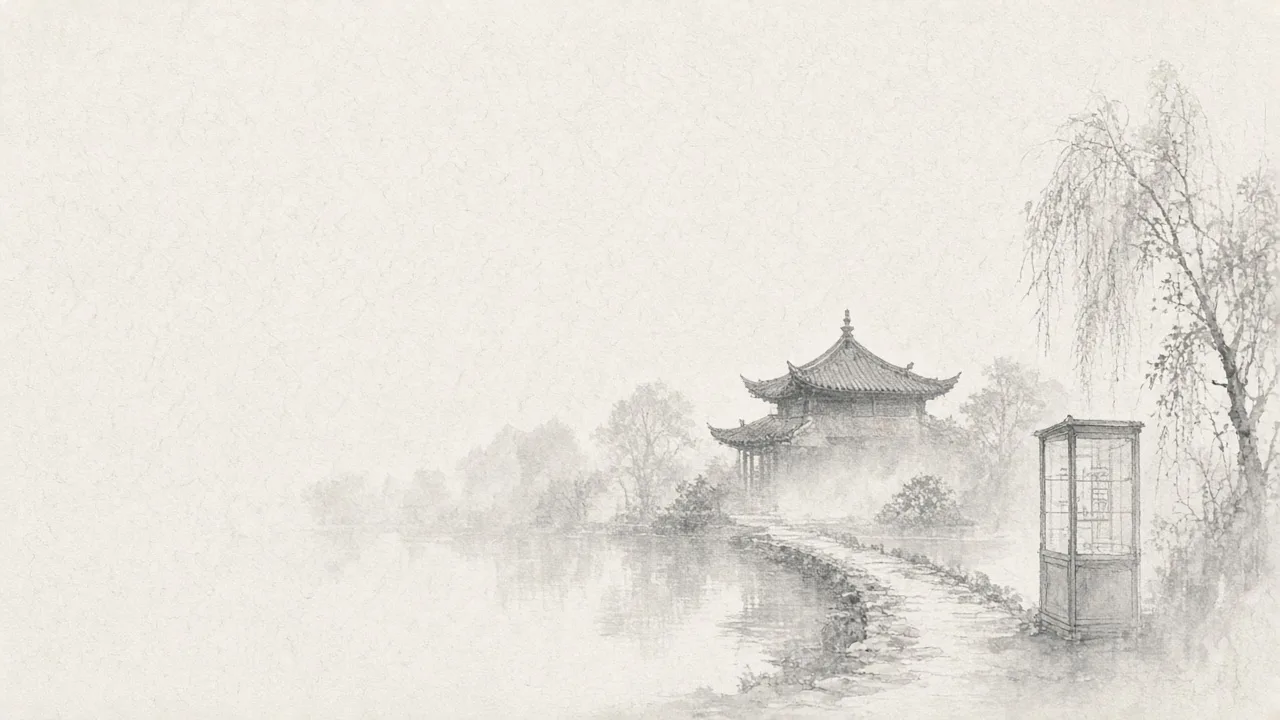
Nantong Museum (南通博物苑, Nántōng Bówùyuàn), founded by Zhang Jian in 1905 as China's first public museum established by Chinese people, is a garden-campus of natural-history specimens, local archaeology, and reform-era civic education on the Haohe River — not a blockbuster gallery with one star object. Walk the grounds first; the campus is the exhibit.
What do you actually see?
Trees, paths, and the Haohe (濠河) along the edge arrive before any hall. Indoors, expect natural-history cases — shells, minerals, plants, animals arranged for study — and Jiangsu archaeology: pottery, metalwork, excavated fragments from this river country. There is no single trophy room. The layout forces a blunt judgment: this was built as a teaching yard, not a cathedral of masterpieces.
Why did Zhang Jian build a campus, not a trophy wall?
Zhang Jian (张謇) founded the museum in 1905 as part of a wider Nantong project braiding industry, education, and public culture. Buildings are spaced for walking. You move from specimen hall to archaeology room to outdoor ground the way a student once moved between lessons. His point was not trophy hunting; he wanted a civic classroom beside the Haohe. The careful claim worth keeping is narrower than brochure hype: first public museum established by Chinese people — treaty-port foreign collections existed earlier, and rival cities still argue over "first."
How is this different from a big-city museum?
If you need a Louvre-scale climax — one room, one object, one photo that proves greatness — this place will frustrate you. The collection is also an argument about how a late-Qing modernizer thought citizens should learn: by walking, looking, and comparing. Skip the Haohe-side paths and you miss the visit; the disappointed traveler is usually the one who treated "first" as a checklist stamp and left without walking the grounds.
When should you go, and how long?
Spring and autumn are kinder: March–May and September–November. Plan about a half day — outdoor circuit first, then specimen and archaeology halls, then a second loop if light allows. Avoid Mondays unless a public holiday lands on one. Pairing tip: the museum sits on the Haohe edge, so a moat-bank walk can continue after the campus, without turning this stop into a city roundup.
Hours, tickets, and how to get there?
Address: No. 19 Haonan Road (濠南路19号), Chongchuan District, on the Haohe. Per the museum visitor guide at ntmuseum.com (checked October 2026): indoor exhibitions 09:00–17:00, last entry 16:30, closed Mondays except public holidays. Garden and grounds are commonly listed 06:00–18:00, no entry after 17:30 — outdoor windows can shift by season, so treat indoor hours as firm and recheck before you go. Buses 5, 8, 12, and 51 stop at 南通博物苑. Real-name booking via the museum WeChat account; bring ID. Park and new halls are generally free; Haonan Villa (濠南别业) + South Hall (南馆) combo is often ¥10, with free entry for minors, visitors 60+, active military, and disabled visitors — confirm on-site or WeChat for special shows.
Who is this for — and who should skip?
Come if you want civic-history texture: how collecting became public education on a river campus in 1905. Skip if you only want a star object to justify the trip; another city may serve that better. Start at the Haohe paths so the garden reads before the cases, and read the bilingual labels for founding date and layout rather than racing a highlight reel.
More from Nantong
- culture / 7 min readOn Langshan, a low hill south of Nantong, Tang-era Guangjiao Temple and the Song Zhiyun Pagoda look over the Yangtze estuary — a half-day of incense and river views, not an alpine climb.
- nature / 7 min readNantong's Haohe is a free daytime riverside loop around the old city — walk the banks first, and treat a lit night boat as optional, not the default.
- culture / 7 min readAt Nantong Blue Calico Museum on Haodong Road, indigo-resist printing is still a living craft — carved blocks, paste, dye vats, and white-on-blue cloth — not a souvenir-shop stop.