Model Commune or Old Stone Village: Dazhai or Xiaohe as a Side Trip from Yangquan?
Pick Xiaohe if you want a Ming–Qing stone village and Shi Pingmei's ancestral home just outside Yangquan city; pick Dazhai, across the line in Xiyang County, if you want the Mao-era model-farming story told on its own terraces.
Published
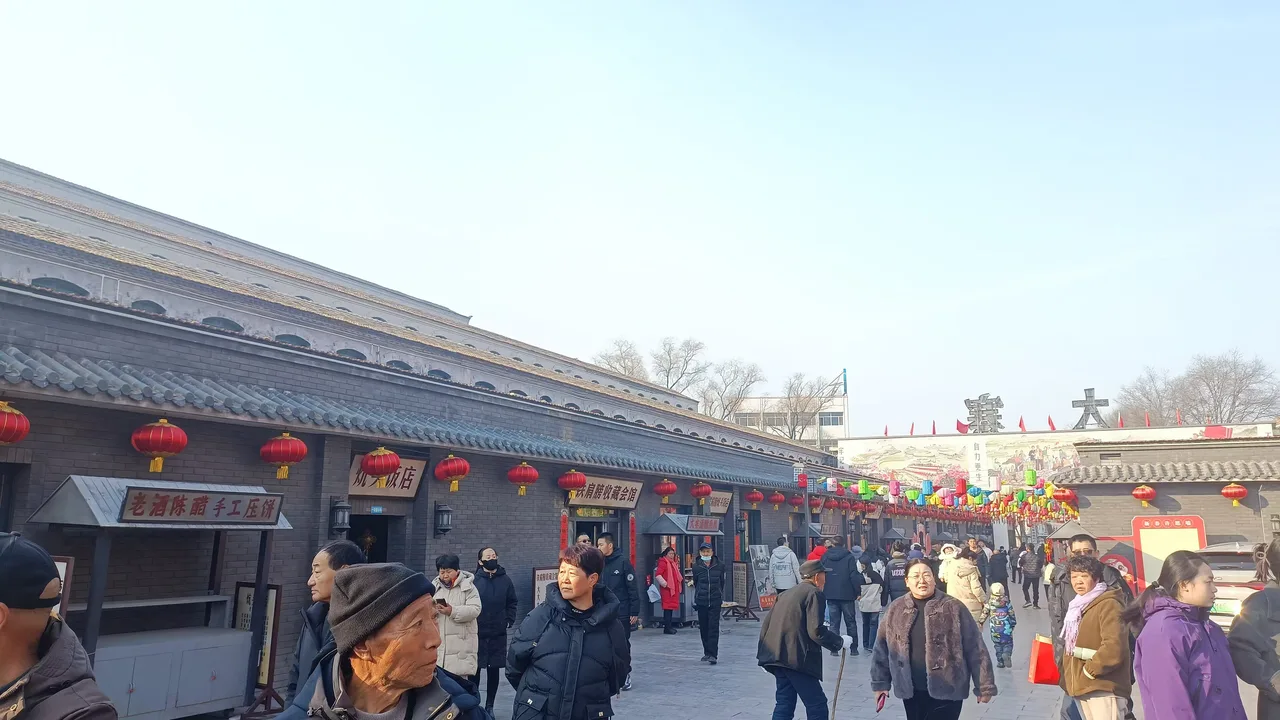
Pick Xiaohe (小河村) for a Ming–Qing stone village and the ancestral home of the writer Shi Pingmei (石评梅), just outside Yangquan city. Pick Dazhai (大寨) for the story of the Mao-era farming model told on its own terraces. Dazhai is across the boundary in Xiyang County (昔阳), Jinzhong, so it takes longer to reach.
Xiaohe: what is there?
Xiaohe is a listed Historic and Cultural Village of China in Yangquan's Chengqu district. Listings put it about 4 km from the city centre. The Yangquan government's own write-up says the Shi family settled here in the early Ming and by the Qing ran shops all the way to Beijing. That money built brick and stone compounds terraced into the slope, many with arched cave rooms. The showpiece is the Shi Family Courtyard (石家大院), begun in the Yongzheng reign: 21 small courtyards linked by passage doors and climbing the hill. Shi Pingmei, a 1920s poet and essayist and an early voice in modern Chinese women's writing, traced her family to this village. The sign at the gate today says "Xiaohe Ancient Village · Pingmei Scenic Area" (小河古村评梅景区).
Allow one to two hours. It is quiet, coherent and close enough for a taxi from town. It is also small, and the interpretation is mostly Chinese.
Dazhai: what is there?
In the 1960s Dazhai was the most famous village in China. Mao's slogan "In agriculture, learn from Dazhai" (农业学大寨) turned a hillside brigade into a national pilgrimage site. Its terraced fields, cave housing and production team became the model for collective farming everywhere. Later history judged the model harshly, and the village's own record is contested. That is part of why it is interesting. Today it is a scenic area with an exhibition hall, the old terraces and housing, and memorial sites, presented largely in the official register.
Go if modern Chinese history interests you and you can read it critically. Skip it if you want architecture; Xiaohe is better for that.
How do you get to each?
- Xiaohe: taxi from Yangquan city, short ride.
- Dazhai: Ctrip places it about 5 km south-east of Xiyang town. Xiyang is on the road south of Yangquan. A hired car from Yangquan is simplest. Listings also describe buses to Xiyang and then a local bus or taxi. Allow most of a day for the round trip.
Tickets and hours — what should you check?
Checked October 2026 (Asia/Shanghai). No official visitor pages were found for either site. Notices at the gate and the numbers below win over these listing figures.
- Xiaohe: listings give about 8:30–18:00 (last entry 17:30), shorter in winter. The Shi residence ticket has been listed at around 20 yuan, but recent visitors report that no ticket was being checked. Listed phone 0353-4201168.
- Dazhai: Ctrip lists year-round opening, roughly 8:30–17:00 in winter and longer in summer, with ticket line 0354-4388706. Third-party guides cite a ticket of around 48 yuan with concessions. That figure is unconfirmed, so ask by phone.
Which should you choose?
On a stopover with only a few hours spare, choose Xiaohe. With a full day, a car and an interest in twentieth-century China, choose Dazhai. Either fits around Niangzi Pass only if you sleep in Yangquan. See the stopover plan.
Cover photo: HerryCFPL / Wikimedia Commons (CC0)
More from Yangquan
- history / 6 min readNiangzi Pass on the Shanxi–Hebei border combines a Ming gate fort with a spring-fed waterfall and riverside village on one four-site ticket; allow three to four hours, climb to the gate first and finish by the water.
- history / 5 min readGuguan in Xinguan village, Pingding, is a recently restored Ming wall-and-gate site with a Great Wall museum; add it to Niangzi Pass if you want to walk actual wall, budget two hours, and confirm the ticket and hours by phone.
- itinerary / 6 min readYangquan North sits roughly 40 minutes by high-speed rail from both Taiyuan South and Shijiazhuang, so you can break the journey for Niangzi Pass and Guguan in one day by hired car, or stay a night and add Xiaohe or Dazhai.