Hot Dry Noodles and Wuhan Breakfast: Where and When Without Fake Hours
Wuhan 过早 centers on hot dry noodles with sesame paste — Hubu Alley and Liangdao Street as Wuchang anchors, early-to-mid morning window, no invented stall clocks.
Published
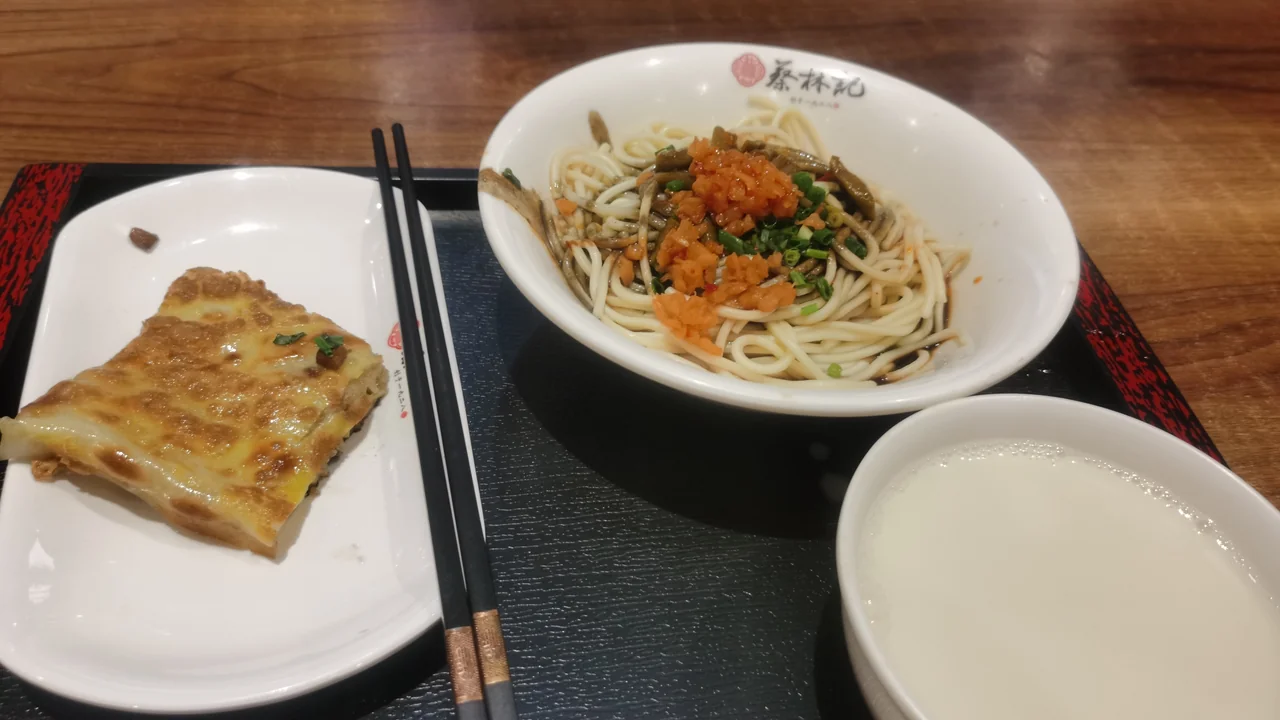
Wuhan breakfast is called 过早 (guòzǎo) — get out early, eat fast, move on. The signature bowl is hot dry noodles (热干面, règānmiàn): alkaline wheat noodles tossed with sesame paste, not soup. Use Hubu Alley (户部巷) or Liangdao Street (粮道街) as Wuchang area anchors near Yellow Crane Tower; treat early morning through mid-morning as the practical window; do not invent a stall’s closing minute.
What should you order first?
Order a plain 热干面 and mix from the bottom immediately — the sesame paste and seasoning sit underneath and seize if you pose for photos first. Soft pairings for a fuller 过早: doupi (豆皮) savory egg-and-rice skins, mianwo (面窝) crisp fried wheat rings, or a small soy milk. Chili is adjustable in speech even when boards lack English: ask for less spice if you need to. Sesame is the core of the dish — if you have a serious sesame allergy, skip rather than asking a busy counter to rebuild the sauce.
When should you go — and how much?
Treat roughly 07:00–09:00 as the classic local window; many counters stay busy later, but the breakfast rhythm thins toward late morning. A casual bowl commonly lands in a single-digit to low-teen RMB range depending on toppings and tourist-lane markup — read the board, do not treat any blog price as a contract. Soft fact (checked October 2026): Wuhan breakfast streets do not publish one official https closing timetable for every stall, so this page uses time-of-day and neighborhood soft facts only.
Hubu Alley or Liangdao Street?
Hubu Alley (Wuchang, near Simenkou / Freedom and Democracy Roads) is the easiest sampler if your day already includes Yellow Crane Tower — short, dense, and tourist-visible. Use it to try two or three classics, then leave; it is not the final judgment on Wuhan food. Liangdao Street stays closer to a local morning feel while still sitting near the tower and Tanhua Lin. Soft rule: pick the street that matches your sightseeing spine instead of crossing the Yangtze for one famous bowl.
Hankou night-snack blocks such as Jiqing Street are useful after dark — they are not the default breakfast map. Pair morning noodles with the tower climb the same Wuchang morning in the three-day itinerary.
How do you get there?
For Hubu Alley / Simenkou: Metro Line 5 to Simenkou Yellow Crane Tower Station and follow signs for the food lane and tower. Pay with Alipay or WeChat where accepted; carry a little cash as backup for tiny counters. Soft transport context: airport and HSR metro.
Who is this for — and who should skip?
Come if you want sesame-paste noodles on plastic stools before the tower or East Lake. Skip if you need white-tablecloth brunch or a guaranteed English menu at every window. March–May and September–November keep morning walks kinder than Wuhan’s midsummer humidity. Checked October 2026; the stall board in front of you wins.
Cover photo: Shwangtianyuan / Wikimedia Commons (CC BY-SA 4.0)
More from Wuhan
- modern / 6 min readOptics Valley Skyrail from Metro Line 11 Guanggu 4th Road — operator pages list ~¥30 single / ¥40 day pass and 09:00–19:00; confirm at the gate.
- history / 6 min readYellow Crane Tower day tickets are ¥70 on Wuhan’s 2026 municipal list; Metro Line 5 to Simenkou, with night sessions sold separately — practical first, poetry second.
- modern / 6 min readTianhe Airport is on Metro Line 2; Hankou, Wuchang, and Wuhan Railway Stations are different hubs — match your 12306 ticket name before you ride.