Beyond the Tower: Fogong Temple Compound and Visit Rules
Inside Fogong Temple in Yingxian, walk the gate–pagoda–Mahavira Hall axis plus Ming courtyard fabric and visit rules — compound frame after the tower essay, not a second climb rewrite.
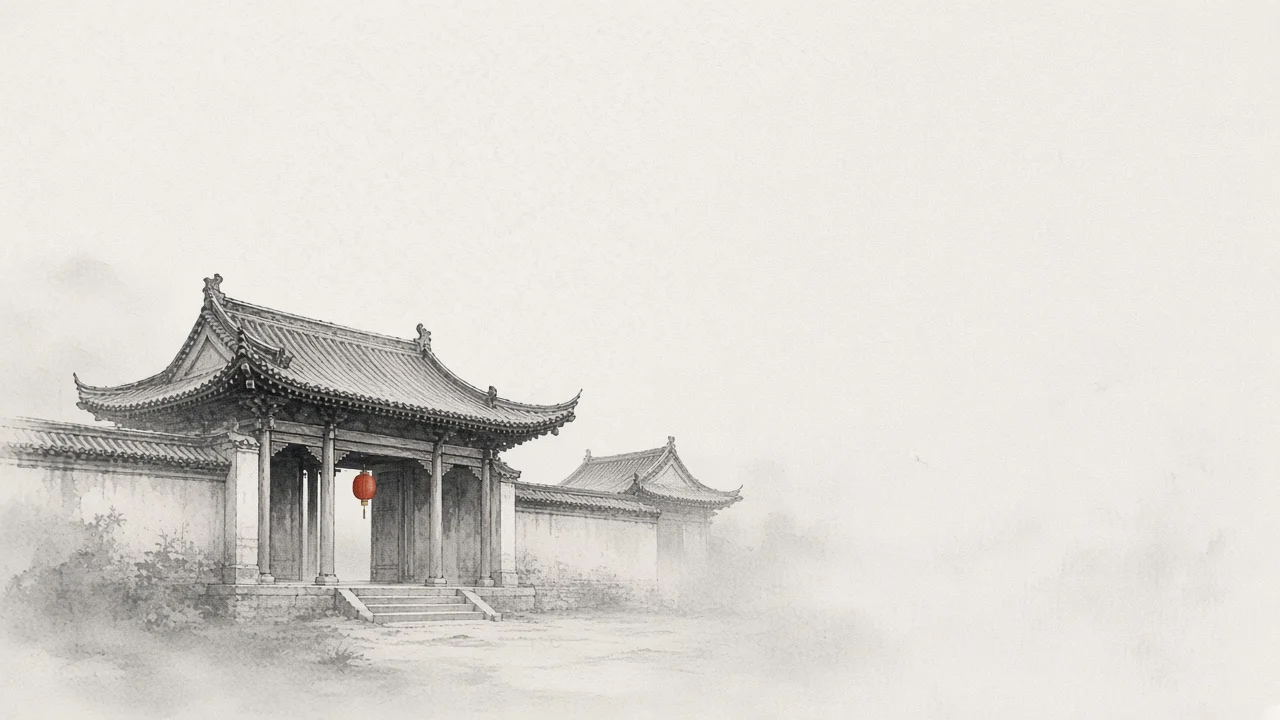
Inside Fogong Temple (佛宫寺) in Yingxian, beyond the Wooden Pagoda, you walk a south-facing compound: mountain gate, Ming bell and drum towers, the tower at center, then Mahavira Hall and side halls — later rebuilds frame the Liao core. Visit rules: ground floor only, no climb; no peddler incense, pets, smoking, or drones; confirm scenic WeChat before you go.
What else is inside Fogong Temple besides the tower?
The ticket buys a temple yard, not a freestanding tower in an empty lot. Fogong sits north–south in Yingxian’s old-town northwest: mountain gate (山门), then the Sakyamuni Pagoda (释迦塔 — the Wooden Pagoda) at center, then the Mahavira Hall (大雄宝殿). Ming bell and drum towers flank the front court; later side halls and wing rooms close the rear.
Only the pagoda is Liao original fabric. Halls and towers around it are mostly Ming–Qing rebuilds that frame the silhouette — useful courtyard depth, not a second Liao encyclopedia. Soft contrast if you already read Datong’s old-city timber pair: Huayan and Shanhua teach choose/read halls; Fogong teaches one axial yard under one tower. Keep Datong depth on Datong pages.
How is this different from “just visiting the tower”?
Series 1 answers what you see at the Wooden Pagoda and whether the climb is worth it today. This page answers the yard: how you arrive through gate and court, what later halls do beside the Liao core, and which rules keep the visit honest.
Treating Fogong as a drive-by photo of the tower wastes the axis. You get better light and scale if you pause at the gate, walk the front court between bell and drum towers, circle the base when open, then glance the Mahavira Hall and side halls without racing plaques. Optional 2026 depth: the scenic digital “cloud climb” hall — treat it as interpretation when stairs stay closed, not a substitute for series 1’s ground-visit judgment.
What are the visit rules and etiquette?
Climb and fabric. Upper-story climb of the pagoda stays closed for protection; expect compound walking and ground-floor access when open. Do not invent stairs from old guidebooks — climb honesty lives on the pagoda page; re-confirm the morning you travel.
Heritage etiquette. No touching or climbing timber and sculpture; no flash on murals if interior rules forbid it; follow staff on bags and photography. Scenic and local notices commonly ban pets, incense and candles carried in, smoking, drones, and flammable or controlled items. Buy incense only through official on-site channels if you need it — ignore random peddlers outside the gate offering “blessed” sticks.
Pace and surfaces. Paths and steps are uneven; rain makes courtyards slick. Plan roughly one to two hours for gate → court → tower base → rear halls → optional digital hall, plus transit buffer from Datong.
How should you walk the compound without racing?
A readable loop: enter through the mountain-gate approach, stop for a full frontal silhouette before you undercut the tower with close-ups, walk the front court (bell / drum), do a slow exterior circuit for dougong and eaves when crowds thin, enter the open ground floor if allowed, then finish at Mahavira Hall and side halls. Leave town meals and ticket-window logistics for later Yingxian pieces — this page stays Fogong compound only.
Pairing that fails: treating the yard as a five-minute selfie stop before a taxi sprint back to Datong, or stacking Fogong, a full cave corridor, and the Hanging Temple into one daylight race. Soft city frame for Datong ↔ Yingxian day-return anchors: the transport article.
Hours, tickets, and how to confirm — compound frame?
Checked October 2026 (Asia/Shanghai). Scenic WeChat “应县木塔景区” and Shuozhou government open-information notices win over third-party clocks; phone commonly listed 0349-5088889. Heritage frame: UNESCO Tentative List — Wooden Pagoda of Yingxian County.
Hours (compound = scenic). A Shuozhou-published scenic notice set autumn hours around 08:00–17:30 (stop sale ~17:00, stop entry ~17:15); 2026 Spring Festival notices used the same pattern and named scenic WeChat plus 游山西 / Ctrip / Douyin for booking. Peak summer can run later when announced — treat mid-October as autumn unless the scenic account posts a winter cut.
Tickets. About ¥50 full / ¥25 half is widely cited on authorized “游山西” and local tourism booking channels (online often a yuan or two lower); timed reservation is the holiday / peak posture. One ticket covers the Fogong compound visit, not a separate “tower-only” fee. Detail judgment on climb vs ground stays in series 1. Last checked: October 2026.
Arrival sketch. Typical frame is a Datong overnight with a Yingxian day-return (county town under Shuozhou), not a Shuocheng city-break. Named rail and bus anchors live in the transport article.
Who is this for — and who should skip?
Come if you want the compound after the tower essay: gate–pagoda–Mahavira Hall axis, Ming courtyard fabric, and visit rules you can verify before a day-return. Skip if you need another climb rewrite, a Liao plaque inventory, or a Shuocheng / Chongfu city-break — out of this slate. Start from series 1’s closed-climb fact, then decide how long Fogong earns on your Datong overnight day.
More from Shuozhou
- history / 7 min readAt Fogong Temple in Yingxian, you see a freestanding Liao timber pagoda from the compound and ground floor — the upper climb stays closed for protection; worth it as a tower visit, not a guaranteed ascent.
- culture / 7 min readCompact Yingxian day-visitor nodes — Fogong tickets, simple meals by the Wooden Pagoda, and return waits at the bus station or Yingxian West — not a Shuozhou or Shuocheng city-break.
- itinerary / 7 min readDay-return from a Datong overnight to Yingxian on named anchors — Datong South ↔ Yingxian West high-speed plus taxi, or bus 902 from the Comprehensive Passenger Transport Center — with last-return risk and Last-checked sources.